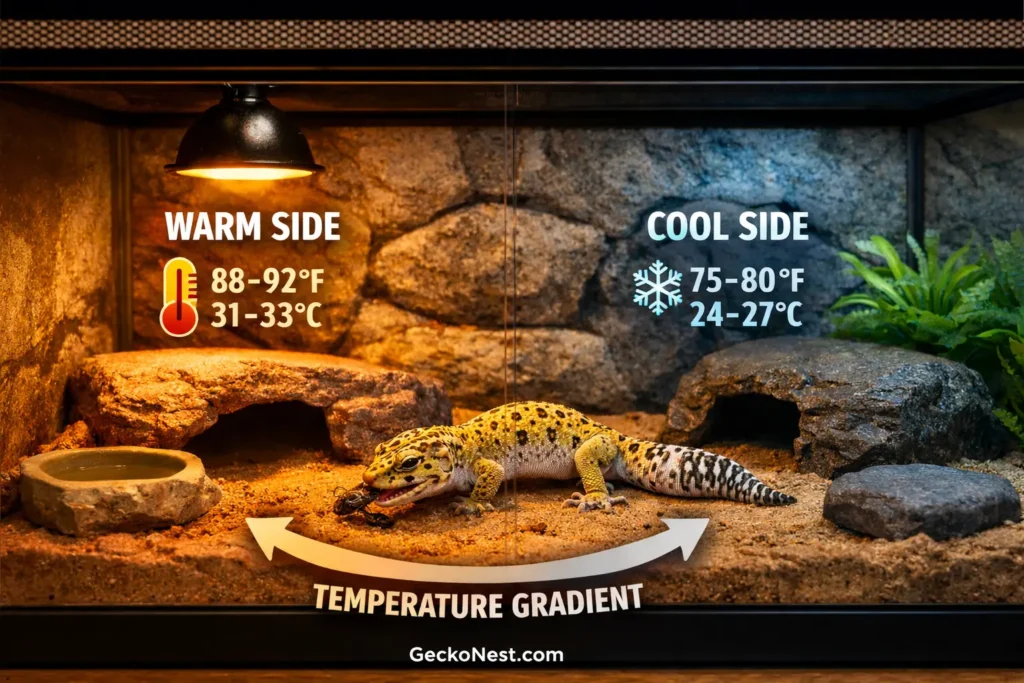

Introduction: Seasonal Leopard Gecko Care Isn’t Optional (Even Indoors)
Let’s be honest for a second…
You probably thought:
“My gecko lives inside… seasons don’t affect it.”
Yeah… your gecko politely disagrees 😅
Seasonal leopard gecko care matters more than most owners realize. Even in climate-controlled homes:
- Winter lowers room temperatures
- Summer creates hidden overheating risks
- Power outages remove all heating
- Storms mess with humidity
- Moving houses stresses your gecko
Leopard geckos are temperature-dependent reptiles.
And your home? That’s their entire universe.
If that universe changes — they feel it.
Understanding seasonal leopard gecko care helps prevent:
- Appetite loss
- Stress
- Digestion issues
- Dangerous emergencies
Let’s break it down step by step 👇
📑 Table of Contents
- Leopard Gecko Winter Care
- Brumation Behavior Explained
- Leopard Gecko Summer Heat Safety
- Power Outage Emergency Plan
- Storms & Environmental Stress
- Traveling & Moving With Your Gecko
- Humidity Changes Across Seasons
- Night Temperature Drops
- Heat Spikes (Silent Killer 👀)
- Seasonal Appetite Changes
- Vacation Planning
- Stability Checklist
🧊 Leopard Gecko Winter Care (Cold Weather Survival Guide)
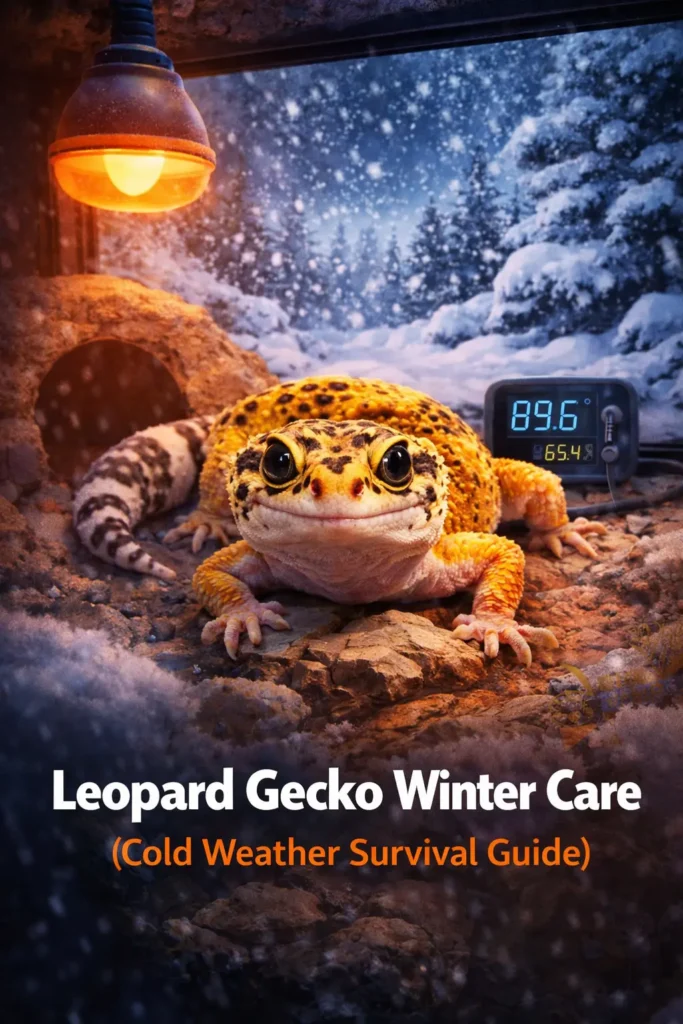
Seasonal leopard gecko care becomes critical in winter.
🌙 Room Temperature Drops at Night
Even if your heat mat is working perfectly…
Your room temperature might betray you at 3 AM 😅
If your room drops below 65°F (18°C):
- Your enclosure loses thermal stability
- Digestion slows down
- Your gecko becomes lazy (even lazier than usual…)
Monitor:
- Warm side: 88–90°F
- Cool side: 75–80°F
💤 Brumation Signs (Normal vs “Hmm…”)
During colder months, your gecko might:
- Eat less
- Move less
- Hide like it’s avoiding responsibilities
This is brumation-like behavior.
✅ Normal if:
- Weight is stable
- Body condition looks healthy
❌ Not normal if:
- Noticeable weight loss
- Weakness
☀️ Leopard Gecko Summer Heat Safety
Here’s the twist:
👉 Summer is often more dangerous than winter.
🔥 Overheating Risks
If your room hits 85–90°F, your tank might become a sauna.
Watch for:
- Open mouth breathing
- Lethargy
- Glass surfing
- Food refusal
🛠️ How to Prevent Overheating
- Always use a thermostat
- Avoid direct sunlight
- Monitor temps daily
- Ensure airflow
Important:
Leopard geckos don’t sweat.
So once overheating starts… it escalates FAST.
⚡ Leopard Gecko Power Outage Emergency Plan
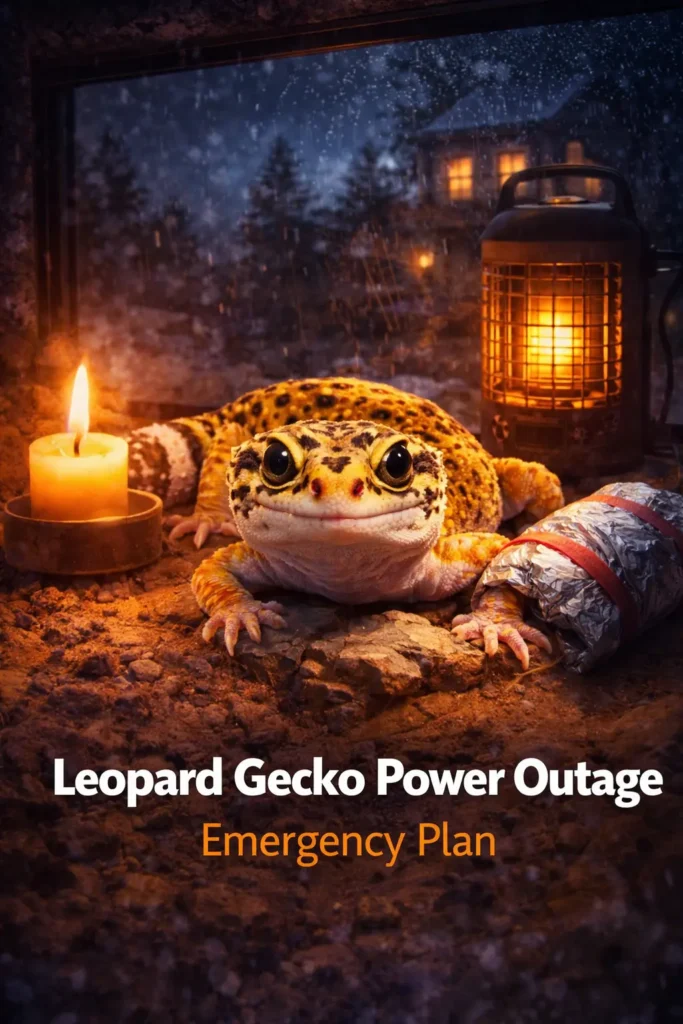
This is where seasonal leopard gecko care becomes survival mode.
⏱️ How Long Can They Handle Cold?
Short answer:
- A few hours → usually fine
- Long exposure below 60°F → risky
🔥 Emergency Heating Solutions
During a power outage:
- Wrap enclosure with blankets
- Use hand warmers (wrapped, NOT direct contact)
- Move to a warmer room
- Use battery backup systems
👉 Preparation > Panic (always)
According to reptile care experts at Association of Reptile and Amphibian Veterinarians (ARAV) , maintaining stable temperatures is one of the most critical factors in seasonal leopard gecko care and overall reptile health.
🌪️ Leopard Gecko During Storms & Climate Events
Storms affect more than just electricity.
They also bring:
- Humidity changes
- Vibrations
- Noise stress
Your gecko notices all of this (yes, even that thunder 😅)
Best approach:
- Keep enclosure stable
- Reduce handling
- Keep environment calm
🚗 Traveling With Your Leopard Gecko
Travel = stress event.
Short trips:
- Use ventilated container
- Paper towel substrate
- Stable temperature
🚫 Never leave your gecko in a parked car
(It turns into an oven… or a freezer)
📦 Moving House With a Leopard Gecko
Moving = “What is happening???” moment for your gecko.
Expect:
- Reduced appetite
- More hiding
- Exploration
Keep:
- Same hides
- Same layout
- Same feeding schedule
Most geckos adjust within 1–2 weeks.
💧 Leopard Gecko Humidity Changes Across Seasons
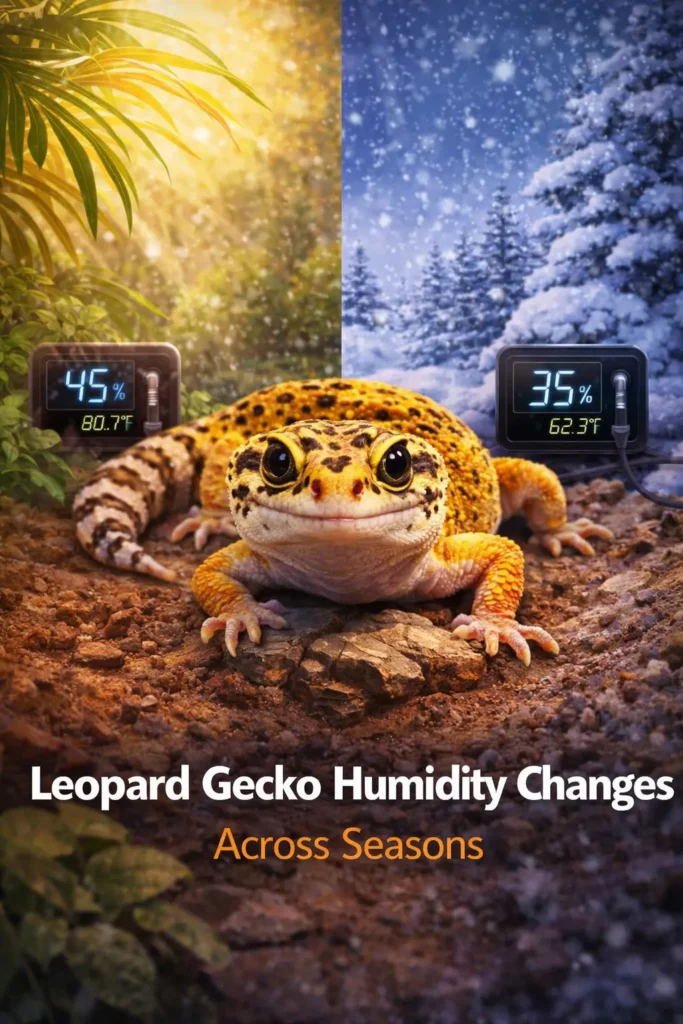
Seasonal leopard gecko care also includes humidity.
- Winter → dry air
- Summer → higher humidity
Ideal:
👉 30–40% humidity
Too much humidity can lead to:
- Shedding issues
- Respiratory problems
🌙 Leopard Gecko Night Temperature Drops
In nature, temps drop at night.
But indoors:
👉 Big drops = BAD
Safe range:
- 5–8°F lower than daytime
- Never below 65°F
🔥 Leopard Gecko Heat Spikes (Silent Risk)
This one catches many owners…
You monitor the heat mat, but forget the room.
If room hits 90°F:
👉 Your enclosure can overheat even with a thermostat
Always track:
- Surface temp
- Air temp
Double monitoring = safety
🌍 Climate Adaptation — Are They Flexible?
Yes… but not superheroes 😄
Leopard geckos come from:
- Dry regions
- Moderate fluctuations
They adapt… but:
👉 In captivity, YOU control everything
🍽️ Seasonal Appetite Changes
Winter:
- Eating less = normal
Summer:
- More active
- Better appetite
👉 Track weight monthly
Weight = truth detector
🧳 Vacation & Absence Planning
Short trips (3–5 days):
- Usually fine
Long trips:
- Get a caretaker
- Pre-measure food
- Leave clear instructions
Never assume:
👉 “It’ll be fine”
✅ Environmental Stability Checklist
Your seasonal leopard gecko care checklist:
- Warm side: 88–90°F
- Cool side: 75–80°F
- Humidity: 30–40%
- Stable night temps
- Backup heating plan
👉 Consistency beats perfection.
🧠 Final Thoughts on Seasonal Leopard Gecko Care
Your gecko may live indoors…
But it still reacts to:
- Seasons
- Temperature changes
- Weather events
- Environmental shifts
The best owners:
- Prepare before winter
- Monitor before summer
- Plan before emergencies
Because great care isn’t reactive.
👉 It’s proactive.
🦎 Seasonal Leopard Gecko Care – FAQ







Helpful Leopard Gecko Tools
Quick calculators and practical tools for feeding, humidity, health, and enclosure setup.
Feeding Calculator
Estimate the right feeding amount for your leopard gecko.
Open ToolCalcium & D3 Calculator
Plan calcium and vitamin D3 more easily and accurately.
Open ToolHumidity Checker
Check if your terrarium humidity is in a safe range.
Open ToolHealth Symptom Checker
Review possible health issues based on symptoms.
Open ToolSetup Builder
Build and review the ideal leopard gecko enclosure setup.
Open ToolGecko Age Calculator
Estimate your gecko’s age and life stage.
Open ToolElectricity Cost Calculator
Estimate terrarium electricity costs by day, month, and year.
Open ToolBreeding Compatibility
Check if two leopard geckos are compatible for breeding.
Open ToolPet Name Calculator
Find a fun and fitting name for your leopard gecko.
Open ToolWeekly Care Planner
Create a simple weekly care routine for your gecko.
Open Tool