
Introduction
If you’ve ever typed “do leopard geckos need UVB” into Google at 2AM while your gecko judges you from across the tank… welcome, you’re in the right place 😄
Here’s the truth: do leopard geckos need UVB? Not exactly… but it’s not a simple yes/no either. And that’s where most guides either confuse you or start sounding like a reptile PhD thesis.
Let’s break it down like normal humans — with real talk, a bit of humor, and zero unnecessary drama.
📌 Table of Contents
- Do Leopard Geckos Need UVB? (Short Answer)
- Why Leopard Geckos Don’t Require UVB
- Why Some Owners Still Use UVB
- What Happens Without UVB?
- How to Use UVB Correctly
- UVB vs No UVB Comparison
- Signs of Calcium Problems
- Final Verdict
🦎 Do Leopard Geckos Need UVB? (Short Answer)
Do leopard geckos need UVB?
👉 No, they do not require UVB to survive.
👉 But low-level UVB can be beneficial when used correctly.
Think of it like this:
You can survive without going outside… but your mood, energy, and health might say otherwise 😅
🌅 Why Leopard Geckos Don’t Need UVB

Leopard geckos are not sun-worshipping reptiles like bearded dragons.
They are:
- Crepuscular (active at dawn & dusk)
- Ground-dwelling
- Masters of hiding like introverts at a party
For years, keepers successfully raised healthy geckos using:
- Calcium supplements
- Vitamin D3
- Proper heating
So technically… UVB is not required.
💡 Why Some Keepers Still Use UVB
Now here’s where things get interesting.
Recent studies and experienced keepers suggest low-level UVB may:
- Improve natural vitamin D3 production
- Support calcium metabolism
- Boost overall activity and vitality
- Encourage natural behaviors
👉 External reference: Association of Reptile and Amphibian Veterinarians
https://arav.org
👉 External reference: UVB lighting basics (Reptile Magazine style guide)
https://reptilesmagazine.com
In simple terms:
Supplements = vitamins
UVB = natural sunlight bonus
Both work. Together? Even better (when done right).
⚠️ What Happens Without UVB?
If you skip UVB, no problem… BUT you must compensate properly.
You need:
- Regular calcium supplementation
- Vitamin D3 included
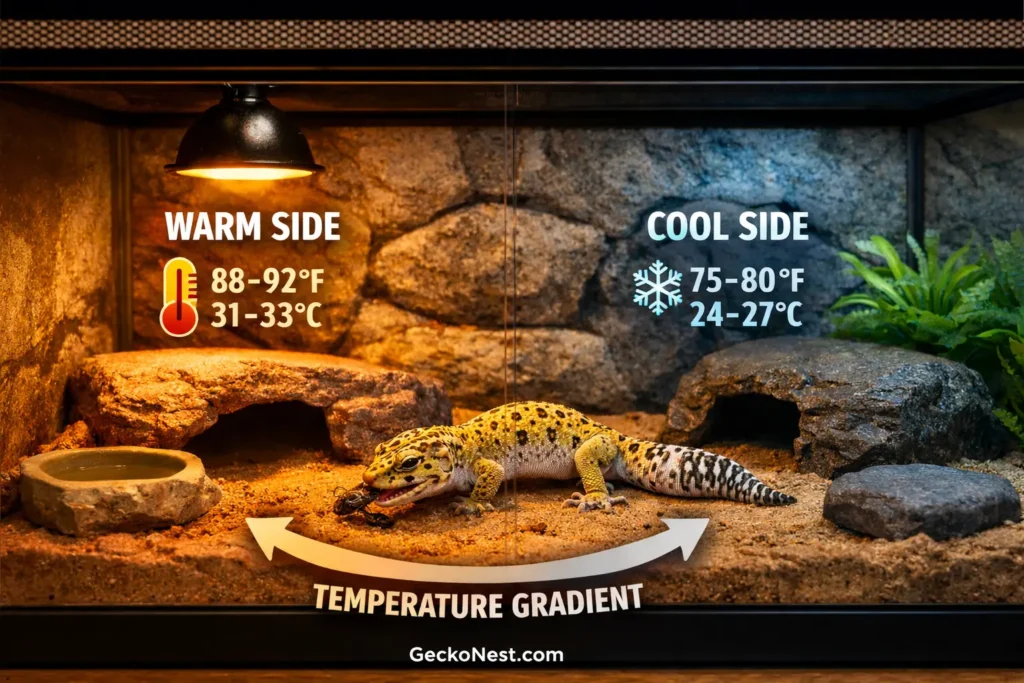
- Correct temperature gradient
Otherwise, you risk metabolic bone disease (MBD) — and trust me, that’s not something you want to Google at 3AM.
👉 Internal guide:
https://geckonest.com/leopard-gecko-feeding-guide/
🔧 How to Use UVB Correctly (Beginner-Friendly)

If you decide to use UVB, don’t go full desert sun mode 😅
Use it like this:
- ✔ Low output (5% UVB)
- ✔ Provide shaded hiding areas
- ✔ Keep safe distance
- ✔ Replace bulb every 6–12 months
- ✔ Adjust D3 supplements accordingly
🚨 Rule of thumb:
More UVB ≠ better gecko
⚖️ UVB vs No UVB: What Actually Works?
Most successful gecko owners fall into two camps:
✔ No UVB + proper D3 supplementation
✔ Low UVB + adjusted supplements
Both work.
What doesn’t work?
❌ Random lighting setups
❌ Guessing instead of understanding
❌ “My friend said it’s fine” method 😄
🚨 Signs of Calcium Problems (With or Without UVB)

If something’s off, your gecko will show it:
- Weak legs
- Tremors
- Soft jaw
- Curved limbs
This is metabolic bone disease — and it’s 100% preventable.
👉 Internal tool:
https://geckonest.com/leopard-gecko-symptom-checker/
🧠 Final Verdict: Do Leopard Geckos Need UVB?
So… let’s answer it clearly:
👉 Do leopard geckos need UVB?
- ❌ Not required to survive
- ✅ Can be beneficial
- ⚠️ Must be used correctly
If you’re a beginner:
👉 Start simple (no UVB + proper supplements)
If you want a more natural setup:
👉 Add low-level UVB carefully
🔥 Quick Summary
- Leopard geckos do NOT require UVB
- Calcium + Vitamin D3 = essential
- UVB = optional benefit
- Too much UVB = stress
- Heat setup matters more
😄 Final Thoughts
Most real problems come from:
- Bad heating
- Poor diet
- Weak setup
UVB is just the “bonus level” — not the main game.
Get the basics right first. Then upgrade like a pro.
If you’re still wondering do leopard geckos need UVB, it’s always smart to check trusted veterinary sources. The Association of Reptile and Amphibian Veterinarians (ARAV) provides science-based care guidelines that many experienced keepers follow.
Think of UVB like sunlight for us—optional, but helpful when used correctly. This detailed guide on reptile UVB lighting basics explains how UVB impacts reptile health in a simple and practical way.
And if you like going a bit deeper (but not full scientist mode 😄), this reptile biology resource from National Geographic helps you understand how reptiles interact with their environment—including light, heat, and behavior.
Frequently Asked Questions About Leopard Gecko UVB
Still confused about UVB for leopard geckos? Totally normal. This topic causes more debate than it should. Here are the clear answers—without the reptile drama.
Do leopard geckos need UVB every day?
No, leopard geckos do not strictly need UVB every day to survive. However, low-level UVB can be beneficial for supporting natural vitamin D3 synthesis and healthy calcium metabolism when used correctly.
Can a leopard gecko live without UVB?
Yes, a leopard gecko can live without UVB if it receives proper calcium supplementation, vitamin D3, and correct tank temperatures. Many keepers successfully raise healthy geckos without UVB lighting.
Is UVB better than vitamin D3 supplements for leopard geckos?
Not necessarily better—just different. UVB helps the body produce vitamin D3 naturally, while supplements provide it through diet. Both methods can work well when the setup and supplement schedule are managed properly.
What type of UVB is safe for leopard geckos?
Low-output UVB, such as 5% UVB or equivalent, is generally considered the safer choice for leopard geckos. They are not high-basking reptiles, so strong UVB exposure can cause unnecessary stress if overdone.
Can too much UVB harm a leopard gecko?
Yes, too much UVB can be stressful and inappropriate for leopard geckos. That’s why it is important to provide shaded hides, proper distance from the bulb, and avoid overly intense lighting setups.
What happens if a leopard gecko does not get enough calcium?
If calcium metabolism is poor, a leopard gecko may develop weakness, tremors, a soft jaw, or bent limbs. These can be signs of metabolic bone disease, which is serious but often preventable with the right care.
Should beginners use UVB for leopard geckos?
Beginners can successfully keep leopard geckos without UVB by focusing on correct heating, calcium, and vitamin D3 supplementation first. UVB is more of an optional upgrade than a basic requirement.







Helpful Leopard Gecko Tools
Quick calculators and practical tools for feeding, humidity, health, and enclosure setup.
Feeding Calculator
Estimate the right feeding amount for your leopard gecko.
Open ToolCalcium & D3 Calculator
Plan calcium and vitamin D3 more easily and accurately.
Open ToolHumidity Checker
Check if your terrarium humidity is in a safe range.
Open ToolHealth Symptom Checker
Review possible health issues based on symptoms.
Open ToolSetup Builder
Build and review the ideal leopard gecko enclosure setup.
Open ToolGecko Age Calculator
Estimate your gecko’s age and life stage.
Open ToolElectricity Cost Calculator
Estimate terrarium electricity costs by day, month, and year.
Open ToolBreeding Compatibility
Check if two leopard geckos are compatible for breeding.
Open ToolPet Name Calculator
Find a fun and fitting name for your leopard gecko.
Open ToolWeekly Care Planner
Create a simple weekly care routine for your gecko.
Open Tool