
The best substrate for leopard gecko tank setups is tile or slate for beginners, while a compact soil-based mix works well for more natural enclosures. Loose sand can be risky when used incorrectly, so it should not be the first choice for beginners.
Quick Picks:
- Best overall: Slate / Tile
- Best natural: Soil + sand mix
- Best for beginners: Paper towel or tile
- Avoid: Loose sand (especially for beginners)
Choosing the best substrate for leopard gecko tank setups sounds simple at first.
Sand or tile. Loose or solid. Done, right?
Well… not quite.
Substrate affects digestion, safety, enrichment, humidity, and temperature stability. In other words, it’s not just decoration — it’s basically the floor your gecko lives on 24/7.
I’ve seen tanks that looked like a National Geographic desert photoshoot, complete with dramatic sand dunes and fancy rocks. Looked amazing. Instagram would approve.
The gecko?
Sat in the corner like someone forced it to attend a family reunion.
A proper leopard gecko tank substrate should:
• Provide solid footing
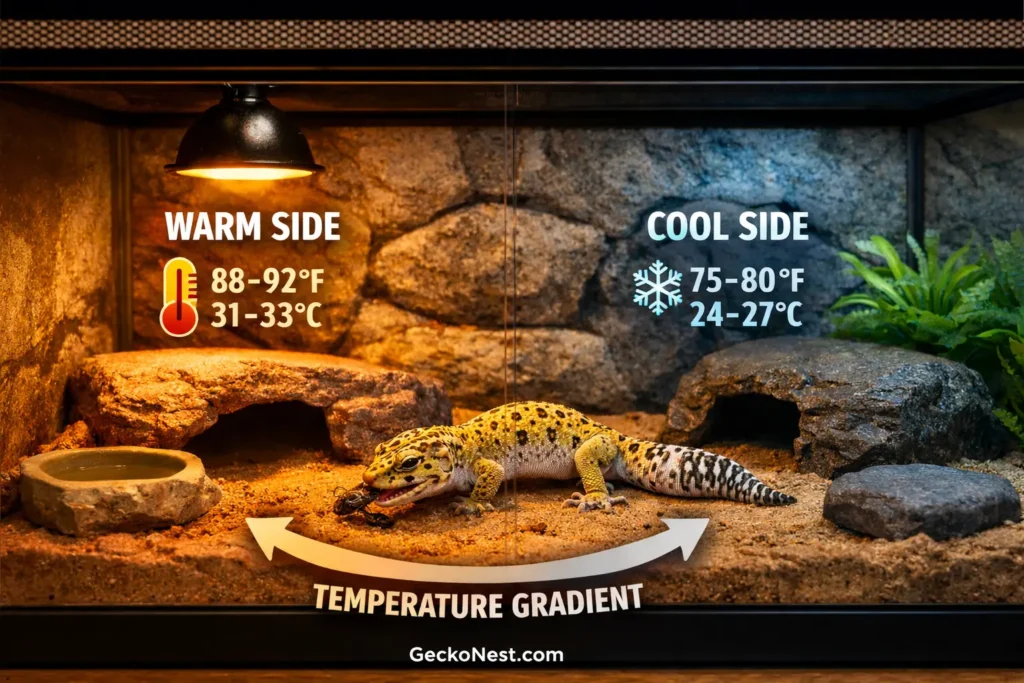
• Work with your heating system
• Keep humidity stable
• Reduce impaction risk
If your substrate is fighting your heat mat like two cats in a cardboard box… you have a problem.
Before we dig deeper (pun absolutely intended), let’s break everything down.
What Is the Best Substrate for Leopard Geckos?
The best substrate for leopard geckos depends on experience level. For beginners, solid options like tile or slate are the safest. For more natural setups, a compact soil mix can work well when used correctly.
Safe vs Unsafe Substrates for Leopard Geckos
Not all substrates are safe for leopard geckos. Some can cause serious health issues if used incorrectly, especially for beginners.
| Substrate | Safe? | Best For | Risk Level |
|---|---|---|---|
| Tile / Slate | ✅ Yes | Beginners | Very Low |
| Paper Towels | ✅ Yes | Quarantine | Very Low |
| Soil Mix | ✅ Yes* | Natural setups | Medium |
| Loose Sand | ⚠️ Risky | Advanced keepers | High |
| Calcium Sand | ❌ No | None | Very High |
Substrates You Should NOT Use
Some substrates may look natural or attractive, but they can be dangerous for leopard geckos.
- Calcium sand – Can lead to serious impaction issues
- Fine loose sand – High risk for beginners
- Wood chips – Can cause injuries and digestive problems
- Gravel – Extremely dangerous if ingested
Best Substrate for Leopard Gecko Tank (Quick Guide)
If you’re searching for the best substrate for leopard gecko tank setups, you probably want the safest option first.
Here’s the practical breakdown.
Beginner-Friendly Substrates
These are simple, safe, and reliable.
• Paper towel
• Textured ceramic tile
• Slate tile
Tile is extremely underrated. It holds heat well, it’s easy to clean, and your gecko won’t accidentally swallow it during dinner.
Unless your gecko suddenly evolves into a tiny construction worker, tile ingestion is not happening.
Paper towels are also fantastic for juveniles. They’re cheap, easy to replace, and make cleaning simple.
Basically the “no drama” option of reptile keeping.
Advanced Substrate Options
For experienced keepers who want a natural enclosure:
• Soil and sand mix
• Structured loose substrate
• Bioactive leopard gecko substrate
Loose substrate can work beautifully — if temperatures and husbandry are correct.
This is not a “close enough” situation.
Your gecko is not a sandbox experiment.
Best Substrate for Leopard Gecko Tank (Beginner vs Advanced Setup)
When choosing the best substrate for leopard gecko tank environments, it helps to divide setups into two categories.
Beginner Setup
Safe. Predictable. Low risk.
Best options:
• Paper towel
• Ceramic tile
• Slate tile
Benefits:
• Minimal impaction risk
• Easy cleaning
• Stable belly heat
Think of this setup as training wheels for reptile keeping. Nothing wrong with that.
Even experienced keepers use tile because it simply works.
Advanced / Naturalistic Setup
If you want a natural environment:
• Soil + sand mix
• Bioactive substrate system
• Structured digging layers
This setup offers:
• Natural digging behavior
• Environmental enrichment
• More realistic habitat
But it also requires proper temperature gradients and humidity control.
A tank that looks incredible but ruins digestion is like buying a Ferrari and forgetting to put gas in it.
Looks great. Goes nowhere.
Is Sand Safe for Leopard Geckos?

This question never disappears.
“Is sand safe for leopard geckos?”
Short answer: plain sand alone is not ideal.
According to the Association of Reptile and Amphibian Veterinarians (ARAV), proper habitat setup and substrate choice play an important role in reptile digestion and overall health. You can learn more at
Calcium Sand (Avoid It)
Leopard gecko calcium sand is heavily marketed.
Unfortunately, it can clump when wet and increase impaction risk.
It’s one of those products that sounds helpful… until it isn’t.
Kind of like buying a treadmill and turning it into a coat rack.
Can Leopard Geckos Live on Sand?
In controlled mixed substrates, sometimes yes.
As a single loose layer?
Not recommended.
Especially for babies and juveniles.
If someone says,
“I’ve used sand for years and my gecko is fine.”
That’s great.
But reptile care should rely on consistent safety, not survival anecdotes.
Leopard Gecko Tile Substrate: Is It Too Boring?
Tile sometimes gets labeled as “basic.”
But boring is not always bad.
• Holds heat consistently
• Prevents accidental ingestion
• Easy to disinfect
• Long-lasting
Is it naturalistic?
Not really.
Is it beginner-proof?
Pretty close.
Sometimes boring is good.
Like wearing a helmet when riding a bike… or not texting your ex at 2 AM.
Bioactive Leopard Gecko Substrate (Natural Setup Option)
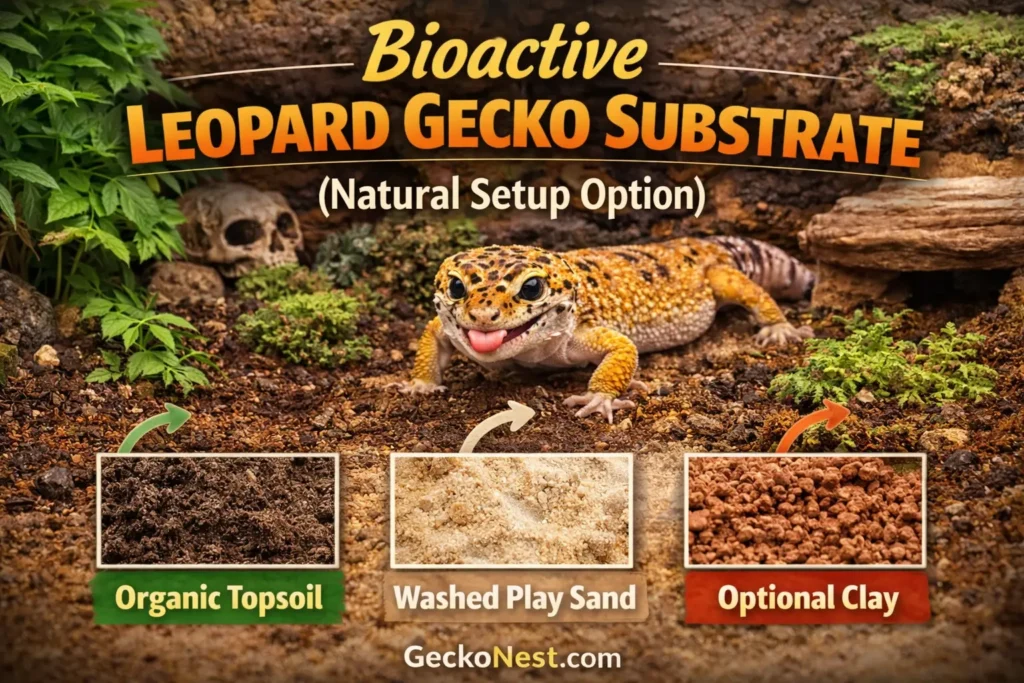
If you’re building a natural enclosure, you’re probably researching bioactive leopard gecko substrate setups.
This is where things get interesting.
A common mix includes:
• Organic topsoil (fertilizer-free)
• Washed play sand
• Optional clay for structure
This combination creates:
• Natural digging areas
• Firm tunnels
• More realistic terrain
Bioactive setups can be incredible.
They allow geckos to display natural behaviors like digging and exploring.
But rushing into bioactive because it looks cool online?
That’s how people accidentally build a $300 science project that grows mold.
Take your time.
Research and husbandry resources from the San Diego Zoo Wildlife Alliance also show that naturalistic environments can help reptiles display more natural behaviors and enrichment.
Leopard Gecko Substrate Mix Recipe (DIY Option)
If you prefer DIY setups instead of premade reptile substrates, a common leopard gecko substrate mix recipe is:
• 70% organic topsoil
• 30% washed play sand
Optional:
• Small amount of clay for structure
And when your gecko starts digging tunnels?
That’s enrichment.
That’s instinct.
That’s also the moment you realize your gecko is secretly a tiny underground engineer.
Leopard Gecko Substrate Comparison
| Substrate | Safe | Impaction Risk | Cleaning | Natural Look |
|---|---|---|---|---|
| Paper Towel | Yes | Very Low | Very Easy | No |
| Tile | Yes | Very Low | Easy | Moderate |
| Soil + Sand Mix | Advanced Only | Moderate | Medium | Yes |
| Calcium Sand | No | High | Hard | Yes |
If you’re unsure, start safe.
You can always upgrade later.
Your gecko will not complain about lack of interior design aesthetics.
Final Thoughts on Choosing the Best Substrate for Leopard Gecko Tank
If you’re overwhelmed right now, that’s completely normal.
The reptile world loves complicated setups.
But your gecko doesn’t care about Pinterest boards.
They care about:
• Warmth
• Safety
• Stability
Start simple.
Use tile or paper towels.
Dial in your temperatures.
Then experiment later.
Because a gecko that feels safe will explore, hunt, dig, and behave naturally.
And honestly, watching a tiny reptile act like it owns the apartment is half the fun.
Frequently Asked Questions
What is the best substrate for leopard gecko tank setups?
The best substrate for leopard gecko tank setups is tile or slate for beginners, as they provide solid footing and eliminate impaction risks.
Is sand safe for leopard geckos?
Loose sand is not safe for beginner leopard geckos because it increases the risk of impaction. More advanced setups may use a compact mix carefully.
Is calcium sand bad for leopard geckos?
Yes, calcium sand is dangerous for leopard geckos because it can clump inside the digestive system and cause blockages.
Can leopard geckos live on tile?
Yes, tile is one of the safest substrates for leopard geckos because it provides stable footing and retains heat effectively.
What is a safe leopard gecko substrate mix recipe?
A safe leopard gecko substrate mix is 70% organic topsoil and 30% washed play sand, with no fertilizers or chemicals added.







Helpful Leopard Gecko Tools
Quick calculators and practical tools for feeding, humidity, health, and enclosure setup.
Feeding Calculator
Estimate the right feeding amount for your leopard gecko.
Open ToolCalcium & D3 Calculator
Plan calcium and vitamin D3 more easily and accurately.
Open ToolHumidity Checker
Check if your terrarium humidity is in a safe range.
Open ToolHealth Symptom Checker
Review possible health issues based on symptoms.
Open ToolSetup Builder
Build and review the ideal leopard gecko enclosure setup.
Open ToolGecko Age Calculator
Estimate your gecko’s age and life stage.
Open ToolElectricity Cost Calculator
Estimate terrarium electricity costs by day, month, and year.
Open ToolBreeding Compatibility
Check if two leopard geckos are compatible for breeding.
Open ToolPet Name Calculator
Find a fun and fitting name for your leopard gecko.
Open ToolWeekly Care Planner
Create a simple weekly care routine for your gecko.
Open Tool