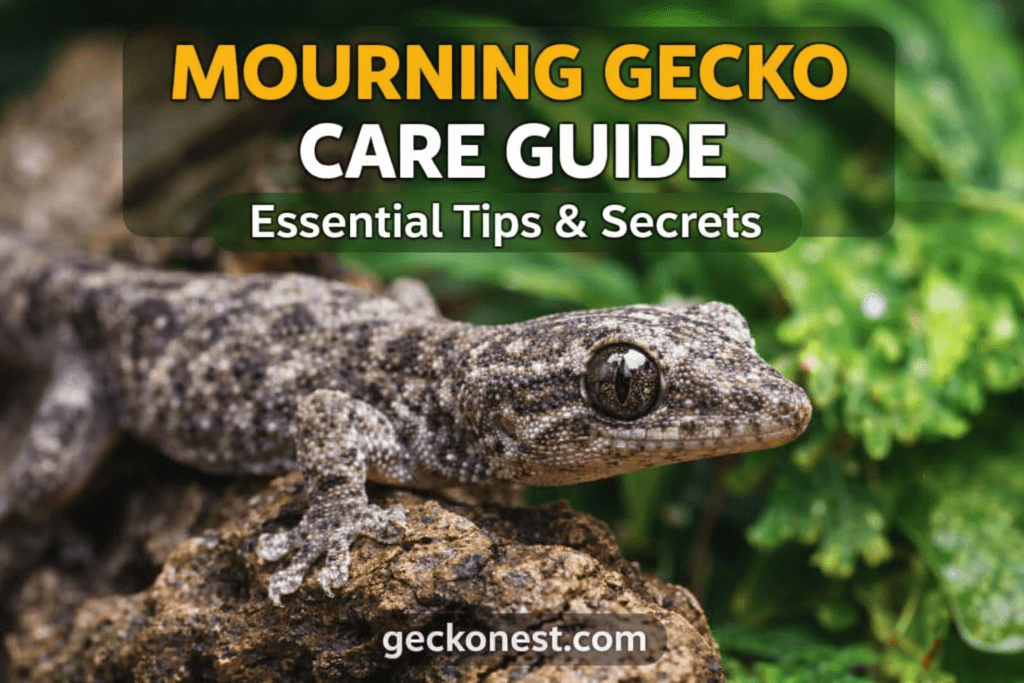
If you’re researching mourning gecko care, prepare yourself for one of the weirdest—and frankly coolest—reptiles in the hobby.
These tiny geckos look adorable, climb like caffeinated ninjas, and reproduce without males like nature accidentally turned on creative mode.
Yes… really.
Mourning geckos are famous for being:
- tiny escape artists
- surprisingly active
- ridiculously fun to watch
- and biologically confusing enough to make your high school science teacher proud
They have very specific humidity, enclosure, feeding, and heating needs.
And if you get them wrong?
Well… your gecko may start protesting harder than a cat being introduced to bath water.
What Is a Mourning Gecko?
The mourning gecko (Lepidodactylus lugubris) is a tiny tropical gecko species known for its:
- all-female colonies
- parthenogenetic reproduction
- arboreal climbing behavior
- small adult size
- communal nature
Unlike many pet reptiles, these geckos can reproduce without males.
That means:
Buy two females?
Congratulations.
You may have accidentally started a tiny gecko empire.
If you want to learn more about the natural history and scientific classification of this fascinating species, check out this detailed mourning gecko species overview, which explains their origin, taxonomy, and unique reproductive biology.
Why Mourning Geckos Are So Popular
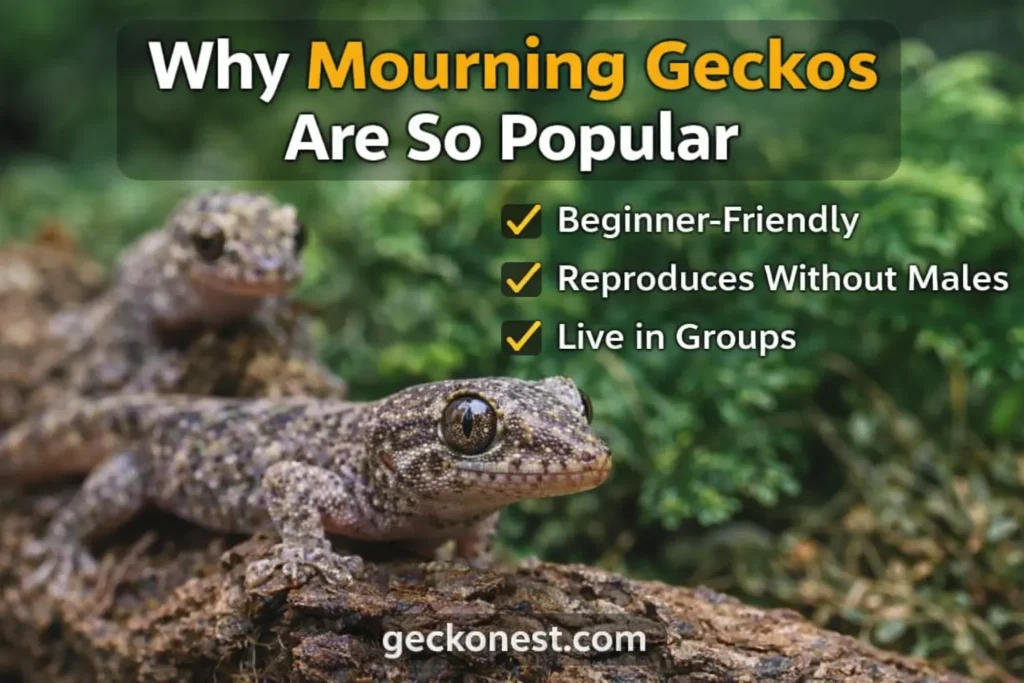
There’s a reason reptile keepers love them:
Pros
- Beginner-friendly once setup is correct
- Small enclosure footprint
- Very active and entertaining
- Fascinating breeding behavior
- Can live communally
- Great display pets
Cons
- Extremely fast
- Difficult to handle
- Escape artists of Olympic caliber
- Tiny babies can fit through absurdly small gaps
Think of them as:
“The Ferrari of tiny geckos—fast, beautiful, and absolutely gone if you leave the door open for 0.4 seconds.”
Mourning Gecko Size: How Big Do They Get?
Adult mourning geckos typically reach:
Average Size
- 3 to 4 inches total length
- Around 2–5 grams
That makes them:
Roughly the size of a very determined house key.
Despite their tiny size, they use every inch of vertical space available.
Mourning Gecko Lifespan
With proper mourning gecko care, lifespan is typically:
- 8–10 years average
- Some live 10+ years
That’s a solid commitment for a reptile smaller than your thumb.
Mourning Gecko Enclosure Setup
A proper setup is one of the most important parts of mourning gecko care.
Minimum Tank Size
For 1–3 adults:
- 12x12x18 inches minimum
Better options:
- 18x18x24 inches
Vertical space matters more than floor space.
Why?
Because mourning geckos are arboreal.
They don’t want a mansion.
They want a treehouse.
For broader reptile husbandry guidance and evidence-based gecko care practices, the ReptiFiles reptile care resource library offers excellent educational information used by many reptile keepers.
Mourning Gecko Tank Setup Essentials
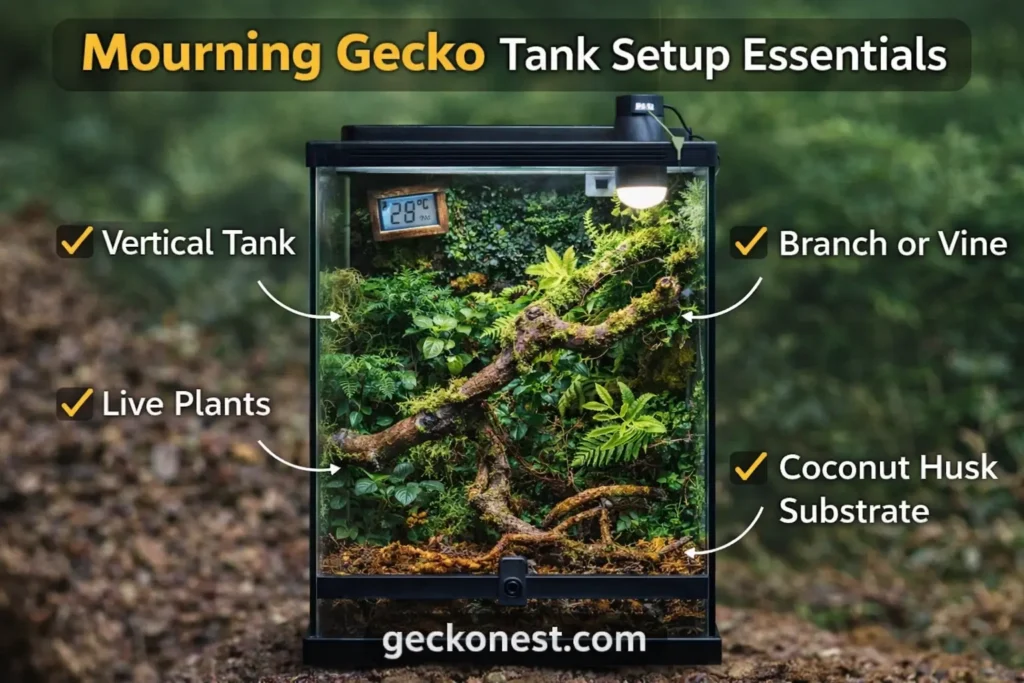
Your enclosure should include:
Climbing Branches
Provide:
- Cork bark
- Driftwood
- Vertical branches
- Bamboo
Dense Foliage
Use:
- Pothos
- Fake vines
- Bromeliads
- Hanging plants
Hides
Even arboreal geckos want privacy.
Provide:
- Elevated cork tubes
- Plant cover
- Hidden ledges
Substrate for Mourning Geckos
Best options:
- Coconut fiber
- Bioactive substrate
- ABG mix
- Paper towel (quarantine only)
Avoid:
- Dry desert substrates
- Loose sand
- Walnut shell
Because yes—
Tiny gecko + giant substrate chunk = bad math.
Temperature for Mourning Gecko Care
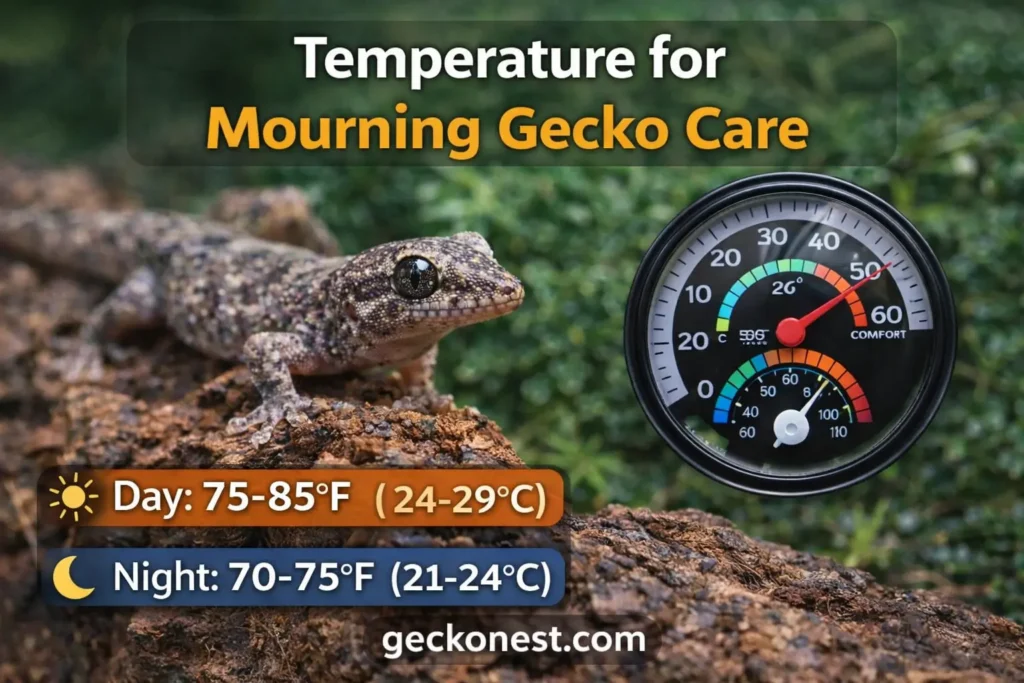
Ideal ambient temperatures:
Daytime
- 75–82°F (24–28°C)
Warm Spot
- 82–85°F max
Night
- 70–75°F
Avoid overheating.
Mourning geckos are tropical—not tiny dragons.
Do Mourning Geckos Need Heat?
Usually:
Yes, if your room is below 72°F regularly.
Use:
- Low wattage heat lamp
- Nano ceramic heater
- Overhead heating preferred
Avoid heat mats when possible.
They climb.
They don’t sit on the floor like leopard geckos waiting for room service.
Do Mourning Geckos Need UVB?
This is one of the most searched questions in mourning gecko care.
Short Answer:
UVB is highly recommended.
Best setup:
- 2–5% UVB bulb
- Shade options throughout enclosure
Benefits include:
- Better calcium metabolism
- More natural behavior
- Improved long-term health
Can they survive without UVB?
Sometimes.
Should you skip it?
Not if you want optimal husbandry.
Mourning Gecko Humidity Requirements
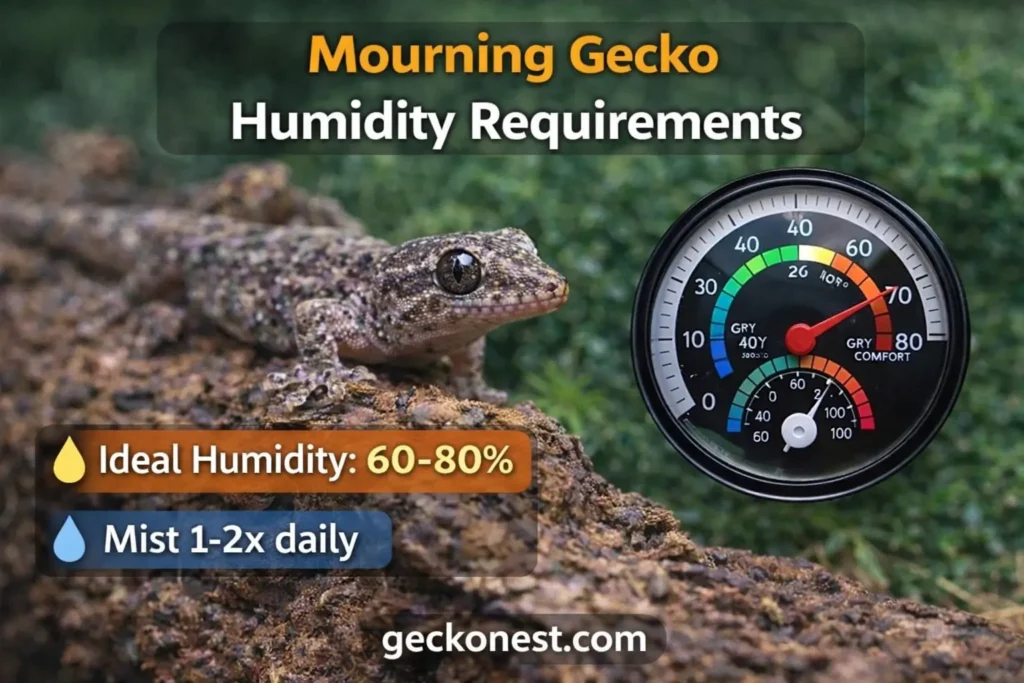
Ideal humidity:
- 60–80%
Allow natural fluctuations:
- Higher after misting
- Lower during daytime dry-out
Misting Schedule
Typically:
- 1–2 times daily
Your tank should not stay swampy 24/7.
If it smells like a Florida marsh…
You have overdone it.
What Do Mourning Geckos Eat?
Diet includes:
Primary Foods
- Crested gecko diet / gecko MRP
- Small feeder insects
Best Feeder Insects
- Flightless fruit flies
- Pinhead crickets
- Small roaches
- Bean beetles
Can Mourning Geckos Eat Fruit?
Technically some lick fruit…
But do not rely on fruit.
Use proper formulated gecko diet instead.
Fruit alone is like feeding your child only applesauce and hoping algebra works out.
Feeding Schedule for Mourning Geckos
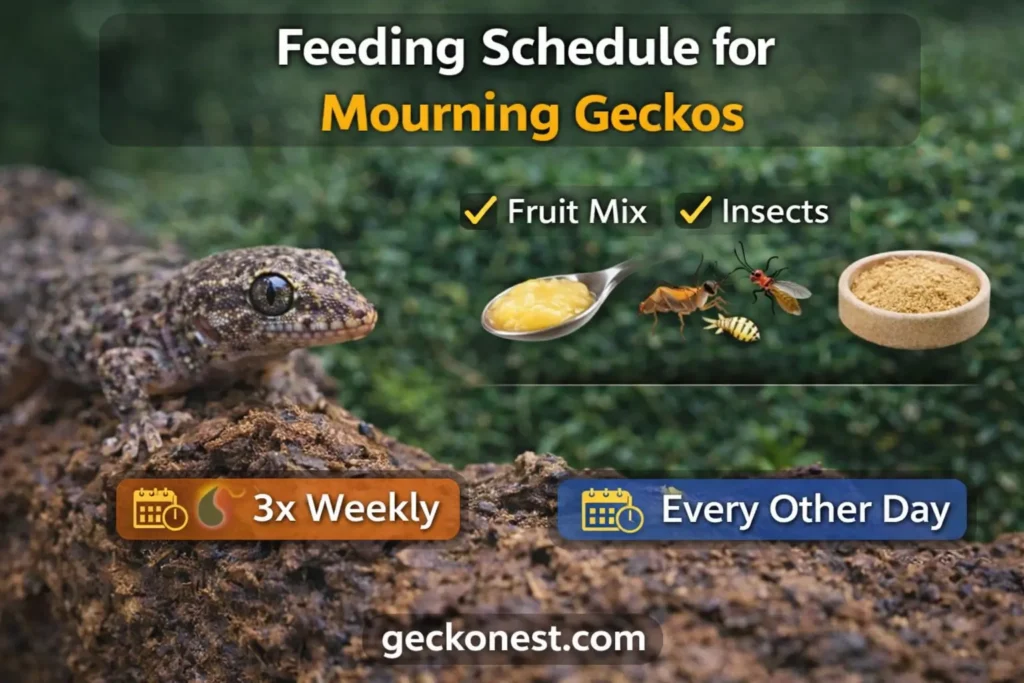
Adults
- CGD / prepared diet: 3–4x weekly
- Insects: 1–2x weekly
Juveniles
- Feed more frequently
Always dust insects with calcium.
Are Mourning Geckos Good Pets?
Yes—if you want a display pet.
No—if you want a cuddly reptile.
They are:
- not ideal for handling
- too fast for beginners wanting interaction
- better for observing than touching
Think:
“Tiny rainforest TV subscription.”
Can Mourning Geckos Live Together?
Yes.
In fact, communal setups are common.
Keep Them In:
- Female groups
- Similar-sized individuals
Monitor for:
- Bullying
- Food competition
- Dominance behavior
Are All Mourning Geckos Female?
Nearly all captive mourning geckos are female.
That’s why this species is famous.
How Do Mourning Geckos Reproduce?
Through parthenogenesis.
Meaning:
Females clone themselves.
Nature really said:
“We don’t need males for this one.”
Do Mourning Geckos Reproduce Asexually?
Yes.
This is one of the coolest facts in reptile keeping.
A single female can produce fertile eggs without mating.
Mourning Gecko Eggs and Breeding
Females lay:
- Usually 2 eggs at a time
- Every 4–6 weeks
Eggs are often glued to surfaces.
Which means removing them can be…
An emotional experience.
Baby Mourning Gecko Care
Baby mourning geckos are:
- Extremely tiny
- Extremely fast
- Extremely capable of vanishing into alternate dimensions
Raise separately if needed.
Use:
- Tiny secure grow-out enclosures
- Paper towel substrate
- Frequent misting
- Small food portions
Common Mourning Gecko Care Mistakes
1. Underestimating Escape Risk
They fit through absurdly tiny gaps.
2. Tank Too Dry
They are tropical geckos.
Not crunchy geckos.
3. No Vertical Space
Horizontal tanks waste their natural behavior.
4. No UVB
Survival ≠ thriving.
5. Overhandling
These are display animals.
Not pocket lizards.
Bioactive Setup for Mourning Geckos
Bioactive works exceptionally well because:
- They love planted enclosures
- Humidity is easier to maintain
- Looks stunning
- Encourages natural behavior
Recommended cleanup crew:
- Springtails
- Isopods (small species)
Are Mourning Geckos Beginner Friendly?
Yes—with caveats.
They are beginner-friendly if:
- You want a display gecko
- You understand humidity/husbandry basics
- You can secure an enclosure properly
They are NOT ideal if:
- You want handling
- You dislike insects
- You panic when tiny things move quickly
Final Verdict: Is Mourning Gecko Care Easy?
Once setup is dialed in?
Yes.
But they require more precision than many beginners expect.
They may be tiny…
Yet they somehow carry the energy of:
- a parkour athlete
- a magician
- and a tax auditor looking for enclosure weaknesses
Get their environment right, and mourning geckos become one of the most fascinating micro-reptiles in the hobby.
Yes, mourning gecko care is beginner friendly for keepers who want a display pet rather than a handling reptile. They are easy to maintain once humidity, temperature, and enclosure setup are correct.
For proper mourning gecko care, a vertical 12x12x18 enclosure is the minimum for a small group, though larger planted terrariums are strongly recommended.
While some keepers raise them without UVB, modern mourning gecko care standards recommend low-level UVB lighting to support calcium metabolism and natural behavior.
Successful mourning gecko care requires humidity between 60% and 80%, with natural daily fluctuations after misting.
A balanced mourning gecko care diet includes crested gecko diet or other prepared gecko formulas along with tiny feeder insects like fruit flies or pinhead crickets.
Yes, communal housing is common in mourning gecko care, and they often do well in female groups when enough space and hiding spots are provided.
One of the most unique parts of mourning gecko care is understanding that they reproduce through parthenogenesis, meaning females can produce fertile eggs without males.







Helpful Leopard Gecko Tools
Quick calculators and practical tools for feeding, humidity, health, and enclosure setup.
Feeding Calculator
Estimate the right feeding amount for your leopard gecko.
Open ToolCalcium & D3 Calculator
Plan calcium and vitamin D3 more easily and accurately.
Open ToolHumidity Checker
Check if your terrarium humidity is in a safe range.
Open ToolHealth Symptom Checker
Review possible health issues based on symptoms.
Open ToolSetup Builder
Build and review the ideal leopard gecko enclosure setup.
Open ToolGecko Age Calculator
Estimate your gecko’s age and life stage.
Open ToolElectricity Cost Calculator
Estimate terrarium electricity costs by day, month, and year.
Open ToolBreeding Compatibility
Check if two leopard geckos are compatible for breeding.
Open ToolPet Name Calculator
Find a fun and fitting name for your leopard gecko.
Open ToolWeekly Care Planner
Create a simple weekly care routine for your gecko.
Open Tool