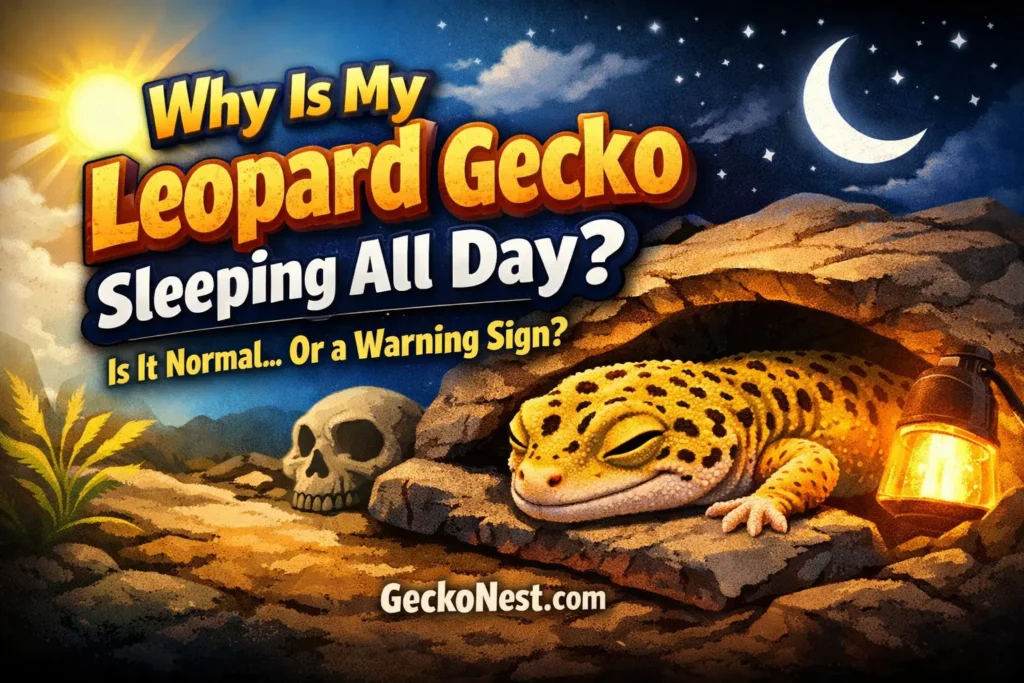
If you’re wondering why is my leopard gecko sleeping all day, take a breath before planning a tiny reptile intervention.
In most cases, a leopard gecko sleeping through the day is completely normal. These little spotted weirdos are naturally nocturnal (technically crepuscular—because reptiles love being academically annoying), which means they’re built to snooze while you’re awake and throw secret lizard parties after dark.
That said…
If your gecko is sleeping all day and showing other symptoms like not eating, losing weight, or acting like a potato at night too, then something may be off.
Many new owners ask, why is my leopard gecko sleeping all day, especially when their pet suddenly becomes less visible during daylight hours.
Are Leopard Geckos Supposed to Sleep All Day?
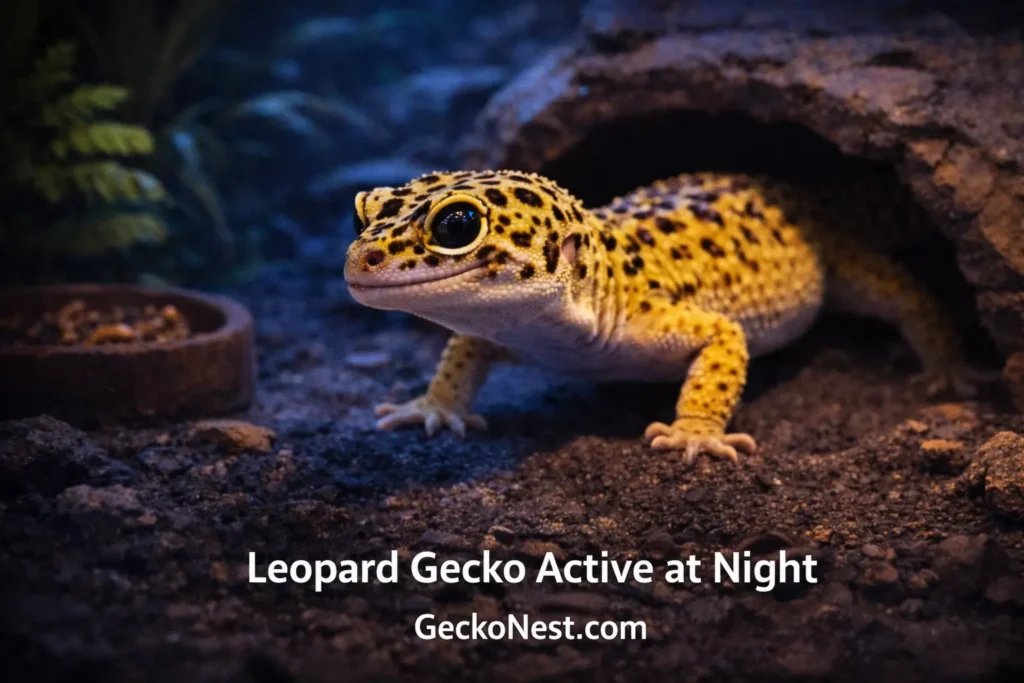
Yes — sleeping all day is normal leopard gecko behavior.
In the wild, leopard geckos spend daylight hours:
- Hidden in rock crevices
- Avoiding predators
- Conserving energy
- Judging humans silently from the shadows
They typically become active:
- At dusk
- During the night
- In the early morning
So if your gecko spends all afternoon looking like a decorative statue inside its hide, that’s expected.
If you want a deeper reference for enclosure basics, heating, hides, and overall husbandry, check out this science-based leopard gecko care guide from ReptiFiles.
Understanding why is my leopard gecko sleeping all day starts with knowing that this species is naturally most active after sunset.What Normal Daytime Behavior Looks Like
A healthy leopard gecko will usually:
- Sleep or rest inside a hide
- Barely move while lights are on
- Occasionally reposition dramatically for no reason
- Wake up when the room gets dim
- Explore at night like a tiny cryptid
If your gecko:
- Eats normally
- Maintains weight
- Poops regularly
- Becomes active at night
Then daytime sleeping is not a concern.
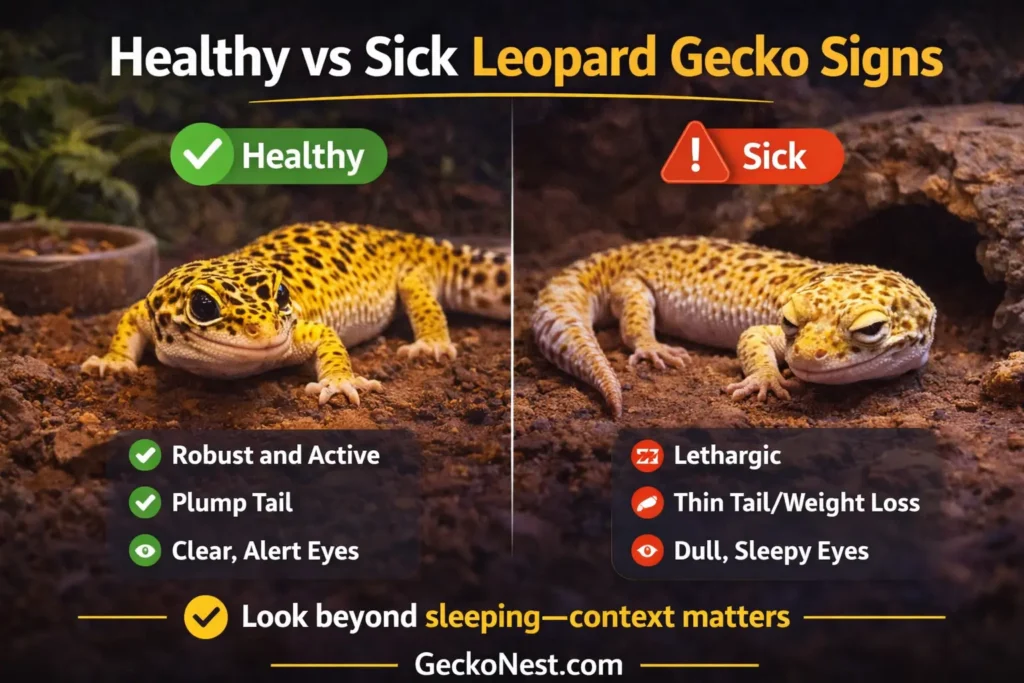
When Sleeping All Day Is NOT Normal
Sleeping all day becomes concerning when paired with other symptoms.
Warning Signs Include:
- Not eating for 2–3 weeks
- Noticeable weight loss
- Tail thinning
- Sunken eyes
- Weak grip
- Diarrhea or foul stool
- No nighttime activity
Sleeping alone? Fine.
Sleeping + decline? Problem.
If your gecko is sleeping all day along with weight loss, diarrhea, or appetite problems, this veterinary resource on parasitic diseases of reptiles can help you understand when symptoms may point to something more serious.
Why Is My Leopard Gecko Sleeping All Day and Not Active at Night?
If your leopard gecko is sleeping all day and staying inactive at night, the most common culprit is poor husbandry.
Temperature Problems: The #1 Hidden Cause
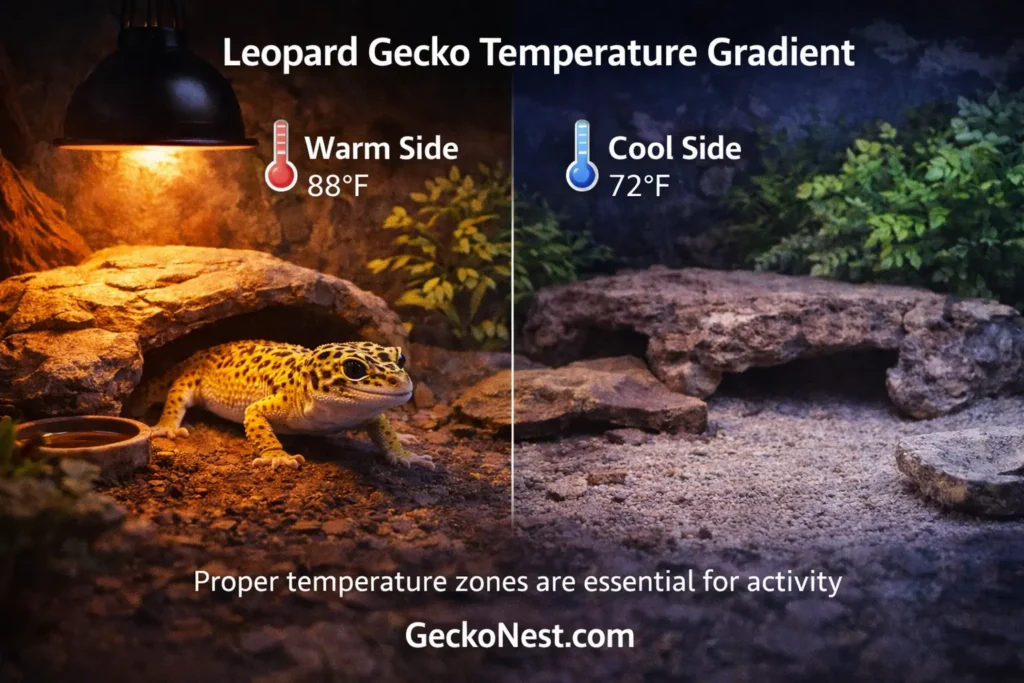
Cold geckos are sleepy geckos.
If you’re still asking why is my leopard gecko sleeping all day even at night, temperature issues are one of the first things to investigate.
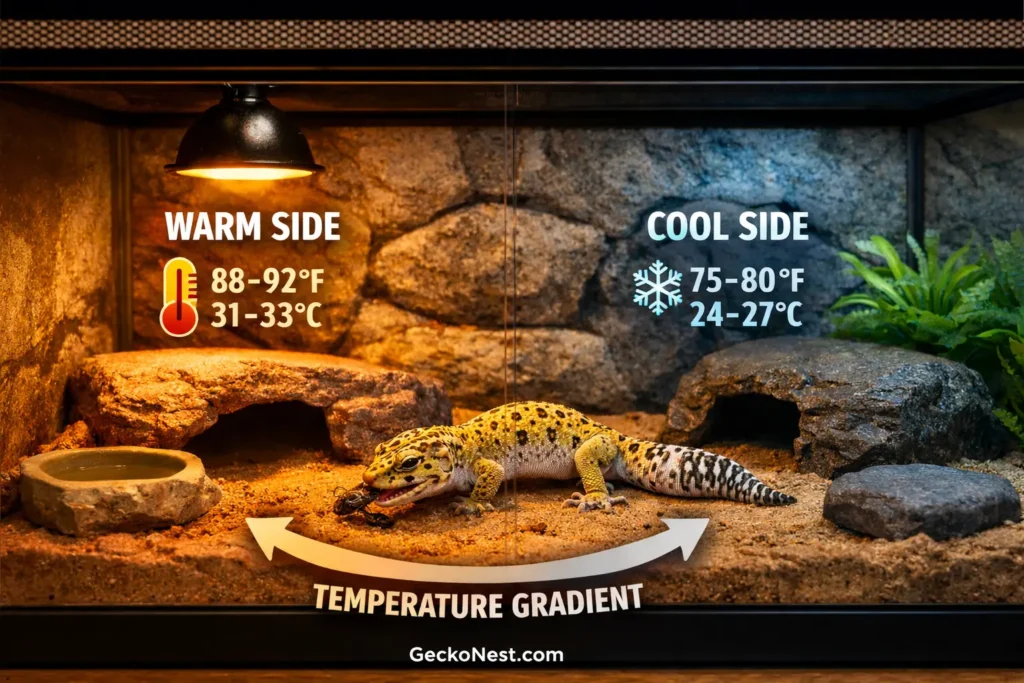
Ideal Temperature Range
- Warm side surface: 88–92°F
- Cool side: 75–80°F
- Night temps: Above 68°F
If temps are too low:
- Metabolism slows
- Appetite drops
- Digestion weakens
- Activity crashes
What To Do
- Use a thermostat
- Measure surface temps with temp gun
- Check warm hide surface temperature
- Verify nighttime temps don’t plummet
If you haven’t checked temps yet, don’t diagnose disease before diagnosing your thermostat.
That’s like blaming your car engine when it has no fuel.
Tank Setup Stress Can Make Leopard Geckos Hide Constantly
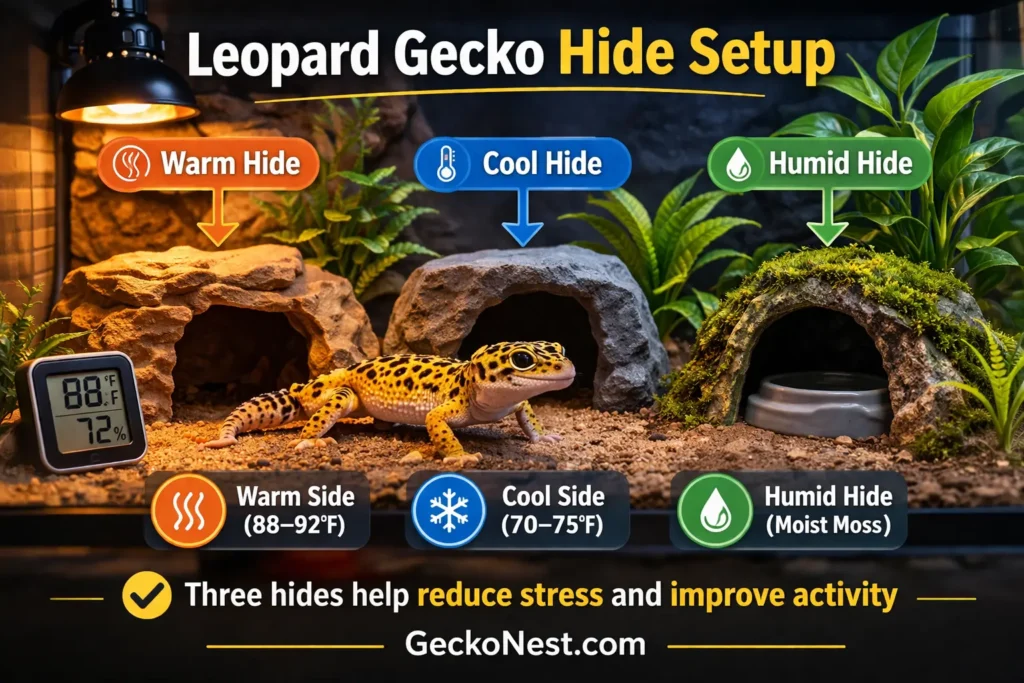
Sometimes the answer to why is my leopard gecko sleeping all day is simple:
Your gecko doesn’t feel safe.
Minimum Hide Setup
- Warm hide
- Cool hide
- Humid hide
Without enough cover, they may:
- Hide excessively
- Avoid coming out at night
- Become stressed and inactive
Other stress factors:
- Tank under 20 gallons
- Bright overhead lights
- Loud room placement
- Frequent handling
- Sudden enclosure changes
Brumation: Reptile Winter Mode
During cooler months, leopard geckos may enter brumation.
Think of it as reptile low-power mode.
During brumation they may:
- Sleep more
- Eat less
- Move minimally
As long as they:
- Maintain weight
- Show no weakness
- Have no illness symptoms
…it may be perfectly normal seasonal behavior.
Why Is My Leopard Gecko Sleeping All Day and Not Eating?
Now we investigate further.
Shedding
Before shedding, geckos often:
- Hide more
- Eat less
- Look pale/dull
Usually lasts only a few days.
Stress / New Environment
Common causes:
- New enclosure
- New substrate
- Tank moved
- New décor added
Adjustment can take 1–2 weeks.
Illness
Potential red flags:
- Swollen belly
- Rapid weight loss
- Persistent lethargy
- Weak movement
- Severe appetite loss
At this point, veterinary evaluation is wise.
Lighting Issues: Too Bright = Too Hidden
Leopard geckos do not need stadium-level brightness.
Overly intense lighting can cause:
- Stress
- Hiding
- Avoidance behavior
- Reduced nighttime activity
Low UVB is beneficial.
Interrogation-room lighting is not.
Could Parasites Cause Excessive Sleeping?
Parasites are possible only if additional symptoms exist.
Watch for:
- Tail thinning
- Refusal to eat
- Diarrhea
- Weight loss
- General weakness
A reptile vet can confirm with fecal testing.
Age Matters More Than People Think
Older leopard geckos naturally:
- Sleep more
- Move less
- Eat less frequently
- Act less chaotic
It’s not sadness.
It’s retirement.
Step-by-Step Checklist If Your Leopard Gecko Sleeps All Day
- Check temperatures
- Confirm warm hide setup
- Reduce bright lighting
- Ensure 3 hides minimum
- Review recent changes
- Observe nighttime activity
- Track weekly weight
- Monitor stool quality
- Reduce handling
- See vet if symptoms continue
When To See a Vet
Seek professional help if your gecko has:
- No appetite for 2–3+ weeks
- Weight loss
- Tail thinning
- Diarrhea
- Swelling
- Breathing issues
- Nighttime lethargy
In the end, most cases of why is my leopard gecko sleeping all day come down to normal nocturnal behavior rather than illness.
Final Thoughts
If you’re asking why is my leopard gecko sleeping all day, the answer is:
Usually because it’s a leopard gecko.
They are nocturnal little cave goblins designed to nap all day and become active when the world gets dark.
But if sleeping comes with:
- Appetite loss
- Weight loss
- Weakness
- No nighttime activity
Then it’s time to investigate.
Most of the time?
They’re just tiny spotted night owls doing exactly what evolution intended.
In most cases, the answer to why is my leopard gecko sleeping all day is simple: leopard geckos are naturally nocturnal and sleep during daylight hours. This is normal unless paired with appetite loss, weight loss, or no nighttime activity.
Yes, leopard geckos commonly sleep inside their hides during the day. Hiding while sleeping is part of their natural instinct to stay protected and conserve energy.
If your leopard gecko is sleeping all day and not eating, possible causes include shedding, brumation, stress, improper temperatures, or illness. If symptoms persist, further investigation is needed.
You should only worry if sleeping all day comes with concerning symptoms like weight loss, diarrhea, weakness, tail thinning, or lack of nighttime activity.
If your leopard gecko is no longer active at night, common causes include low temperatures, stress, illness, parasites, or seasonal brumation.







Helpful Leopard Gecko Tools
Quick calculators and practical tools for feeding, humidity, health, and enclosure setup.
Feeding Calculator
Estimate the right feeding amount for your leopard gecko.
Open ToolCalcium & D3 Calculator
Plan calcium and vitamin D3 more easily and accurately.
Open ToolHumidity Checker
Check if your terrarium humidity is in a safe range.
Open ToolHealth Symptom Checker
Review possible health issues based on symptoms.
Open ToolSetup Builder
Build and review the ideal leopard gecko enclosure setup.
Open ToolGecko Age Calculator
Estimate your gecko’s age and life stage.
Open ToolElectricity Cost Calculator
Estimate terrarium electricity costs by day, month, and year.
Open ToolBreeding Compatibility
Check if two leopard geckos are compatible for breeding.
Open ToolPet Name Calculator
Find a fun and fitting name for your leopard gecko.
Open ToolWeekly Care Planner
Create a simple weekly care routine for your gecko.
Open Tool