Let’s be honest for a second.
If you are running a heat mat without a leopard gecko thermostat, you’re basically trusting the universe to manage temperature control. And the universe? Well… it’s busy doing galaxy things.
A leopard gecko thermostat is not some fancy optional gadget. It’s the tiny device standing between:
- a comfortable reptile spa, and
- a mini dragon oven scenario.
And your gecko definitely didn’t sign up to become barbecue.
In this guide we’ll break down:
- Do leopard geckos need a thermostat?
- What is the best thermostat for leopard gecko tanks
- How to set up a leopard gecko heat mat thermostat
- And whether a dimming thermostat leopard gecko keepers talk about is actually necessary
No boring lecture. Just practical reptile wisdom.
Table of Contents
- Do Leopard Geckos Need a Thermostat
- Best Thermostat for Leopard Gecko Tanks
- Dimming Thermostat Leopard Gecko Owners Ask About
- Leopard Gecko Heat Mat Thermostat Setup
- Leopard Gecko Thermostat Temperature Settings
- What Happens If You Skip the Thermostat
- Budget vs Expensive Thermostats
- Common Thermostat Mistakes
- Final Thoughts
Do Leopard Geckos Need a Thermostat?
Yes. Absolutely. No debate.
A leopard gecko thermostat is essential because leopard geckos rely on belly heat to digest their food.
Your heat mat may say 8W or 16W, but that number does not magically regulate temperature.
Without a leopard gecko thermostat, your tank can:
- Overheat the glass
- Create hotspots above 110°F
- Stress your gecko
- Or run too cold in winter
Think of it this way.
Leaving a heat mat running without a thermostat is like leaving your oven on all day and hoping it somehow stays at 90°F.
Spoiler alert: it won’t.
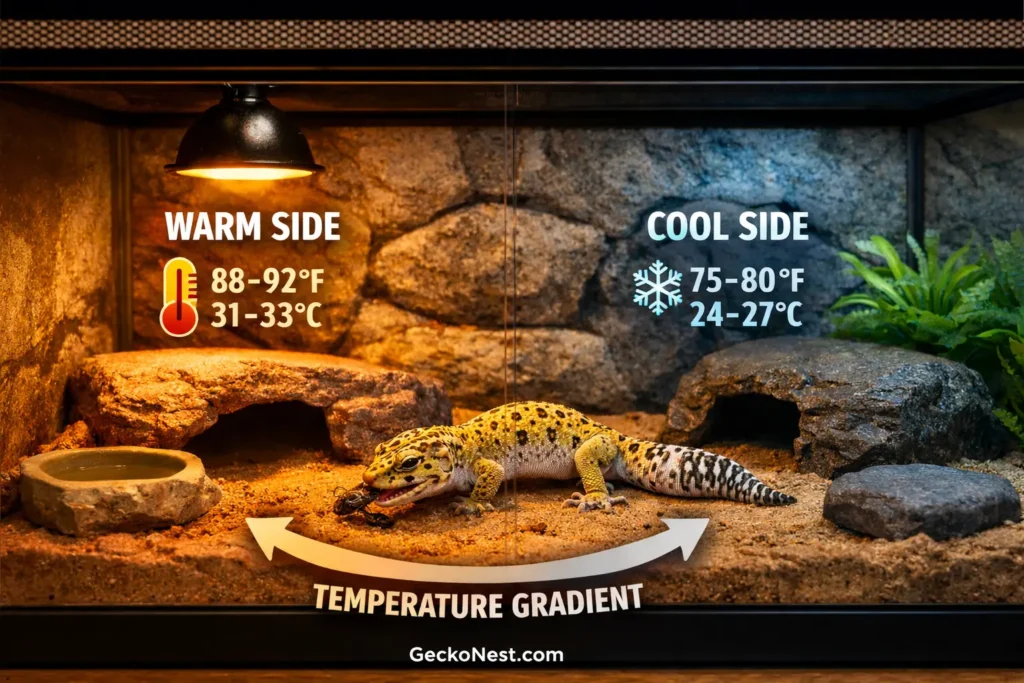
A thermostat keeps the warm side stable around 88–92°F, which is the sweet spot for digestion.
Best Thermostat for Leopard Gecko Tanks
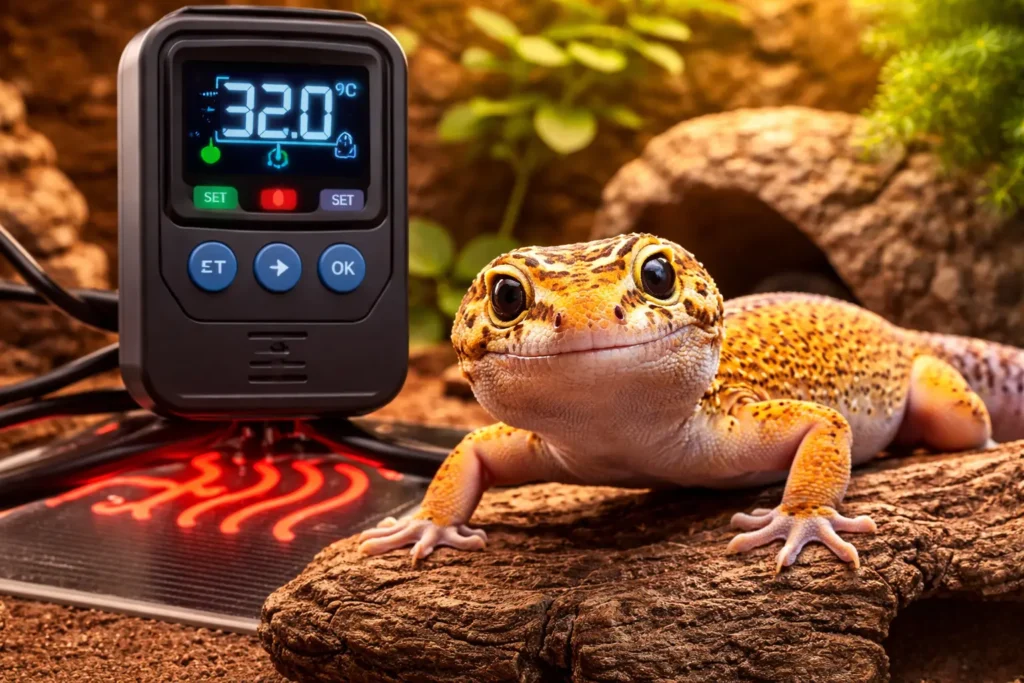
When people search best thermostat for leopard gecko setups, they usually imagine some ultra-advanced reptile control system.
Something that looks like it belongs inside a NASA rocket.
Relax.
You usually don’t need that.
There are three main thermostat types.
1. On/Off Thermostat
The classic.
Simple. Reliable. Affordable.
It works by:
- Turning the heat mat on
- Turning the heat mat off
Pros:
- Budget friendly
- Easy to use
- Perfect for heat mats
For most beginner setups, an on/off leopard gecko thermostat works perfectly fine.
2. Dimming Thermostat Leopard Gecko Keepers Talk About
A dimming thermostat leopard gecko setup adjusts power gradually instead of switching fully on or off.
Instead of:
ON → OFF → ON → OFF
It smoothly adjusts heat output.
This matters more for:
- heat lamps
- ceramic heaters
For a leopard gecko heat mat thermostat, it’s nice but not required.
Unless you enjoy buying reptile gear just because it sounds cool.
(No judgment. We’ve all been there.)
3. Pulse Thermostat
Pulse thermostats send rapid bursts of electricity to control heat.
They are more common with:
- ceramic heat emitters
- reptile bulbs
For a basic leopard gecko heat mat thermostat setup, it’s usually overkill.
It’s like buying a Formula 1 engine for a bicycle.
Technically impressive… but unnecessary.
Leopard Gecko Heat Mat Thermostat Setup
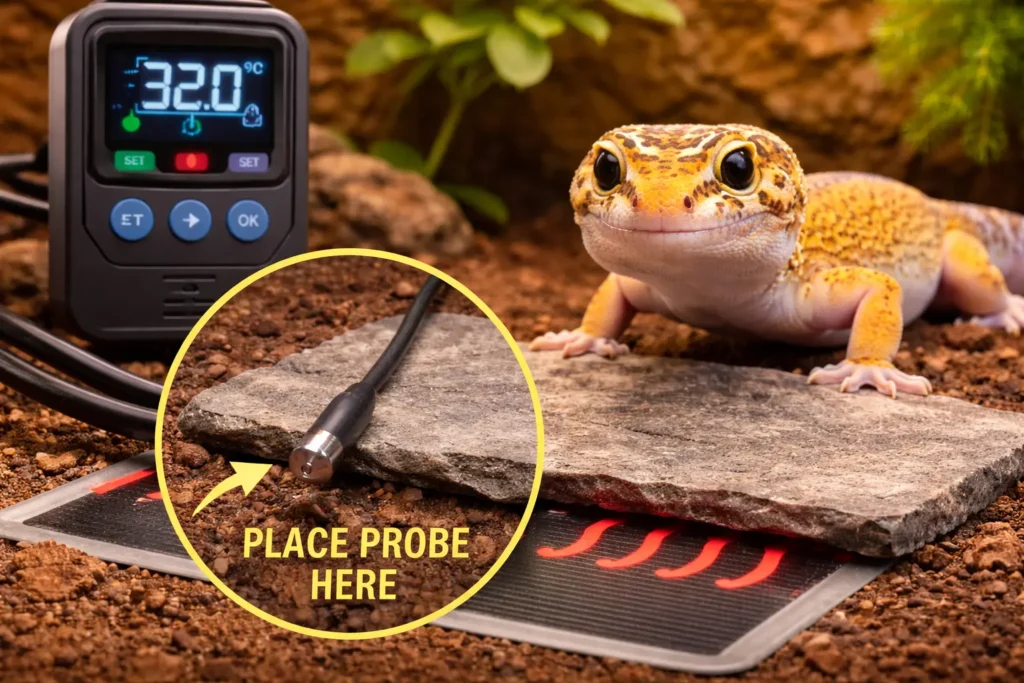
This is where most people mess up.
They buy the thermostat.
They plug it in.
Then they toss the probe somewhere random.
And suddenly temperatures start acting weird.
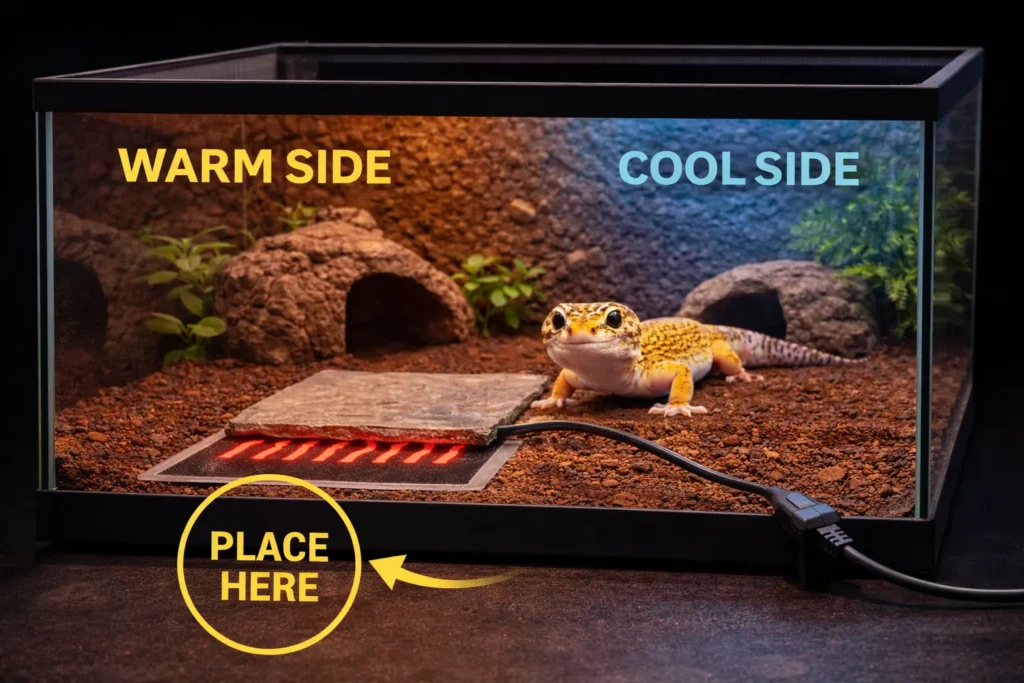
Here’s the correct leopard gecko heat mat thermostat setup.
Step-by-Step Setup
- Place the heat mat under one side of the tank (never the whole bottom).
- Plug the heat mat into the thermostat.
- Place the thermostat probe inside the tank.
- Tape the probe directly onto the warm-side floor.
- Cover it lightly with substrate or tile.
- Set the thermostat to 90°F (32°C).
Probe placement is critical.
If the probe hangs in the air, temperature readings become inaccurate.
And inaccurate thermometers are basically professional liars.
Leopard Gecko Thermostat Temperature Settings
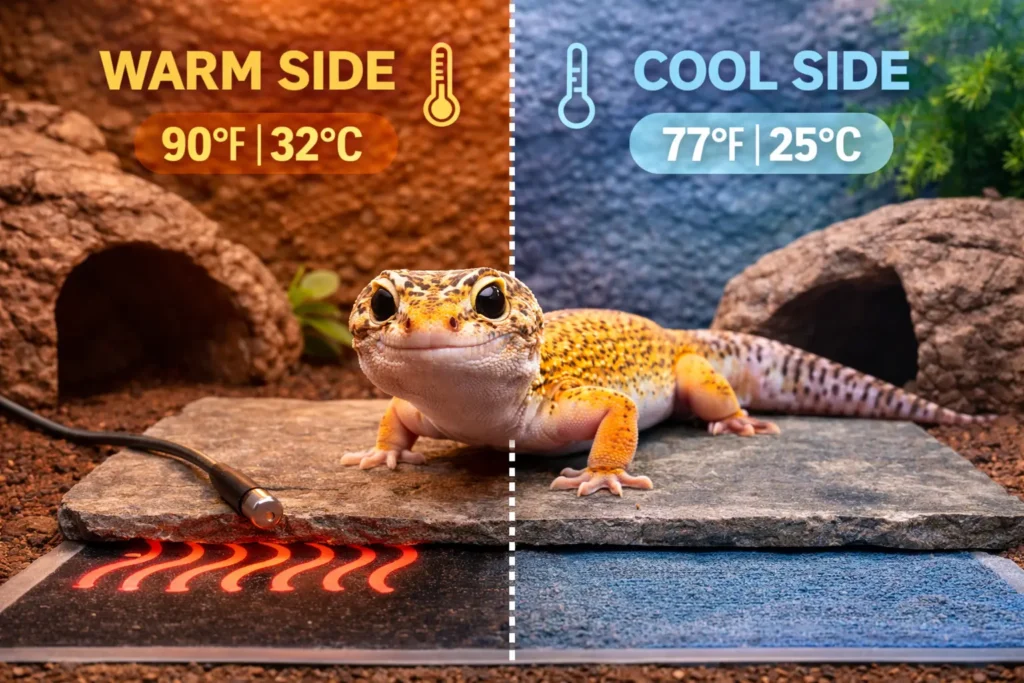
Correct leopard gecko thermostat temperature settings help digestion and prevent stress.
Ideal temperature zones
Warm side surface temperature
88–92°F (31–33°C)
Cool side temperature
72–78°F
Do not guess.
Do not touch the glass and say
“Hmm… feels warm enough.”
Use a digital infrared thermometer gun.
If you want a deeper dive into proper reptile temperatures, the excellent guide at ReptiFiles Leopard Gecko Care Guide explains why stable heating is critical for digestion and metabolism. Think of it as your gecko’s version of a perfectly heated pizza oven — except hopefully less dramatic.
Your gecko unfortunately cannot send you a text message saying:
“Hey… it’s like 107°F down here.”
What Happens If You Skip the Thermostat?
Let’s imagine a very realistic scenario.
You feed your gecko.
It doesn’t digest properly.
It stops eating.
You panic.
Then at 2 AM you are Googling:
“Why won’t my leopard gecko eat?”
Meanwhile the real problem is simple.
No leopard gecko thermostat = unstable heat.
A leopard gecko heat mat thermostat costs about $20–40 and prevents that entire drama.
That is cheaper than one emergency reptile vet visit.
And also cheaper than your emotional meltdown at 2 AM.
Budget vs Expensive Thermostats
Here’s a little secret.
For heat mats, even affordable thermostats work great if:
- the probe is accurate
- the device has good reviews
- temperature stability is consistent
You do not need a NASA-grade reptile controller.
You just need stable heat.
Your gecko is not planning a moon landing.
Common Thermostat Mistakes
Even experienced reptile keepers sometimes make these mistakes.
Avoid them.
❌ Plugging the heat mat directly into the wall
❌ Letting the probe hang in the air
❌ Setting the thermostat too high “just to be safe”
❌ Never checking temperatures during winter
Room temperature changes affect terrariums.
When winter hits, tanks behave differently.
Just like your home heating bill suddenly says:
“Hello. I missed you.”
Quick Reality Check
If your leopard gecko setup currently has:
Heat mat ✔
No thermostat ❌
You are running your terrarium on pure vibes.
And reptiles do not thrive on vibes.
Final Thoughts
A leopard gecko thermostat is not an accessory.
It is the safety system of your entire tank.
Whether you choose a basic model or a dimming thermostat leopard gecko keepers prefer, the goal is simple:
Stable heat
Healthy digestion
Calm gecko
Less stress for you
And honestly?
Peace of mind is worth way more than the cost of a thermostat.
Leopard Gecko Thermostat FAQ
Leopard gecko thermostat kullanımı hakkında en sık sorulan sorular burada. Çünkü “ısıtıcıyı fişe taktım, gerisi kader” yöntemi pek başarılı sonuçlar vermiyor.
Do leopard geckos need a thermostat?
Yes, leopard geckos need a thermostat. A leopard gecko thermostat helps control the heat source, prevents overheating, and keeps the warm side in a safe digestion range of around 88–92°F. Without one, a heat mat can become too hot or too cold depending on the room temperature.
What is the best thermostat for a leopard gecko?
The best thermostat for a leopard gecko depends on the heat source. For most heat mats, a reliable on/off thermostat works very well. If you are using a heat lamp or want smoother control, a dimming thermostat can be a great upgrade.
Where should I place the thermostat probe in a leopard gecko tank?
The thermostat probe should be placed on the warm-side floor, directly above the heated area. It should be secured in place and lightly covered if needed. If the probe hangs in the air, the thermostat may read the wrong temperature and your gecko could end up living in either a freezer or a tiny dragon oven.
What temperature should a leopard gecko thermostat be set to?
Most keepers set a leopard gecko thermostat to around 90°F (32°C) for the warm side surface. The ideal range is usually 88–92°F (31–33°C). Always verify the actual surface temperature with a digital thermometer or infrared temp gun.
Can I use a heat mat without a thermostat for my leopard gecko?
No, using a heat mat without a thermostat is risky. Heat mats do not regulate themselves, so they can overheat the tank floor and create dangerous hot spots. A thermostat is one of the most important safety tools in any leopard gecko setup.
Is a dimming thermostat necessary for a leopard gecko?
A dimming thermostat is not usually necessary for a basic heat mat setup. It is more useful for heat lamps and ceramic heaters because it adjusts heat output more smoothly. For many leopard gecko keepers, a standard on/off thermostat is enough.
Calculate Your Reptile Tank Electricity Cost
Wondering how much your reptile tank really costs to run each month? Use our Electricity Cost Calculator for Reptile Tanks to estimate heating and lighting expenses in just a few clicks. Because surprise power bills are fun for absolutely no one.
Try the Electricity Cost Calculator