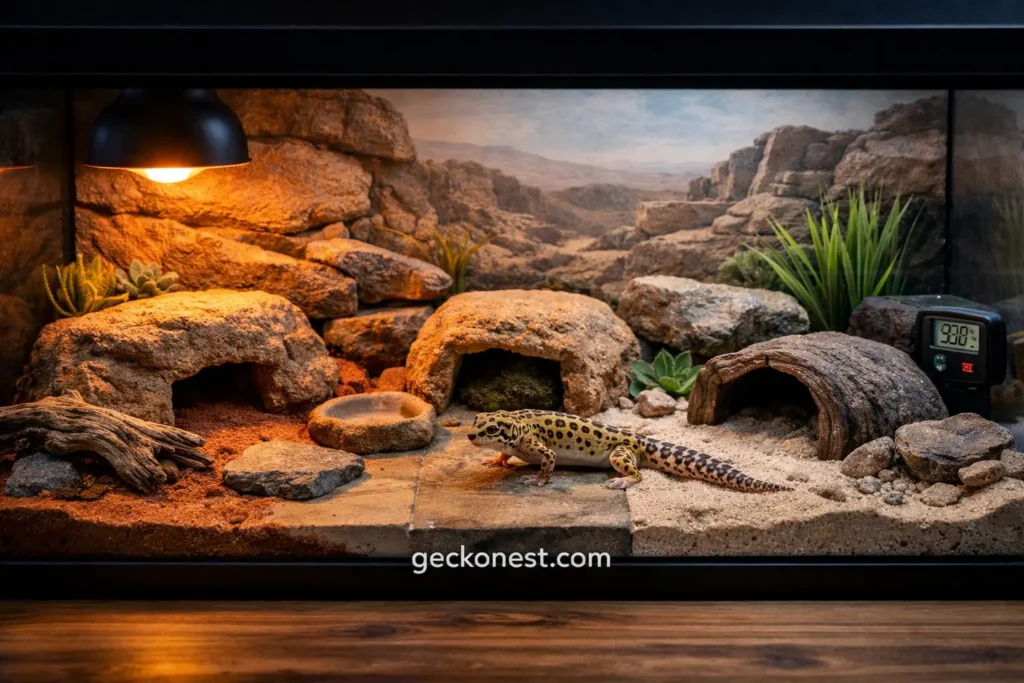
Introduction: If the Temperature Is Wrong, Everything Feels Wrong
If your leopard gecko isn’t eating, hiding more than usual, or just acting “off,” the first thing to check is leopard gecko temperature.
Not vitamins.
Not rare diseases.
Not a dramatic Reddit thread where someone claims their gecko cured itself with kale.
Temperature.
Getting the right leopard gecko temperature inside the tank is the foundation of everything else. Digestion depends on it. Activity depends on it. Appetite depends on it.
And honestly, most beginner problems trace back to the heat being slightly off. Just slightly.
The good news? Once you understand the ideal leopard gecko temperature range and how to build a proper temperature gradient, things get surprisingly simple.
No reptile science lab required.
No engineering degree needed.
Just the right numbers in the right places.
Let’s break it down clearly.
Table of Contents
- What Temperature Should a Leopard Gecko Tank Be?
- Leopard Gecko Temperature Range Explained
- What Is a Leopard Gecko Temperature Gradient?
- How to Set Up the Perfect Temperature Gradient
- Ideal Leopard Gecko Temperature (Fahrenheit + Celsius)
- Leopard Gecko Temperature at Night
- Leopard Gecko Temperature and Humidity Balance
- Leopard Gecko Temperature Chart
- Common Leopard Gecko Temperature Mistakes
- What To Check If Your Gecko Stops Eating
What Temperature Should a Leopard Gecko Tank Be?

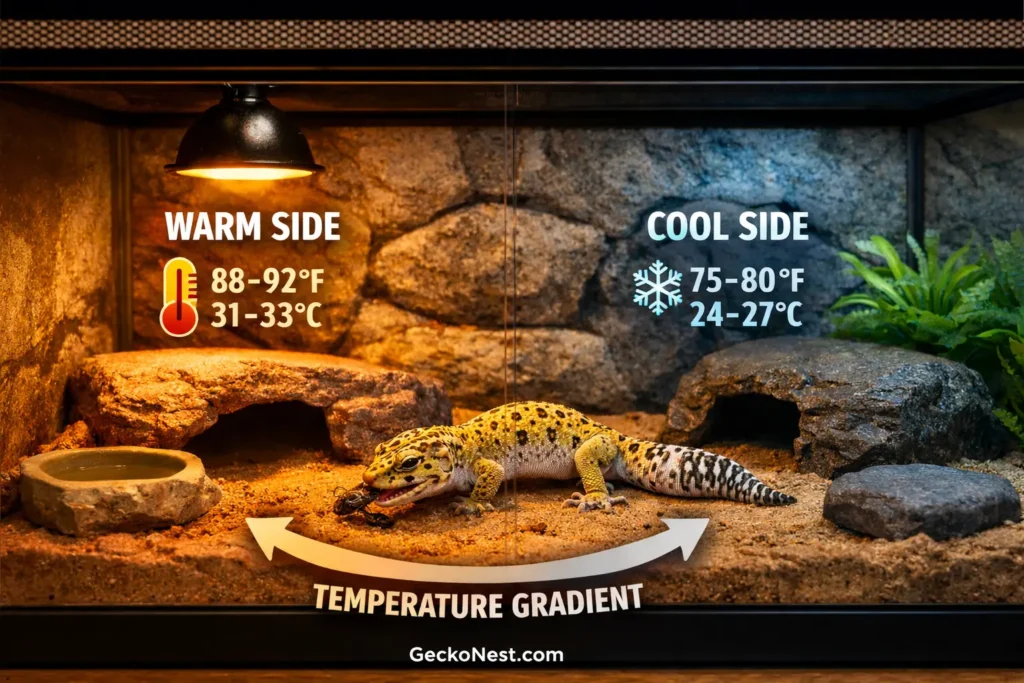
If you’re searching for the ideal leopard gecko temperature, here are the numbers most keepers follow.
Warm side surface temperature
88–92°F (31–33°C)
Cool side ambient temperature
75–80°F (24–27°C)
Night temperature minimum
~70°F (21°C)
That range represents the optimal leopard gecko temperature setup for healthy adult geckos.
When these numbers are correct:
• digestion works
• appetite stays consistent
• activity levels remain normal
When they’re wrong?
Things get weird fast.
Leopard geckos regulate body heat by moving between warm and cool areas. They don’t sweat, shiver, or grab a sweater.
They simply walk a few inches to the left.
That’s their entire thermostat system.
If the whole tank feels “kind of warm everywhere,” that’s not ideal. They need choices.
Think of it like living in a house with only one temperature setting all day. Sounds okay… until you actually live in it.
If you’re setting up a terrarium for the first time, check our Complete Leopard Gecko Care Guide for Beginners where we cover the entire setup step-by-step.
Leopard Gecko Temperature Range (Warm Side vs Cool Side)
When people search for leopard gecko temperature, they usually want a single number.
One number.
Set it.
Forget it.
Unfortunately, reptiles don’t work that way.
A proper leopard gecko temperature range means creating a temperature gradient inside the enclosure.
That means:
• one warm side
• one cool side
Warm side surface
88–92°F (31–33°C)
Cool side ambient
75–80°F (24–27°C)
That difference allows your gecko to regulate digestion and comfort.
Without that gradient, the gecko can’t regulate its body temperature.
And reptiles don’t throw tantrums when that happens.
They just stop eating.
Which then causes you to panic.
Which then causes you to Google things at 1:17 AM while whispering to a thermometer.
We’re trying to avoid that lifestyle.
What Is a Leopard Gecko Temperature Gradient?
A leopard gecko temperature gradient simply means the enclosure has two zones.
Warm side
Cool side
The gecko moves between them to regulate its body heat.
Warm side surface temperature
88–92°F (31–33°C)
Cool side air temperature
75–80°F (24–27°C)
That difference is essential for digestion.
If the tank temperature feels evenly warm everywhere, the gecko has no way to self-regulate.
And reptiles without temperature control don’t complain.
They just quietly skip meals.
Which then leads to more midnight Googling.
How to Set Up the Perfect Leopard Gecko Temperature Gradient
Good news: creating the perfect leopard gecko temperature setup is easier than people think.
1. Use an Under Tank Heat Mat (One Side Only)
One side.
Not the entire tank.
Not the middle.
Not the whole bottom like a heated pizza stone.
Just one side.
This creates the warm digestion zone that leopard geckos rely on.
They prefer belly heat, not dramatic overhead lighting.
No reptile stage lighting required.
2. Use a Thermostat
A thermostat controls the heat mat and prevents overheating.
Without one, heat mats can spike higher than expected.
And reptiles won’t complain.
They won’t bark.
They won’t meow.
They’ll just sit there politely… being uncomfortable.
Which is not ideal.
3. Place the Probe Correctly
Put the thermostat probe inside the warm hide on the substrate surface.
Not hanging in the air.
Not stuck to the glass.
The floor temperature is what your gecko actually feels.
Air temperature is interesting.
Surface temperature is what matters.
4. Measure Both Sides
Use two measurements.
• warm side probe
• cool side thermometer
If your current system is:
“I put my hand in and it feels warm.”
Congratulations.
Today we upgrade from vibes to science.
Your gecko deserves it.
Ideal Leopard Gecko Temperature (Celsius + Fahrenheit)
Here are the standard leopard gecko temperature ranges used by most keepers.
Warm side surface
88–92°F | 31–33°C
Cool side
75–80°F | 24–27°C
Night minimum
70°F | 21°C
If you constantly convert numbers in your head and get confused halfway through, you’re not alone.
Most reptile keepers end up taping these numbers somewhere near the tank.
Because nobody remembers temperature conversions during a 2 AM reptile anxiety check.
Leopard Gecko Temperature at Night
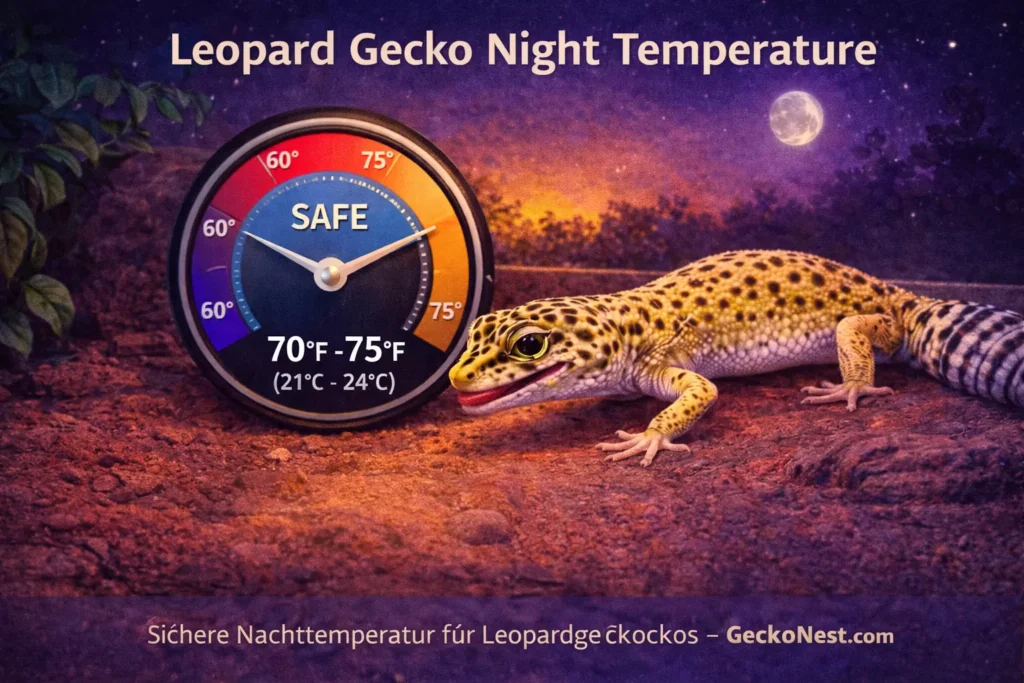
Night temperature is where many new keepers start overthinking things.
Lights go off.
The house gets quiet.
And suddenly you’re staring at the tank thinking:
“Is it too cold in there?”
Here’s the truth.
A healthy leopard gecko can safely handle nighttime temperatures around:
70°F (21°C)
That’s the standard leopard gecko temperature at night.
A small nighttime drop is actually natural.
They are desert reptiles, not spa guests who demand constant warmth.
Should the Warm Side Stay at 90°F All Night?
No.
Daytime warm side temperature should be 88–92°F.
At night it can drop as long as it does not fall below 70°F.
You don’t need blazing heat 24 hours a day.
Think of it like your house.
You probably don’t sleep with the thermostat at daytime levels either.
Do Leopard Geckos Need a Heat Lamp at Night?
Short answer: no.
Leopard geckos do not need bright heat lamps overnight.
If your room stays above 70°F, nighttime heating may not even be necessary.
If your house drops into the mid-60s°F, gentle under-tank heat is helpful.
But no — your gecko does not need a spotlight at 2 AM.
They’re not filming a wildlife documentary.
Leopard Gecko Humidity (Separate From Temperature)
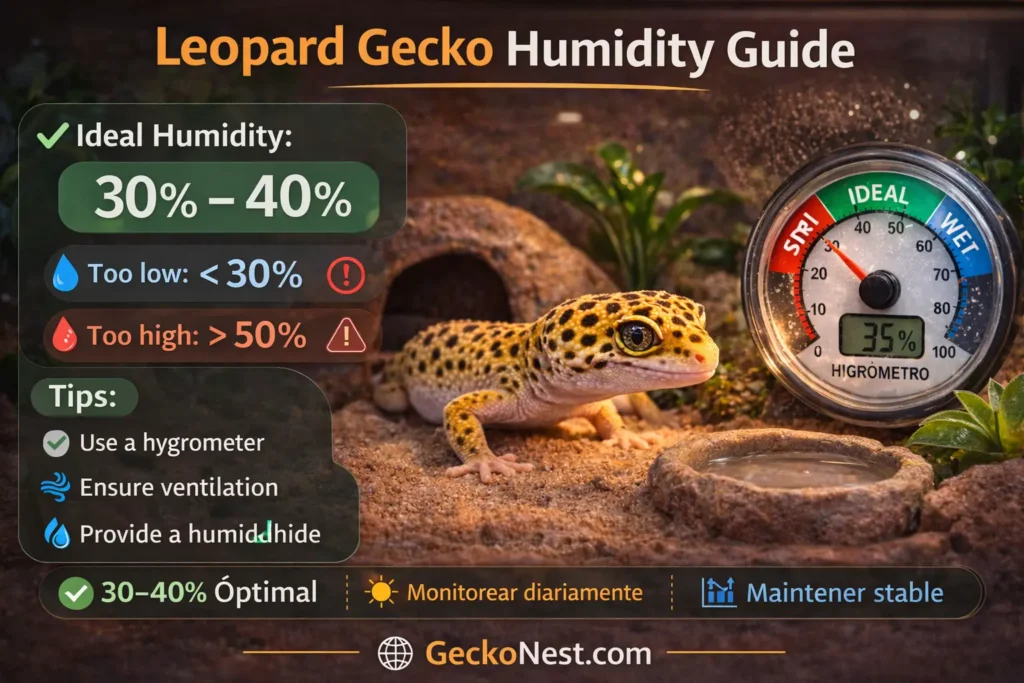
Temperature and humidity often get mixed together.
But they do completely different jobs.
Temperature affects:
• digestion
• activity
• appetite
According to the Association of Reptile and Amphibian Veterinarians (ARAV), proper heating and environmental control are essential for reptile digestion and overall health.
Humidity affects:
• shedding
• skin health
• respiratory comfort
The ideal leopard gecko temperature and humidity balance is:
Temperature warm side
88–92°F
Cool side
75–80°F
Humidity
30–40%
That’s the sweet spot.
Not tropical.
Not bone-dry desert.
Just moderate.
Leopard Gecko Temperature and Humidity Chart
Here’s the quick reference chart.
Warm side surface
88–92°F | 31–33°C
Cool side ambient
75–80°F | 24–27°C
Night minimum
~70°F | ~21°C
Humidity
30–40%
Humid hide
60–80%
Save it.
Screenshot it.
Tape it to the enclosure if needed.
Because guessing temperatures leads directly to reptile anxiety.
Common Leopard Gecko Temperature Mistakes
Most issues come from simple temperature mistakes.
Measuring Air Instead of Surface Temperature
Leopard geckos rely on belly heat.
The floor temperature inside the warm hide must be 88–92°F.
No Thermostat
Heat mats without thermostats can overheat quickly.
A thermostat keeps leopard gecko temperature stable.
No Temperature Gradient
If the tank feels evenly warm everywhere, the gecko cannot regulate its body temperature.
Warm side for digestion.
Cool side for relaxation.
Choice matters.
Too Much Basking Light
Leopard geckos are not basking lizards.
Strong overhead bulbs are often unnecessary.
They prefer steady ground warmth, not stage lighting.
If Your Leopard Gecko Stops Eating
Before assuming illness, check these four things.
Warm side temperature
Cool side temperature
Night temperature
Humidity levels
Most feeding problems come from environmental setup.
You can also read:
Internal link suggestion
Leopard Gecko Feeding Guide
Internal link suggestion
Complete Leopard Gecko Care Guide
Internal link suggestion
Leopard Gecko Shedding Problems Guide
Everything connects.
Temperature affects digestion.
Digestion affects appetite.
Humidity affects shedding.
Reptile care is basically a chain reaction.
If your leopard gecko is not eating, temperature is often the reason — but feeding habits also matter. See our Leopard Gecko Feeding Guide for a full breakdown of diet, portions, and feeding schedule.
Final Thoughts
Setting the correct leopard gecko temperature may sound complicated at first.
Warm side.
Cool side.
Night drops.
Humidity ranges.
But once the setup is correct, things become routine.
Check the thermometer.
Glance at the probe.
Move on with your day.
Your gecko does the same.
Stable heat.
Simple gradient.
Moderate humidity.
That’s the formula.
And once you dial it in, you’ll probably wonder why it ever felt confusing in the first place.
Because leopard geckos aren’t fragile.
They just need the environment to make sense.