Introduction
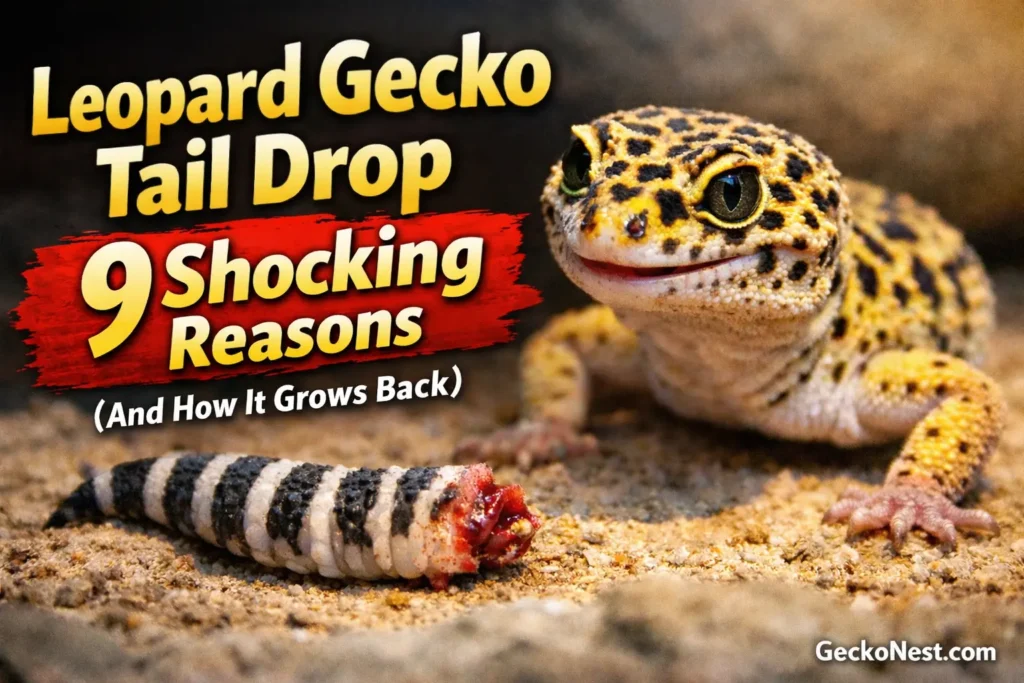
If your leopard gecko tail drop just happened, take a breath. Seriously.
The first time you see it, your brain immediately jumps to something like:
“Did I just accidentally break my gecko?”
Relax — leopard gecko tail drop is a natural defense mechanism. These little reptiles are basically equipped with an emergency escape button. In the wild, when a predator grabs their tail, they can detach it and run away while the tail wiggles like a tiny reptile distraction grenade.
Yes, it’s dramatic. Yes, it looks like a tiny horror movie scene.
But most of the time, it’s completely survivable.
The key is knowing why leopard gecko tail drop happens and what you should do next.
Table of Contents
- Why Leopard Geckos Drop Their Tails
- Leopard Gecko Tail Drop: What To Do Immediately
- Is Bleeding Normal After Tail Drop?
- Leopard Gecko Tail Regrowth Explained
- How Long Tail Regrowth Takes
- Can Leopard Geckos Drop Their Tail More Than Once?
- Signs of Infection After Tail Drop
- How to Prevent Leopard Gecko Tail Drop
Why Leopard Geckos Drop Their Tails
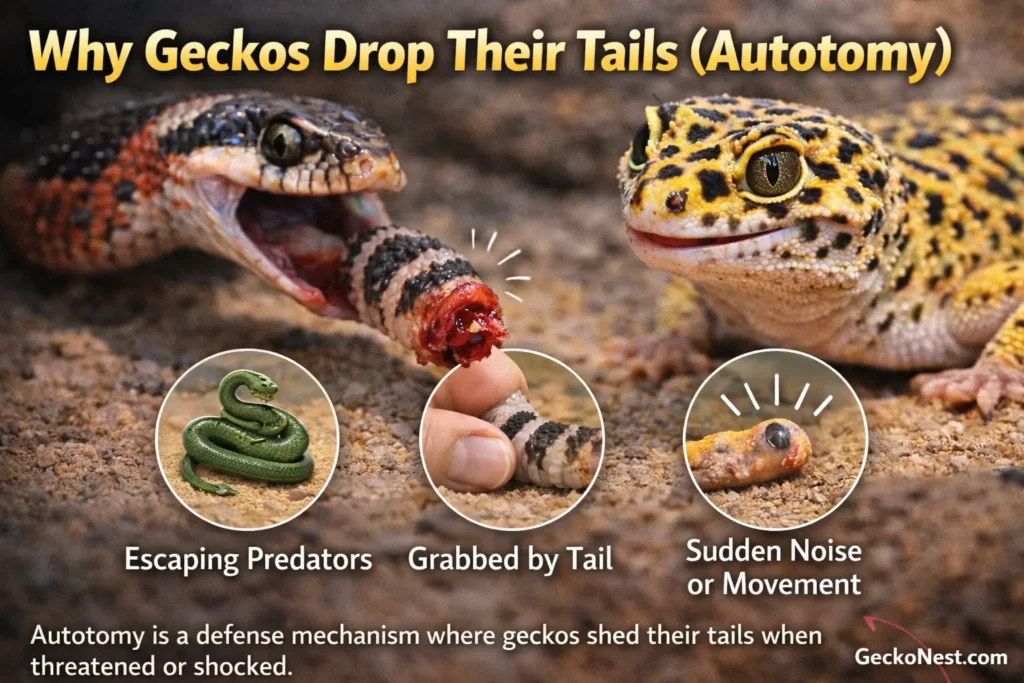
The official name for leopard gecko tail drop is autotomy.
It means the gecko can voluntarily detach its tail when it feels threatened.
Common triggers include:
• Sudden stress
• Rough handling
• Tank mates fighting
• Being grabbed by the tail
• Loud disturbances
• Rarely: infection or tail rot
Sometimes the trigger feels ridiculous to humans.
You bump the terrarium while cleaning.
The dog barks.
Your younger sibling taps the glass like it’s an aquarium drum solo.
Next thing you know — tail on the ground.
Leopard geckos are calm creatures… until their internal panic alarm goes off.
According to reptile specialists at the Association of Reptile and Amphibian Veterinarians , tail autotomy is a natural defense behavior seen in many lizard species that allows them to escape predators in the wild.
Leopard Gecko Tail Drop: What To Do Immediately
If a leopard gecko tail drop just happened, follow these steps.
1. Remove Loose Substrate
Switch to paper towels immediately.
Loose substrate can stick to the wound and cause infection.
2. Keep the Enclosure Clean
A clean enclosure dramatically reduces infection risk.
Think of it like a hospital room for reptiles — sterile beats stylish.
3. Avoid Handling
Leave your gecko alone for 1–2 weeks.
Stress slows healing.
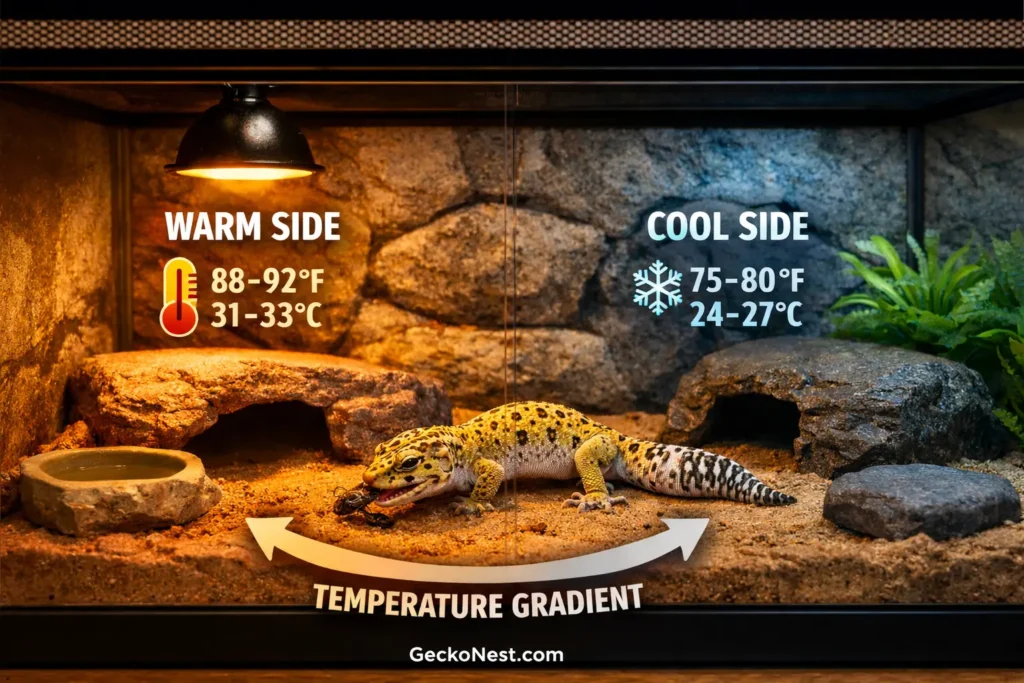
4. Check Temperature
Proper heat supports immune function and healing.
5. Monitor the Wound
Most leopard gecko tail drops stop bleeding quickly.
If bleeding continues heavily for more than a few minutes, it’s vet time.
Leopard Gecko Tail Bleeding: Is It Normal?
A small amount of blood after leopard gecko tail drop is completely normal.
However, watch for warning signs like:
• Continuous bleeding
• Swelling
• Oozing discharge
• Strong odor
If the wound starts looking like something from a zombie movie, call a vet.
And please don’t start panic-searching 2 AM reptile home remedies while stress-eating cookies.
Step one is always clean environment first.
Leopard Gecko Tail Regrowth Explained

Good news.
Yes — leopard gecko tail regrowth happens.
But the new tail usually looks slightly different.
Typical differences include:
• Slightly shorter length
• Thicker shape
• Smooth texture
• More uniform color
Some reptile keepers jokingly call it the “stubby comeback edition.”
Functionally though, it works perfectly for fat storage, which is the tail’s main job.
Research summarized by National Geographic’s reptile guide explains that tail autotomy allows many lizard species to escape predators while the detached tail distracts the attacker.
How Long Does Leopard Gecko Tail Take To Grow Back?
Tail regrowth happens gradually.
Typical timeline:
• 1–2 weeks: wound heals
• 4–8 weeks: visible tail regrowth
• Several months: fat reserves fully rebuild
If you’re checking the tail every morning thinking,
“Is it bigger today?”
Don’t worry — every reptile owner does that.
Can a Leopard Gecko Drop Its Tail More Than Once?
Yes, leopard geckos can drop their tail multiple times.
But it’s not ideal.
Repeated tail drops can:
• Stress the gecko
• Reduce fat storage capacity
• Slow recovery time
Think of it like a rechargeable battery.
It still works — but the more cycles it goes through, the less efficient it becomes.
So ideally, tail drop should be a once-in-a-lifetime event.
Leopard Gecko Tail Infection After Drop
Most leopard gecko tail drop wounds heal cleanly if the enclosure stays sanitary.
Watch carefully for infection signs:
• Spreading redness
• White or yellow discharge
• Loss of appetite
• Lethargy
• Foul smell
If you see these symptoms, contact a reptile veterinarian.
Not Reddit.
Not random reptile forums.
Actual veterinary advice matters here.
Leopard Gecko Partial Tail Drop
Occasionally, the tail does not fully detach.
This is called partial tail drop, and it requires extra care.
Important rules:
• Do NOT pull the tail
• Keep enclosure sterile
• Monitor closely
• Veterinary visit recommended
This situation is not a DIY reptile surgery project.
Leopard Gecko Tail Size After Regrowth
The new tail will usually be:
• Slightly thicker
• Slightly shorter
• Smooth in texture
It may not win any reptile beauty contests.
But your gecko won’t care.
And honestly — neither should you.
Healthy gecko > perfect tail.
How to Prevent Leopard Gecko Tail Drop
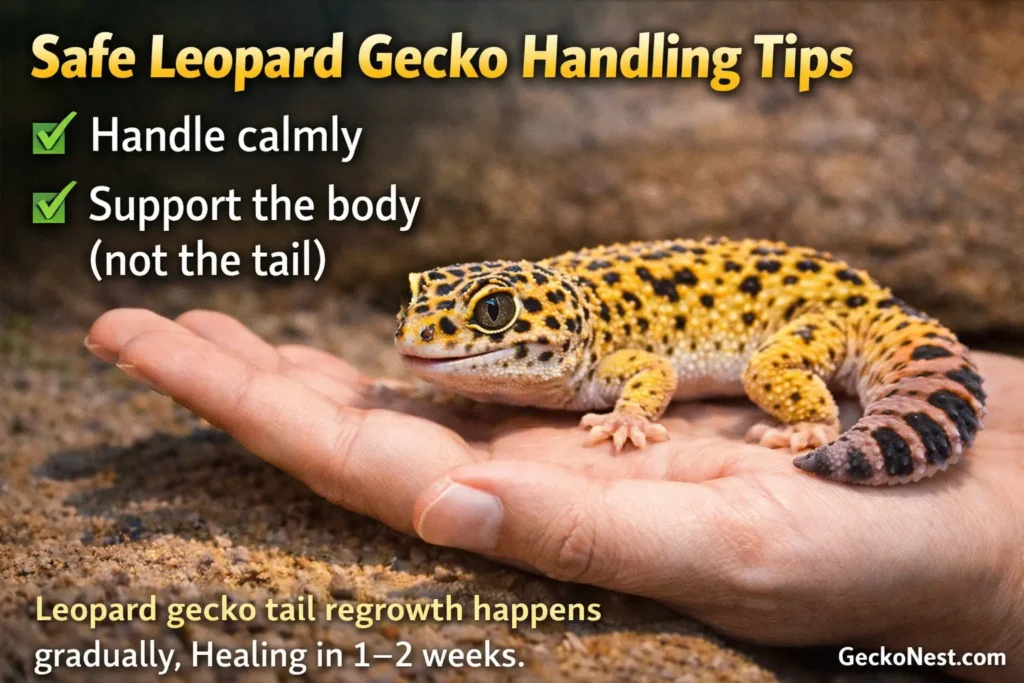
Prevention is easier than treatment.
Follow these simple rules:
• Never grab a leopard gecko by its tail
• Handle calmly and low to the ground
• Avoid housing geckos together
• Maintain proper tank temperature
• Reduce loud disturbances near the tank
• Keep other pets away from the enclosure
Leopard geckos are relaxed animals.
But like humans on Monday mornings — they do have stress limits.
Quick Summary
• Leopard gecko tail drop is a natural defense mechanism.
• Most cases heal without complications.
• Paper towel substrate is safest during healing.
• Monitor carefully for infection.
• Tail regrowth typically takes 4–8 weeks.
• The new tail may look different, but works normally.
Final Thoughts
Seeing leopard gecko tail drop for the first time can feel shocking.
It looks dramatic.
It feels like something went terribly wrong.
But in reality, it’s simply a survival adaptation.
Stay calm.
Keep the enclosure clean.
Give your gecko time to heal.
Chances are your gecko will be completely fine — just with a slightly upgraded “aerodynamic tail design.”
Leopard Gecko Tail Drop – FAQ
Leopard geckos drop their tails as a defense mechanism called autotomy. When they feel threatened, stressed, or grabbed by the tail, they can detach it to escape predators.
Yes, leopard gecko tail regrowth usually occurs within 4–8 weeks. The new tail may look shorter, thicker, and slightly different in color, but it still works for fat storage.
A small amount of bleeding is normal right after a leopard gecko tail drop. Heavy bleeding that continues for several minutes may require veterinary attention.
Remove loose substrate, switch to paper towels, keep the enclosure clean, avoid handling the gecko for 1–2 weeks, and monitor the wound for signs of infection.
Yes, leopard geckos can drop their tail multiple times. However, repeated tail drops may cause stress and the regrown tail may not look as natural as the original.
You can reduce the risk of tail drop by handling your gecko gently, never grabbing the tail, avoiding housing multiple geckos together, and keeping the enclosure calm and stress-free.