Introduction
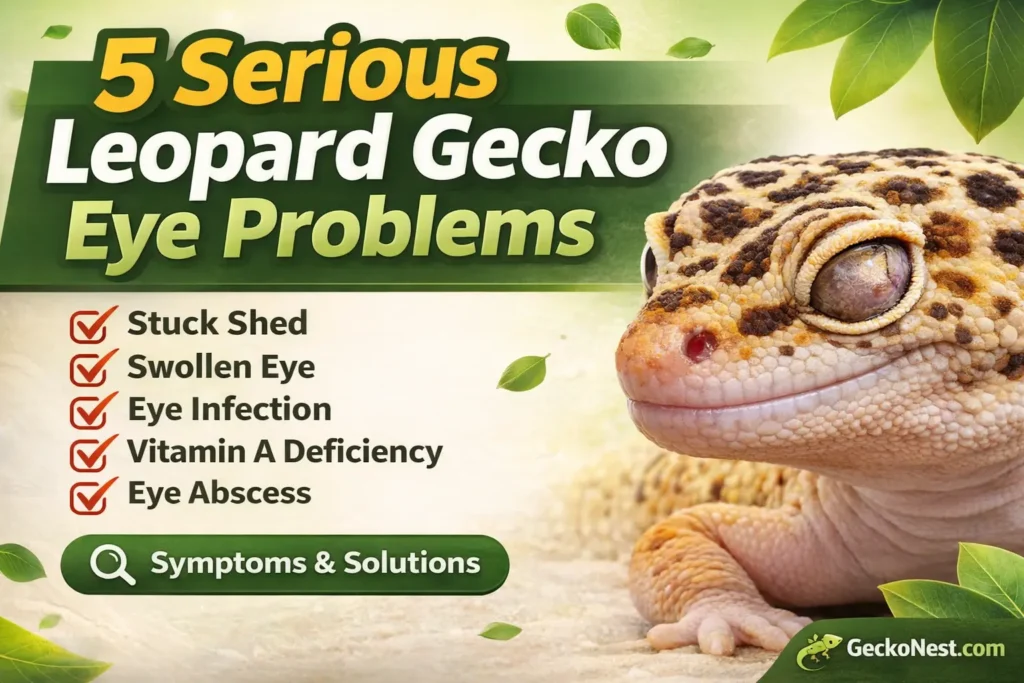
Leopard gecko eye problems are more common than many new reptile owners expect. Most of the time the issue starts with something small — a closed eye, a bit of swelling, or your gecko rubbing its face on the décor like it just smelled something weird.
At first, you might think:
“Eh… maybe it’s just a bad shed day.”
Sometimes that’s true.
Other times your gecko is basically trying to tell you:
“Hey human, my eye feels like there’s a sock stuck in it.”
Knowing the difference between a minor irritation and a serious leopard gecko eye problem can help you react early and prevent long-term health issues.
Table of Contents
- Leopard Gecko Eye Stuck Shed
- Leopard Gecko Eye Infection
- Leopard Gecko Vitamin A Deficiency
- Leopard Gecko Eye Injury
- Leopard Gecko Eye Abscess
- What To Do If Your Leopard Gecko Keeps One Eye Closed
- When Eye Problems Become an Emergency
- Quick Prevention Tips
1️⃣ Leopard Gecko Eye Stuck Shed
The Most Common Leopard Gecko Eye Problem

Among all leopard gecko eye problems, stuck shed around the eyelids is by far the most common.
If the tank humidity is slightly off, shed skin can remain stuck around the eye area.
Symptoms usually include:
- One eye staying closed
- White or flaky skin around the eyelids
- The gecko rubbing its face on tank decorations
Here’s the interesting part: leopard geckos don’t have movable eyelids like humans. Instead, they have a transparent protective scale covering the eye.
When shed gets stuck on that layer, irritation happens quickly.
In most cases the fix is simple:
- Improve humidity levels
- Provide a proper humid hide
- Allow the shed to soften naturally
But never peel dry shed off the eye.
Seriously.
That’s basically the reptile version of ripping off a scab early — painful and risky.
2️⃣ Leopard Gecko Eye Infection
When Leopard Gecko Eye Problems Become Serious
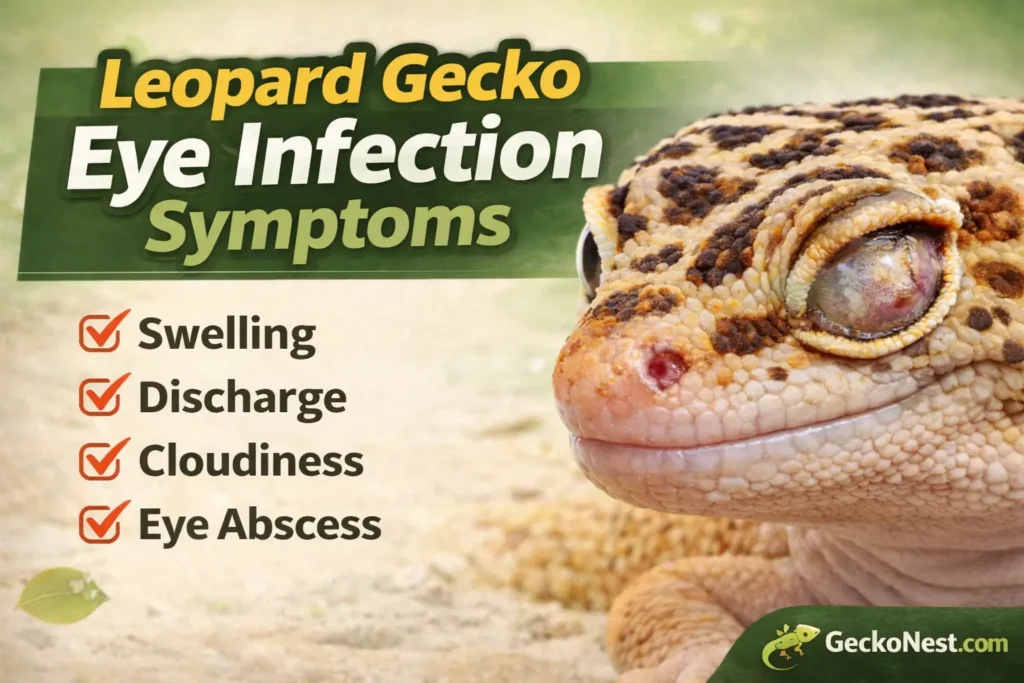
Some leopard gecko eye problems are more than just shed issues.
Eye infections can develop from several causes.
Common symptoms include:
- Swelling around the eye
- Discharge (clear, white, or yellow)
- Cloudy eye appearance
- Loss of appetite combined with eye closure
Eye infections are often linked to:
- Dirty substrate
- Old stuck shed that wasn’t removed properly
- Vitamin A deficiency
- Injuries from feeder insects
Yes — crickets can fight back.
They don’t exactly volunteer for the food chain.
If swelling increases or discharge appears, it’s time to consult a reptile veterinarian.
For guidance on reptile veterinary care, the Association of Reptile and Amphibian Veterinarians provides professional resources and vet directories.
According to medical research summarized on Vitamin A deficiency , inadequate vitamin intake can cause eye health problems across many animal species.
3️⃣ Leopard Gecko Vitamin A Deficiency
Eye Problems Caused by Poor Supplementation
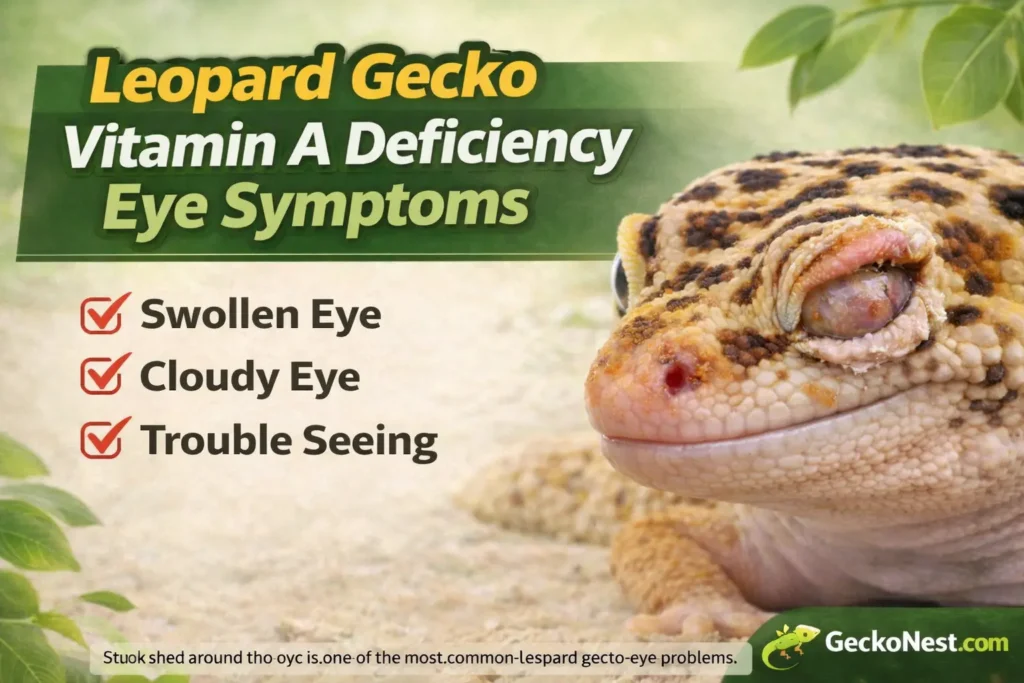
This is one of the most surprising causes of leopard gecko eye problems, especially for beginners.
Improper supplementation can slowly lead to vitamin A deficiency.
Symptoms may include:
- Swollen eyelids
- Frequent stuck shed around the eyes
- Reduced activity
- Appetite changes
Unlike an injury, this issue develops gradually.
You won’t wake up one morning to a dramatic change.
Instead, it’s more like a slow “maintenance problem.”
Think of it like forgetting to change the oil in your car.
Once or twice? No big deal.
For months? That engine starts complaining.
Using a consistent multivitamin schedule usually prevents this entirely.
4️⃣ Leopard Gecko Eye Injury
Minor Trauma That Causes Eye Irritation
Sometimes leopard gecko eye problems are simply caused by minor injuries.
Possible causes include:
- Sharp decorations
- Loose substrate particles
- Aggressive feeder insects
Signs of injury include:
- One eye suddenly closing
- No visible shed around the eye
- No discharge
- Otherwise normal behavior
In many cases, minor irritation resolves within a day or two.
But if the eye stays closed longer than 48 hours, it should be evaluated.
Eyes are not something you want to ignore for weeks.
Your gecko can’t exactly say,
“Hey, I think something scratched my cornea.”
5️⃣ Leopard Gecko Eye Abscess
A Rare but Serious Leopard Gecko Eye Problem
Eye abscesses are less common but significantly more serious.
Possible signs include:
- Hard swelling around the eye
- Bulging eye
- Thick discharge
- Sudden appetite loss
Unlike minor irritation, an abscess cannot be treated at home.
Veterinary care is required.
Thankfully, in well-maintained terrariums these cases are relatively rare.
Organizations like National Geographic Society highlight how reptiles rely heavily on eye health for survival behaviors like hunting and navigation.
Which means eye issues should always be taken seriously.
Veterinary resources like the Merck Veterinary Manual highlight that reptile eye infections and abscesses often require professional veterinary treatment.
What To Do If Your Leopard Gecko Keeps One Eye Closed
Follow this simple checklist:
Step 1: Check tank humidity
Step 2: Look for stuck shed around the eyelids
Step 3: Check for swelling or discharge
Step 4: Review vitamin supplementation
Step 5: Evaluate tank cleanliness
If the eye does not improve within 2–3 days, contact a reptile vet.
Eye problems don’t magically disappear forever.
Unfortunately reptiles didn’t evolve with built-in ophthalmologists.
When Is It an Emergency?

Seek veterinary care immediately if you see:
- Thick discharge
- Rapid swelling
- Bulging eye
- Complete appetite loss with eye closure
- Eye injury with bleeding
Mild irritation sometimes resolves with environmental correction.
But ignoring it for weeks is never a good plan.
That’s like ignoring a blinking engine light in your car.
It never ends well.
Quick Summary
Most leopard gecko eye problems fall into these categories:
- Stuck shed around the eyelids
- Minor irritation from décor or feeder insects
- Vitamin A deficiency
- Eye infection
- Rare abscess
The good news?
Most eye issues are preventable with:
- Proper humidity
- Clean enclosure
- Balanced supplements
- Safe terrarium décor
A healthy enclosure usually means healthy gecko eyes.
And a happy gecko means fewer midnight Google searches like
“Why is my gecko blinking weird?”
Frequently Asked Questions About Leopard Gecko Eye Problems
Leopard gecko eye problems can look minor at first, but small symptoms can turn into bigger issues if ignored. Here are some of the most common questions owners ask.
Why is my leopard gecko keeping one eye closed?
A leopard gecko may keep one eye closed because of stuck shed, irritation, infection, vitamin A deficiency, or a minor injury. If the eye stays closed for more than 48 hours or you notice swelling or discharge, it is best to contact a reptile vet.
Can stuck shed cause leopard gecko eye problems?
Yes. Stuck shed is one of the most common leopard gecko eye problems. When shed remains around the eyelids, it can irritate the eye and make your gecko keep it closed. Improving humidity and using a proper humid hide usually helps prevent this issue.
What does a leopard gecko eye infection look like?
A leopard gecko eye infection may cause swelling, discharge, cloudiness, redness, and appetite loss. If you see yellow or white discharge, rapid swelling, or worsening symptoms, veterinary care is recommended.
Can vitamin A deficiency cause eye issues in leopard geckos?
Yes. Poor supplementation over time can lead to vitamin A deficiency, which may cause swollen eyelids, repeated eye shed problems, lethargy, and appetite changes. A balanced supplement routine helps prevent this.
When should I take my leopard gecko to the vet for an eye problem?
You should see a vet if your leopard gecko has thick discharge, rapid swelling, a bulging eye, bleeding, or refuses food along with eye symptoms. Mild irritation may improve with enclosure corrections, but serious symptoms should never be ignored.
How can I prevent leopard gecko eye problems?
You can prevent many leopard gecko eye problems by keeping the enclosure clean, maintaining proper humidity, providing a humid hide, using safe décor, and following a consistent supplement schedule. Basically: clean tank, happy gecko, fewer panic searches at midnight.
🔎 Find an Exotic Vet Near You
Need a reptile veterinarian fast? Use our free tool to quickly find an exotic vet near you. This tool helps leopard gecko owners locate reptile vets, exotic animal hospitals, and emergency reptile clinics nearby.
Open Exotic Vet Finder →