
Introduction
If you’re looking for a leopard gecko care guide for beginners, the good news is that these reptiles are among the easiest pets to care for when their setup is done correctly.
You don’t need a rainforest enclosure, complicated lighting systems, or constant hands-on attention. What you do need is proper heat, a consistent feeding routine, and a clean enclosure.
When these basics are correct, leopard geckos become calm, hardy, and surprisingly low-stress pets.
However, when something is off—especially temperature—small issues can slowly turn into bigger problems.
After years of keeping geckos, one thing becomes very clear: once you understand their basic needs, leopard gecko care becomes simple and predictable.
This leopard gecko care guide covers everything beginners need to know, from enclosure setup to feeding routines and common mistakes new owners make.
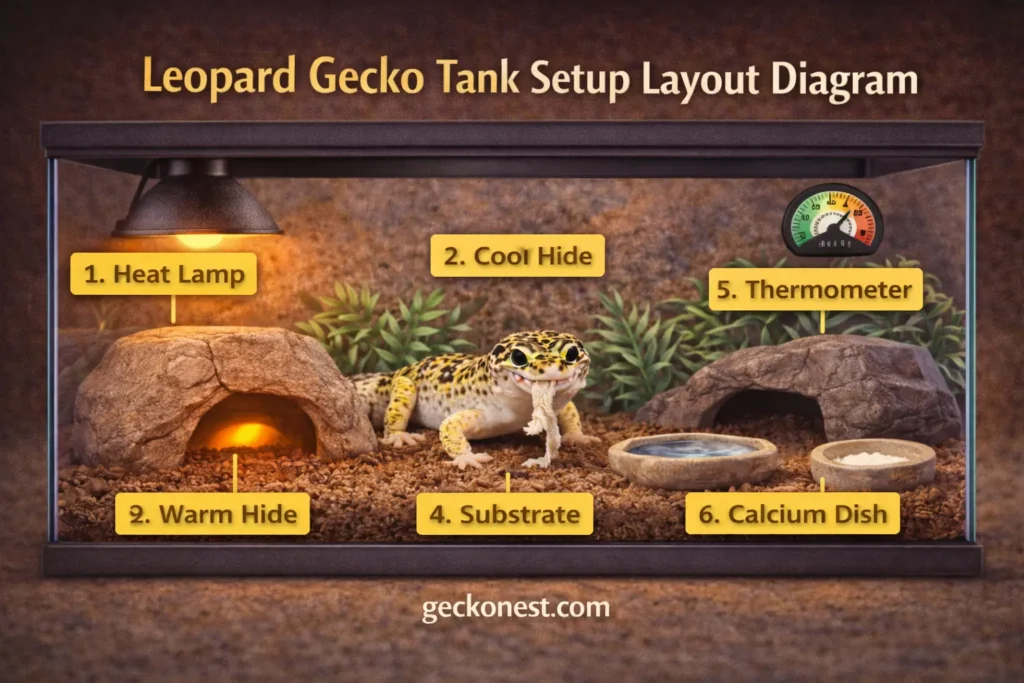
Table of Contents
- What Makes Leopard Geckos Beginner Friendly
- Leopard Gecko Tank Temperature Guide
- Best Substrate for Leopard Geckos
- Leopard Gecko Diet & Feeding Guide
- Supplements and Calcium Needs
- Shedding and Humidity Problems
- Common Leopard Gecko Beginner Mistakes
- Quick Care Summary
- FAQ for New Owners
What Makes Leopard Geckos So Beginner-Friendly?
Leopard geckos are popular for a reason.
They are calm, predictable, and adaptable when their environment is correct.
Unlike many reptiles:
- They don’t require high humidity
- They don’t require strong basking lights
- They don’t require daily handling
Instead, leopard gecko care focuses on three simple things:
- Ground heat
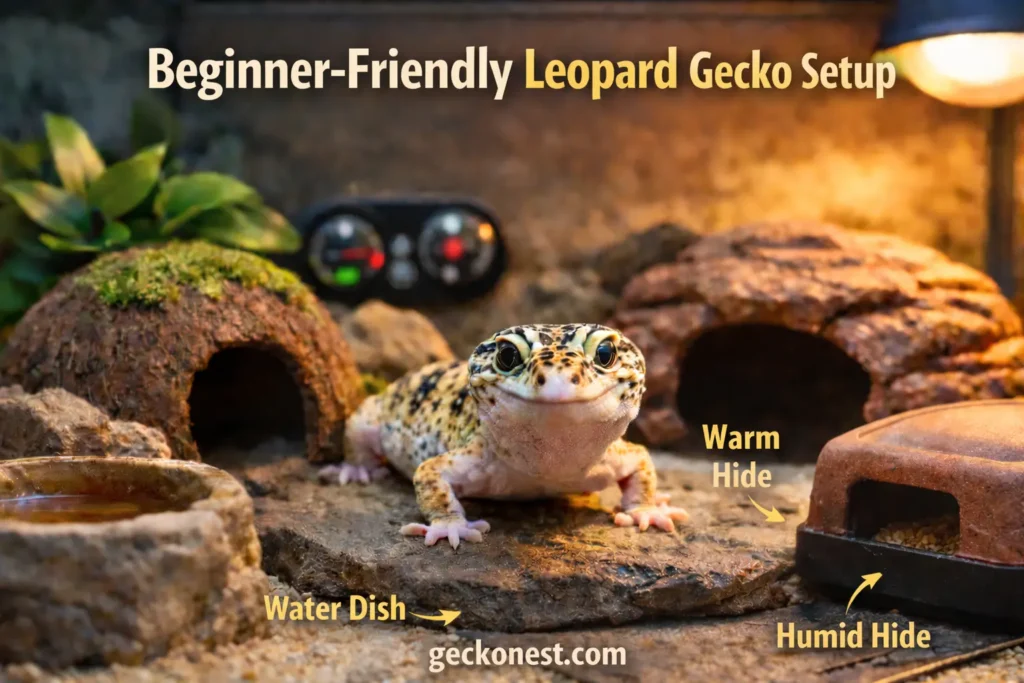
- Secure hiding spots
- Regular feeding
Leopard geckos are crepuscular, meaning they are most active in the evening.
During the day, they usually stay hidden. This behavior is completely normal.
Another reason beginners love them is their lifespan. With proper care, leopard geckos commonly live 15–20 years.
So getting one is less like buying a temporary pet and more like adopting a quiet roommate that happens to eat insects.
Leopard Gecko Care Guide: Ideal Tank Temperature Setup
Temperature is the single most important part of any leopard gecko care guide.
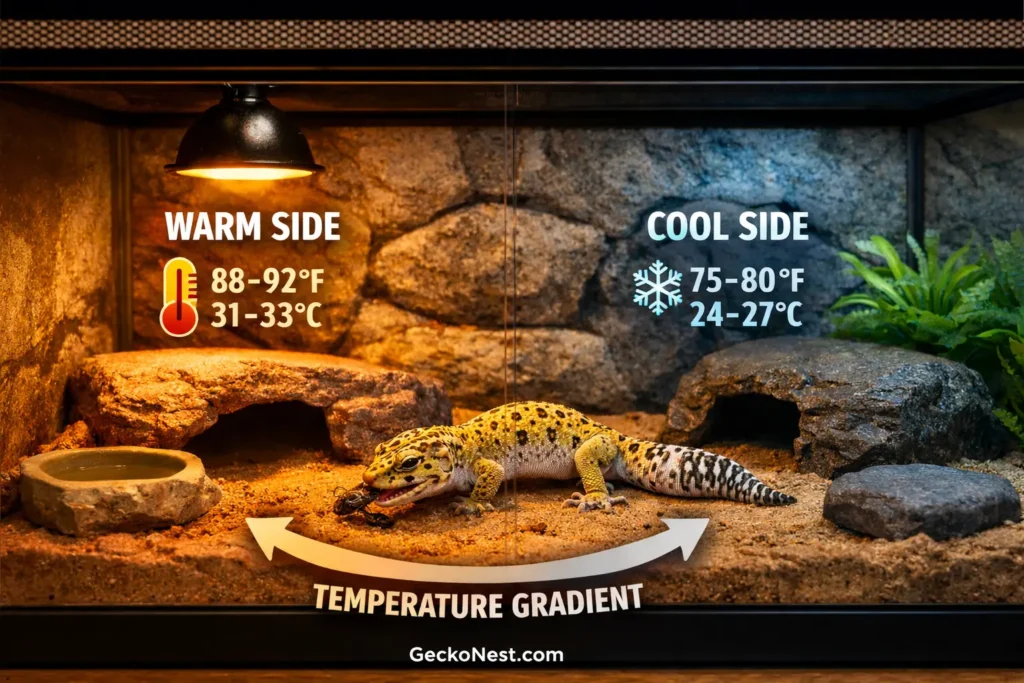
Leopard geckos need a temperature gradient so they can regulate their body temperature.
Instead of moving toward light like some reptiles, they move toward heat.
In any proper leopard gecko care guide, temperature is always the most critical factor for digestion, activity, and long-term health.
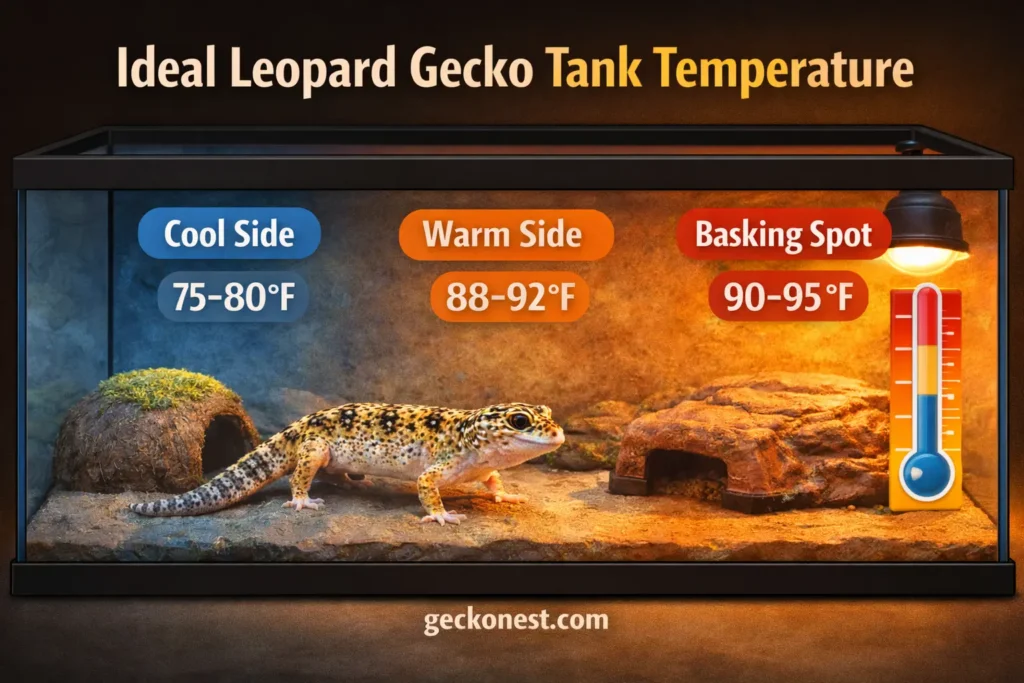
Ideal Tank Temperature
For a healthy adult leopard gecko:
- Warm side surface temperature: 88–92°F
- Cool side ambient temperature: 75–80°F
This temperature difference allows proper digestion and normal activity.
When temperatures are correct, your gecko will naturally move between the warm and cool sides throughout the day.
Correct Warm Side Temperature
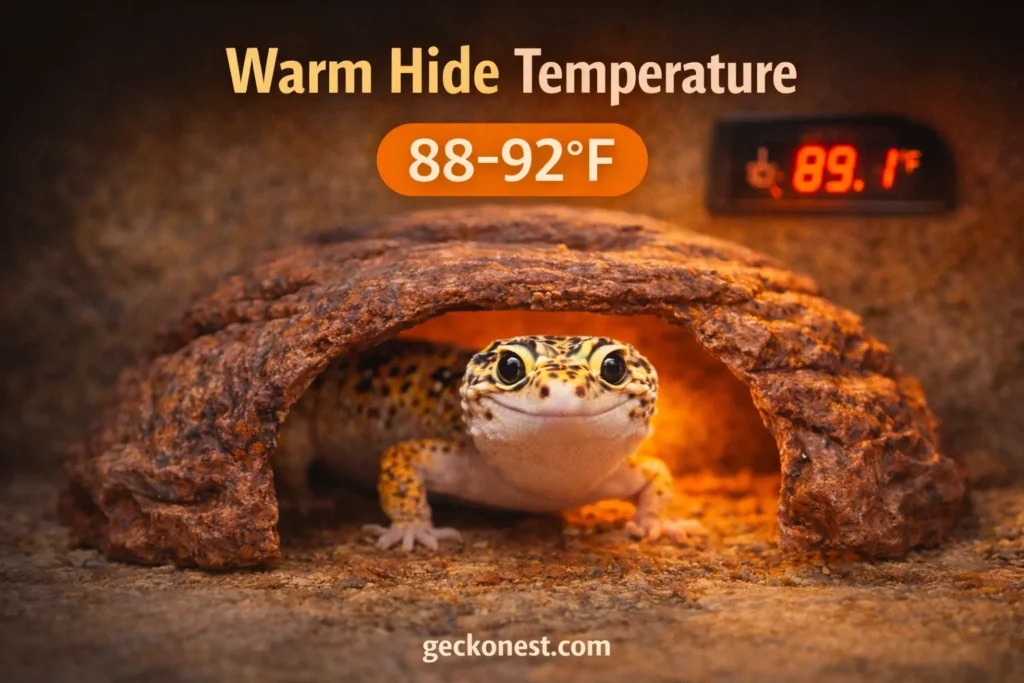
The warm side surface temperature should stay between 88–92°F.
This temperature must be measured on the substrate surface, not just in the air.
Leopard geckos rely on belly heat to digest food.
Without correct surface heat:
- appetite becomes inconsistent
- digestion slows down
- stool quality changes
Using a digital probe thermometer is the most reliable way to measure temperature.
External reference:
Learn more about reptile heating from
Reptile Magazine
Night Temperature for Leopard Geckos
Night temperatures can drop slightly.
As long as the enclosure stays above 70°F, leopard geckos are usually comfortable.
If your room becomes colder than this, a low-power heat mat can maintain stable nighttime warmth.
Stability is more important than chasing perfect numbers.
Do Leopard Geckos Need Basking Lights?
Unlike species such as the Bearded Dragon, leopard geckos do not require strong basking lights.
They prefer ground heat rather than overhead heat.
Bright basking lights may actually cause them to hide more frequently.
For this reason, under-tank heating systems are usually the most effective.
Best Substrate for Leopard Gecko Enclosures
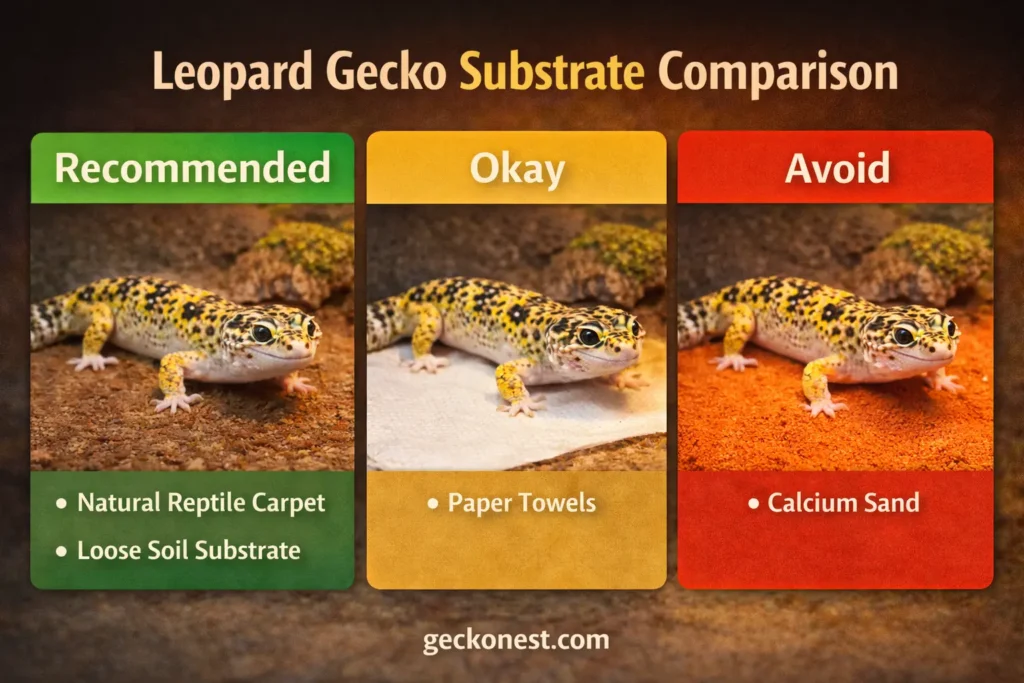
Choosing the right substrate is another important part of leopard gecko care for beginners.
If you are new, simple substrates are always safer.
Good beginner options include:
- Paper towels
- Reptile carpet
- Ceramic or slate tile
Tile is especially popular because:
- it holds heat well
- it is easy to clean
- it helps wear down nails naturally
Loose sand may look attractive, but it often creates problems if temperatures or nutrition are not perfect.
External reference:
Substrate safety explained by
The Reptile Database
Best Substrate for Baby Leopard Geckos
For baby leopard geckos, paper towels are the safest option.
Young geckos sometimes miss their prey while hunting and may accidentally ingest substrate.
Paper towels eliminate that risk entirely.
They also allow you to easily monitor droppings, which helps detect:
- digestion problems
- dehydration
- parasites
It may not look fancy, but it works extremely well.
Are Loose Substrates Safe?
Loose substrates can work in advanced setups.
However, beginners should avoid them because they introduce extra variables.
If heating or calcium supplementation is incorrect, loose particles increase the risk of impaction.
Simple setups are usually safer and easier to maintain.
Leopard Gecko Diet and Feeding Guide
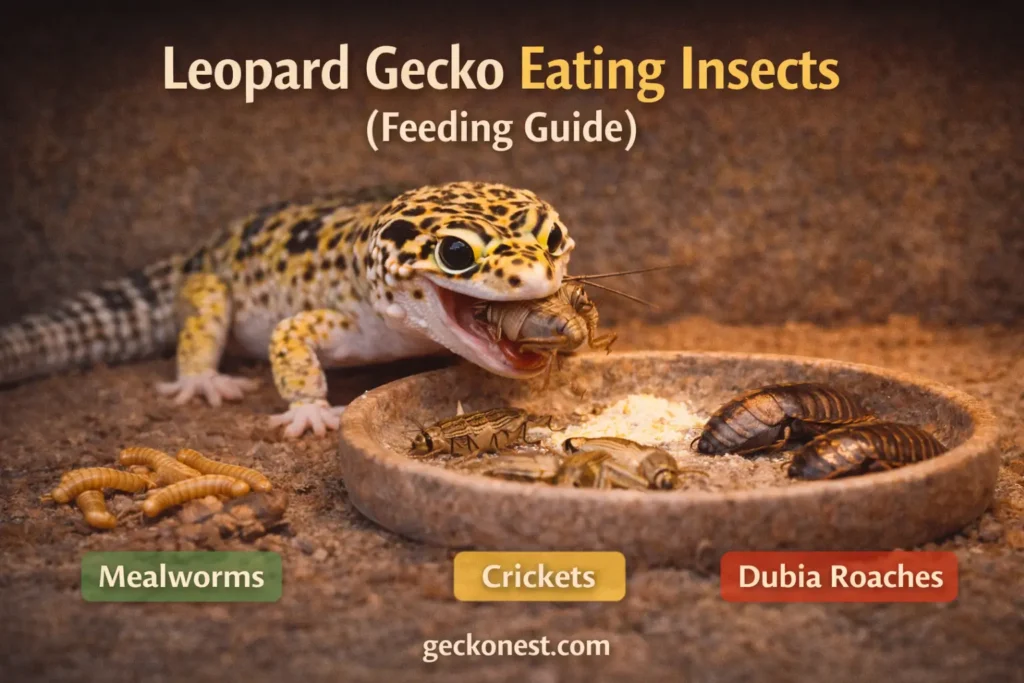
Leopard geckos are strict insectivores.
They do not eat fruit, vegetables, or commercial pellets.
Their main food sources should be live insects.
Common feeder insects include:
- Crickets
- Dubia roaches
- Mealworms
- Superworms (occasionally)
Variety is important for nutrition and stimulation.
A healthy adult leopard gecko usually eats two or three times per week.
Juveniles eat more often because they are still growing.
A complete leopard gecko care guide should always include clear feeding rules, because diet plays a major role in reptile health.
How Much Should You Feed a Leopard Gecko?
A simple feeding rule is:
Feed as many insects as your gecko will eat within 10–15 minutes.
For most adults this equals:
5–8 insects per feeding.
A good sizing rule is that insects should not be wider than the space between your gecko’s eyes.
If the tail remains thick and healthy, feeding amounts are usually correct.
Calcium and Vitamin Supplements
Proper supplementation is essential for long-term leopard gecko health.
You should use three supplements:
- Calcium without D3 (regular use)
- Calcium with D3 (once or twice weekly)
- Reptile multivitamin (weekly)
Dust feeder insects lightly before feeding.
They should have a thin coating, not a thick layer.
Consistent supplementation helps prevent Metabolic Bone Disease (MBD).
External reference:
Supplement information from
Association of Reptile and Amphibian Veterinarians
According to the Association of Reptile and Amphibian Veterinarians, proper heating and calcium supplementation are essential for reptile health.
Shedding Problems in Leopard Geckos
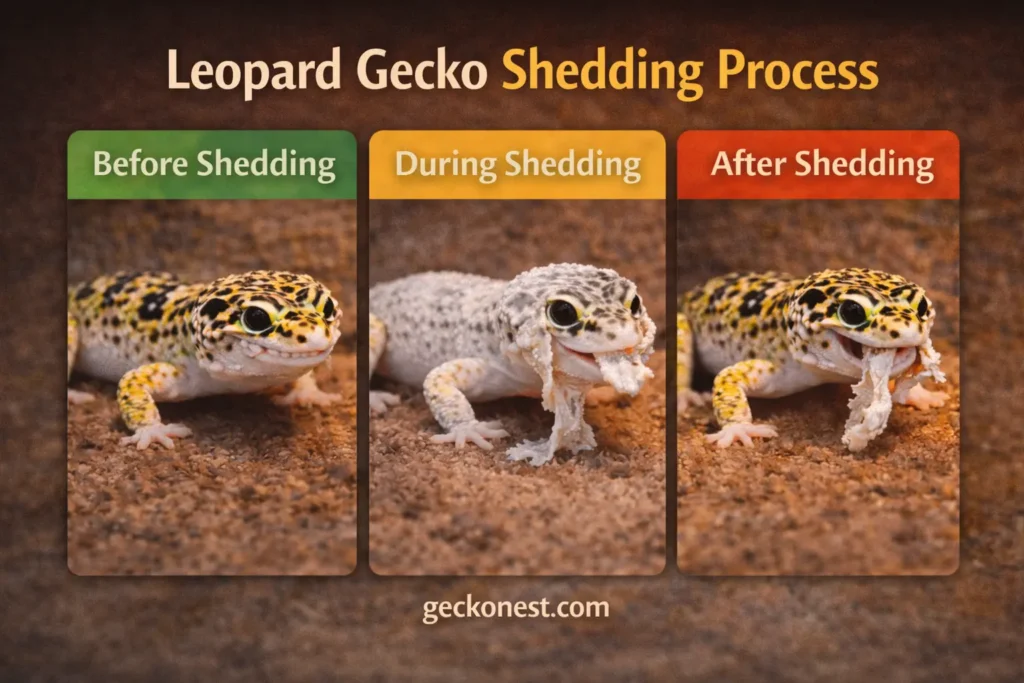
Shedding usually occurs every 3–6 weeks.
Before shedding, your gecko may:
- look pale
- hide more
- skip a meal
This is completely normal.
Most leopard geckos remove their shed without assistance.
They often eat the shed skin as well.
Common Stuck Shed Areas
If shedding problems occur, they usually appear on:
- toes
- tail tip
- eyelids
Low humidity is often the cause.
Providing a humid hide usually prevents shedding problems.
Helping a Gecko With Stuck Shed
Never pull dry shed skin.
Instead:
- Place the gecko in shallow lukewarm water for 10 minutes
- Gently remove loose skin with a cotton swab
- Improve humidity in the humid hide
Often this resolves future shedding issues completely.
Common Leopard Gecko Beginner Mistakes
Many beginner problems come from simple setup mistakes.
1. Not Using a Thermostat
Heat mats without thermostats can overheat quickly.
A thermostat is essential.
2. No Temperature Gradient
A tank with uniform temperature prevents proper thermoregulation.
3. Feeding Only One Insect
Variety helps maintain balanced nutrition.
4. Handling Too Soon
New geckos need time to adjust before regular handling.
5. Overreacting to Small Changes
Occasional skipped meals or extra hiding is normal behavior.
Quick Leopard Gecko Care Summary
If you skipped everything above, here are the basics:
- Minimum 20-gallon enclosure
- Warm side: 88–92°F
- Cool side: 75–80°F
- Always use a thermostat
- Provide three hides, including one humid hide
- Feed live insects only
- Rotate feeder insects
- Supplement calcium regularly
When temperature and diet are correct, 90% of leopard gecko problems disappear.
FAQ for New Owners
How long can a leopard gecko go without eating?
Healthy adults can skip several days without issues thanks to fat stored in their tails.
Can two leopard geckos live together?
In most cases, no. Housing them separately prevents stress and competition.
Do leopard geckos recognize their owners?
Not like dogs, but they learn feeding routines and enclosure sounds.
Why is my gecko always hiding?
Hiding is normal behavior for leopard geckos.
How long do leopard geckos live?
With proper care, 15–20 years is common.
Final Thoughts
Leopard geckos are one of the best reptiles for beginners.
Not because they are flashy—but because they are stable and low-maintenance.
Once the setup is correct, care becomes routine.
And honestly, watching a leopard gecko silently stalk a cricket never stops being fascinating.
If you follow this leopard gecko care guide and keep temperatures stable, most beginner problems can be avoided completely.