
If you’re searching for leopard gecko behavior problems, chances are your tiny reptile roommate is doing something bizarre enough to make you question reality.
Sleeping all day?
Digging like it owes someone money?
Standing in one corner staring into the void like it just discovered taxes?
Good news: most “weird” leopard gecko behavior is completely normal.
Bad news: they are naturally odd little creatures.
Before you panic-Google “why is my gecko broken,” this guide will walk you through the most common leopard gecko behavior problems, what causes them, and when you should actually worry.
Why Understanding Leopard Gecko Behavior Matters First

Before labeling something as a “problem,” remember this:
Leopard geckos are:
- Nocturnal
- Instinct-driven
- Energy efficient
- Professional hide-and-seek champions
They are not tiny dogs.
They do not crave constant affection.
They do not want motivational speeches.
They do not care that you cleaned their tank “for them.”
A huge percentage of so-called leopard gecko behavior problems are really just owners expecting mammal behavior from a reptile.
Your gecko isn’t broken.
It’s just operating on ancient desert lizard software.
Why Is My Leopard Gecko Sleeping All Day?

One of the most searched leopard gecko behavior problems is:
Because… that’s what they do.
Leopard geckos are nocturnal. They naturally rest during daylight and become active in the evening.
When Sleeping All Day Is Normal
If your gecko:
- Sleeps during the day
- Becomes active at dusk/night
- Eats normally
- Maintains weight
Congratulations.
You own a functioning leopard gecko.
When Sleeping All Day Is NOT Normal
It may be a problem if your gecko also:
- Never becomes active at night
- Refuses food for 10–14+ days
- Loses weight
- Appears weak or floppy
Leopard Gecko Behavior Problems Caused by Temperature (The #1 Hidden Issue)
If there were an award for “Most Common Cause of Weird Gecko Behavior,” bad temperatures would win by a landslide.
Many leopard gecko behavior problems are simply husbandry issues in disguise.
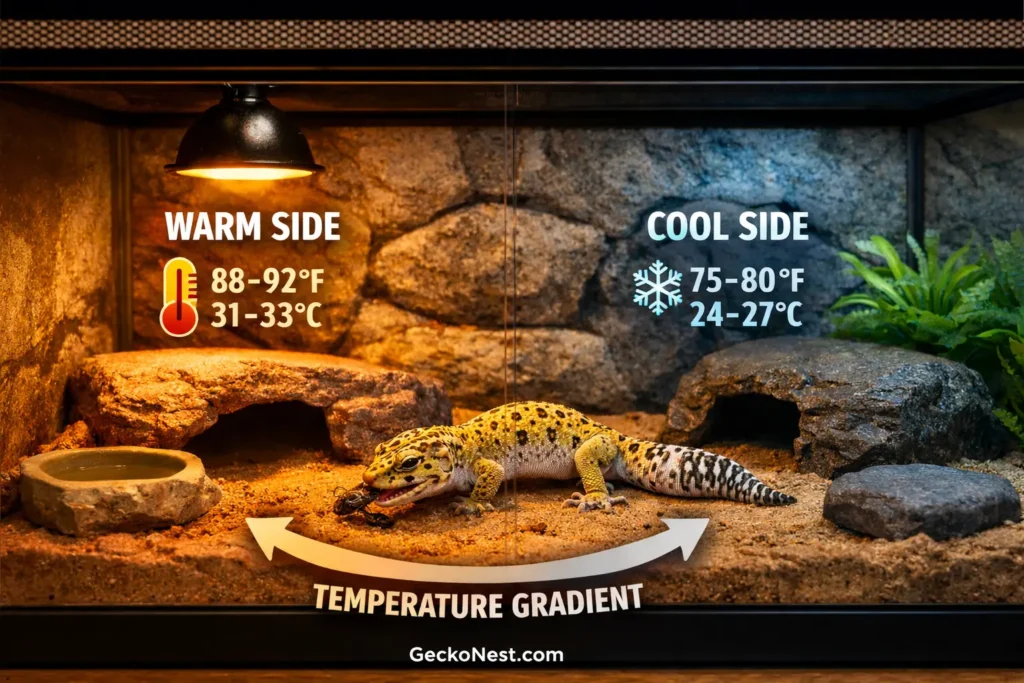
Ideal Leopard Gecko Temperature Gradient
- Warm Side: 88–92°F
- Cool Side: 72–77°F
If your enclosure is too cold:
- Digestion slows
- Appetite drops
- Energy disappears
- Your gecko becomes a decorative paperweight
Pro Tip
If your leopard gecko suddenly acts lazy, weird, or “off”…
Check temperatures before assuming illness.
Seriously.
Heat solves half of reptile ownership problems.
Why Is My Leopard Gecko So Skinny?
Healthy Leopard Gecko Body Signs
A healthy gecko usually has:
- Thick carrot-shaped tail
- Rounded belly
- No visible hip bones
- Smooth body proportions
If your gecko’s tail looks like a shoelace, it’s investigation time.
Common Causes of Weight Loss
Poor Temperatures
No heat = poor digestion = no weight gain.
Stress
Stressors include:
- New enclosure
- Loud environment
- Excessive handling
- Tank mates (never recommended)
Parasites
Possible if your gecko:
- Eats but keeps losing weight
- Has runny stool
- Looks weak
At that point, a reptile vet is your best move.
Poor Diet Variety
Feeding only mealworms forever is the reptile equivalent of surviving on plain crackers.
Better feeder rotation includes:
- Dubia roaches
- Crickets
- Mealworms
- Occasional treats only
Why Is My Leopard Gecko So Fat?
Yes—obesity is extremely common in captivity.
Wild leopard geckos have to hunt.
Yours has food delivered like reptile DoorDash.
Signs Your Gecko Is Overweight
- Thick/swollen tail
- Fat bubbles near armpits
- Lethargy
- Difficulty moving smoothly
Those little armpit bubbles?
Cute? Maybe.
Healthy? Usually not.
Most Common Cause of Obesity
Adults should NOT eat daily.
Proper Adult Feeding Schedule
- 2–3 feedings per week
That’s it.
Your gecko may act starving every day.
It is lying.
Why Does My Leopard Gecko Look Sad?
This is perhaps the funniest of all leopard gecko behavior problems.
Because no matter what happens…
They always look mildly disappointed in you.
The Truth
Leopard geckos naturally have:
- Droopy eyelids
- Neutral/downturned mouth shape
- Eternal “I’ve seen things” expression
That is simply their face.
Can Leopard Geckos Feel Sad?
They can experience:
- Stress
- Fear
- Comfort
- Hunger
They do not experience:
- Existential dread
- Midlife crises
- Breakup depression
- Monday morning burnout
If your gecko “looks sad” but eats and behaves normally:
It’s fine.
Just judgmental.
Why Is My Leopard Gecko Digging?
Digging is a completely normal instinctive behavior.
In nature, leopard geckos dig to:
- Create burrows
- Escape heat
- Regulate temperature
- Feel secure
Female Leopard Gecko Digging?
If female, she may be preparing to lay infertile eggs—even if never bred.
Signs include:
- Constant corner digging
- Restlessness
- Reduced appetite
- Searching obsessively
Provide a moist lay box if this happens.
Why Is My Leopard Gecko Hiding All the Time?
Another classic leopard gecko behavior problem that usually… isn’t a problem.
Leopard geckos hide because hiding makes them feel safe.
Normal Reasons for Hiding
- Sleeping
- Digesting
- Shedding
- Avoiding bright light
- General gecko business
When Hiding Becomes Concerning
If hiding is paired with:
- Refusing food
- Weight loss
- Extreme lethargy
- Weakness
Then deeper investigation is needed.
Why Is My Leopard Gecko Not Eating?
This is the holy grail of reptile owner panic.
Before assuming disaster, remember many leopard gecko behavior problems involving appetite are temporary.
Common Reasons Leopard Geckos Stop Eating
Shedding
Many geckos eat less before shed.
Brumation
Seasonal slowdown can reduce appetite.
Stress
Environmental changes suppress feeding quickly.
Temperature Problems
Again—heat matters.
Parasites/Illness
If appetite loss persists with weight loss, vet time.
Why Is My Leopard Gecko Glass Surfing?
Glass surfing = repeatedly climbing or scratching at enclosure walls.
Common Causes
- Stress
- Too small enclosure
- Reflection confusion
- Breeding season restlessness
- Improper temperatures
Sometimes they simply have one brain cell bouncing around.
But chronic glass surfing usually means something environmental needs adjusting.
Why Is My Leopard Gecko Wagging or Twitching Its Tail?
Tail movement can mean several things.
Slow Tail Wave
Usually hunting mode.
Translation:
“I am predator. Fear me, insect.”
Fast Twitching / Vibrating
Often means:
- Excitement
- Stress
- Defensive alertness
Context matters.
Leopard Gecko Behavior Problems Troubleshooting Checklist
Before assuming your gecko is sick, run through this:
Husbandry Checklist
- Warm side 88–92°F
- Cool side 72–77°F
- Humidity 30–40%
- Proper calcium supplementation
- Clean enclosure
- No tank mates
- Appropriate hides
- Proper feeder variety
If any of these are off, fix them first.
When Leopard Gecko Behavior Problems Require a Vet

Seek reptile veterinary help immediately if you notice:
- Rapid weight loss
- Persistent refusal to eat
- Sunken eyes
- Severe lethargy
- Persistent diarrhea
- Weak limbs
- Trouble walking
Leopard geckos are hardy.
But they are not invincible little armored potatoes.
Real Owner Reality Check
Every gecko owner goes through this:
“My gecko hasn’t moved in 7 hours—is he okay?”
Probably.
“Why is she staring at the wall?”
Unknown.
Possibly ancient reptile thoughts.
“He looks mad at me.”
He probably always looks like that.
Owning reptiles requires patience.
And a willingness to accept that sometimes your pet will behave like a tiny, emotionally unavailable dragon.
Final Thoughts on Leopard Gecko Behavior Problems
Most leopard gecko behavior problems come down to:
- Husbandry mistakes
- Temperature issues
- Feeding confusion
- Normal reptile instincts
- Human overreaction
Rarely is weird behavior catastrophic.
Usually your gecko is simply doing gecko things in the weirdest way possible.
And honestly?
That’s part of the charm.
FAQ: Leopard Gecko Behavior Problems
Worried about strange gecko habits? These answers cover the most common leopard gecko behavior problems in a simple, owner-friendly way.
Are leopard gecko behavior problems always a sign of illness?
No. Most leopard gecko behavior problems are not true medical emergencies. In many cases, unusual behavior is linked to temperature, stress, shedding, feeding schedule, or normal instinctive habits. In other words, your gecko may not be broken — just dramatically reptilian.
Why is my leopard gecko sleeping all day?
Sleeping during the day is one of the most misunderstood leopard gecko behavior problems. Leopard geckos are nocturnal, so daytime sleeping is usually normal. It becomes concerning only if your gecko is also inactive at night, losing weight, or refusing food for a long period.
What causes leopard gecko behavior problems related to hiding?
Hiding is often completely normal. Leopard geckos hide to sleep, digest, cool down, feel secure, or prepare for shedding. However, if hiding comes with appetite loss, weakness, or weight loss, then those leopard gecko behavior problems should be investigated more closely.
Can temperature cause leopard gecko behavior problems?
Absolutely. Temperature is one of the biggest causes of leopard gecko behavior problems. If the enclosure is too cold, your gecko may become lethargic, eat less, hide more, and seem “off.” A proper warm side and cool side usually solve more drama than any midnight panic search ever will.
Why is my leopard gecko not eating?
Appetite loss is one of the most common leopard gecko behavior problems. It may happen during shedding, brumation, stress, or when temperatures are incorrect. If your gecko keeps losing weight, looks weak, or refuses food for too long, a reptile vet visit is the smart move.
Are digging and scratching normal leopard gecko behavior problems?
Digging is usually normal and instinctive. Leopard geckos may dig to feel secure, regulate temperature, or prepare to lay eggs if female. These kinds of leopard gecko behavior problems are often not problems at all — just your gecko acting like a tiny desert construction manager.
Why does my leopard gecko look sad?
This is less about real leopard gecko behavior problems and more about gecko facial design. Leopard geckos naturally have a serious, slightly unimpressed expression. If your gecko is eating, moving, and behaving normally, that “sad” face is probably just the standard model.
When should leopard gecko behavior problems be taken seriously?
You should take leopard gecko behavior problems seriously if they include rapid weight loss, severe lethargy, persistent diarrhea, sunken eyes, weak limbs, or a long-term refusal to eat. Weird behavior alone is often normal. Weird behavior plus physical decline is where the alarm bell starts ringing.







Helpful Leopard Gecko Tools
Quick calculators and practical tools for feeding, humidity, health, and enclosure setup.
Feeding Calculator
Estimate the right feeding amount for your leopard gecko.
Open ToolCalcium & D3 Calculator
Plan calcium and vitamin D3 more easily and accurately.
Open ToolHumidity Checker
Check if your terrarium humidity is in a safe range.
Open ToolHealth Symptom Checker
Review possible health issues based on symptoms.
Open ToolSetup Builder
Build and review the ideal leopard gecko enclosure setup.
Open ToolGecko Age Calculator
Estimate your gecko’s age and life stage.
Open ToolElectricity Cost Calculator
Estimate terrarium electricity costs by day, month, and year.
Open ToolBreeding Compatibility
Check if two leopard geckos are compatible for breeding.
Open ToolPet Name Calculator
Find a fun and fitting name for your leopard gecko.
Open ToolWeekly Care Planner
Create a simple weekly care routine for your gecko.
Open Tool