If you’ve been looking at the Leachie Gecko and thinking, “Why does this animal look like a tiny ancient dragon that also has strong opinions about rent prices?” — welcome, you’re among friends.
The Leachie Gecko is one of the most impressive reptiles in the hobby. It is large, muscular, dramatic, weirdly charismatic, and somehow looks both adorable and mildly offended at the same time. That alone deserves respect. Or at least a cautious slow clap.
But owning a Leachie Gecko is not like owning a typical gecko. This is not a “cute little beginner reptile” situation. This is more like inviting a prehistoric, barky, moody tree goblin into your home and agreeing to care for it for the next couple of decades.
In this complete Leachie Gecko care guide, we’ll cover everything you need to know: size, lifespan, enclosure, diet, price, temperament, handling, bite strength, UVB, and whether this giant gecko is truly a good pet—or just an expensive lizard with trust issues.
What Is a Leachie Gecko?
It is famous for:
- Massive body size
- Thick muscular build
- Bark-like camouflage skin
- Loud vocalizations
- A face that permanently looks annoyed with customer service
Many keepers love the Leachie Gecko because it feels more like owning a miniature dragon than a normal reptile.
How Big Do Leachie Geckos Get?

One of the first questions future keepers ask is: how big do Leachie Geckos get?
Adult size varies by locality, but most fall into these ranges:
Average Adult Size
- Length: 10–17 inches
- Weight: 200–350+ grams
Some larger mainland localities can exceed this and start looking less like geckos and more like suspiciously athletic potatoes.
Why Size Varies So Much
Not all Leachie Geckos are created equal.
Size depends heavily on:
- Genetics
- Locality / bloodline
- Diet and husbandry
- Overall health
Island localities are usually smaller, while mainland forms become significantly bulkier.
Leachie Gecko Lifespan
A healthy Leachie Gecko can live a surprisingly long time.
Average Lifespan
- 15–20 years commonly
- 25+ years with excellent care
Buying one is less like buying a pet and more like entering a long-term reptilian contract.
If commitment scares you, this may not be your species.
Leachie Gecko Enclosure Setup

Minimum Enclosure Size
- Juveniles: 18″ x 18″ x 24″
- Adults: 24″ x 24″ x 36″ minimum
- Large adults: Bigger is strongly recommended
What to Put in the Enclosure
Your enclosure should include:
- Thick climbing branches
- Cork bark hides
- Dense plants / foliage
- Humidity-retaining substrate
- Elevated resting spots
- Large water dish
If the enclosure looks like a rainforest had a fight with a reptile expo booth, you’re doing well.
Leachie Gecko Enclosure Size Mistakes to Avoid
Many beginners underestimate how much room a Leachie Gecko needs.
Avoid:
- Housing adults in short tanks
- Sparse / empty layouts
- Not enough cover
- Weak branches that can’t support their weight
Remember: this is a heavy-bodied climber, not a tiny leaf gecko doing yoga on twigs.
Temperature and Humidity for a Leachie Gecko
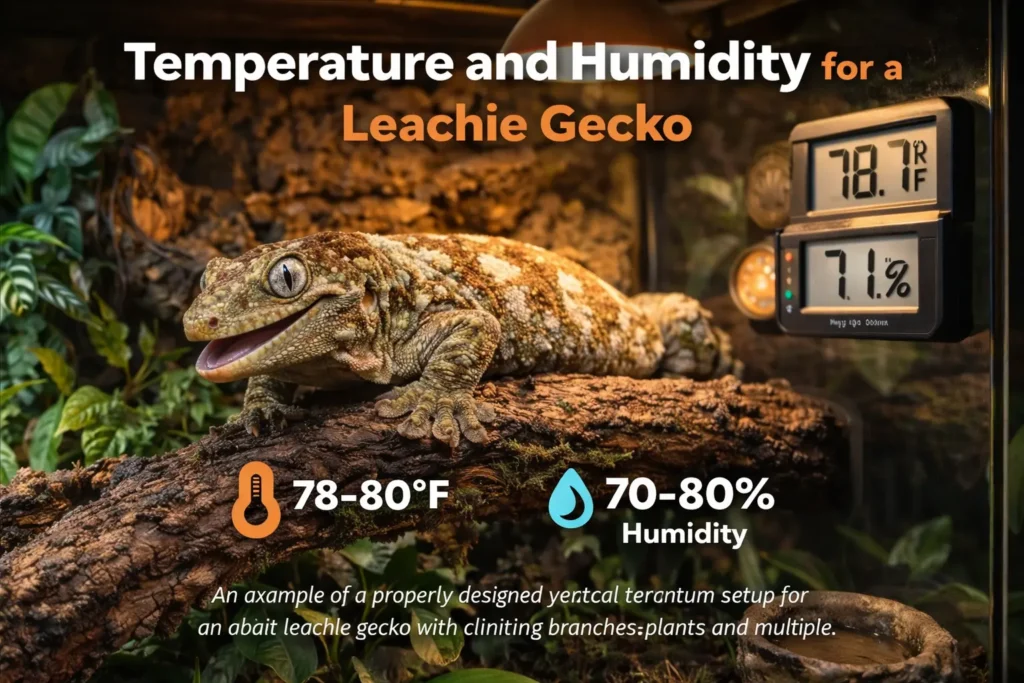
A Leachie Gecko does NOT need extreme heat.
Ideal Temperature Range
- Day: 72–78°F
- Night: 68–74°F
Temperatures above 82°F can stress or even kill them.
Yes—your expensive gecko is basically allergic to warm weather.
Ideal Humidity Range
- Day: 50–70%
- Night: 70–85%
Mist regularly, but allow the enclosure to partially dry between sessions.
Permanent swamp conditions are not the goal.
What Do Leachie Geckos Eat?
A balanced Leachie Gecko diet includes prepared gecko diet and occasional insects.
Staple Foods
- Complete gecko diet powder
- Commercial fruit/insect formulas
Best Insects for Leachie Geckos
- Dubia roaches
- Crickets
- Black soldier fly larvae
- Mealworms (occasionally)
Basically, if it moves and fits in their mouth, they’ll at least consider violence.
Leachie Gecko Diet Tips
To maintain a healthy Leachie Gecko diet:
- Do not overfeed
- Track weight monthly
- Gut-load insects properly
- Supplement when needed
- Adjust feeding frequency by age
That “feed me” face is manipulation. Stay strong.
Do Leachie Geckos Need UVB?
Technically, a Leachie Gecko can survive without UVB if supplementation is perfect.
However, many keepers now recommend low-level UVB.
Potential Benefits of UVB
- Better calcium metabolism
- Improved activity
- Stronger appetite
- More natural behaviors
Think of UVB like a gym membership:
Not strictly required to survive… but generally a solid life choice.
Leachianus Gecko Care Sheet by ReptiFilesLeachie Gecko Temperament
The biggest myth in the hobby?
That all geckos are friendly.
The Leachie Gecko would like to disagree aggressively.
Are Leachie Geckos Friendly?
Some are calm.
Some tolerate handling.
Some wake up daily and choose hostility.
Temperament varies greatly by individual.
Are Leachie Geckos Aggressive?
Yes—Leachie Geckos can be aggressive compared to many other gecko species.
Common defensive behaviors include:
- Barking / croaking
- Lunging
- Tail whipping
- Defensive biting
This species is known for attitude.
They are not evil.
They are simply dramatic.
Do Leachie Gecko Bites Hurt?
Yes.
A Leachie Gecko bite hurts significantly more than most gecko bites.
Why Their Bite Hurts
Because they have:
- Strong jaw pressure
- Larger teeth
- Absolutely no concern for your emotional wellbeing
It’s not dangerous for most adults—but it is enough to make you reconsider your choices.
How Much Does a Leachie Gecko Cost?
The price of these types of lizards might surprise beginners.
Average Price Range
- Babies: $500–$1,000+
- High-end localities: $2,000–$10,000+
- Breeding pairs: Often much higher
Yes, some cost more than a gaming PC.
No, they do not come with RGB lighting.
Can Leachie Geckos Live Together?
Usually, no.
Why Cohabitation Is Risky
Because these types of lizards are territorial.
Housing multiple together can cause:
- Stress
- Dominance issues
- Fighting
- Serious injury
Unless you are an experienced breeder managing a pair carefully, keep them separate.
Are Leachie Geckos Good Pets?

A Leachie Gecko can be an amazing pet—but only for the right owner.
Great For
- Intermediate / advanced reptile keepers
- Display-animal enthusiasts
- People wanting a rare “wow factor” reptile
- Keepers comfortable with attitude
Not Great For
- Small children
- People wanting a cuddly pet
- Anyone who panics when a lizard screams at them
Final Verdict: Is a Leachie Gecko Worth It?
If you want one of the most unique reptiles in the hobby, this giant New Caledonian gecko is absolutely worth considering.
They’re:
- Stunning
- Intelligent
- Prehistoric-looking
- Full of personality
- Occasionally rude for no reason
But they are also:
- Expensive
- Territorial
- Long-lived
- Not ideal for beginners expecting a friendly lap lizard
Treat them correctly, respect their space, and your giant gecko roommate may tolerate you for decades.







Helpful Leopard Gecko Tools
Quick calculators and practical tools for feeding, humidity, health, and enclosure setup.
Feeding Calculator
Estimate the right feeding amount for your leopard gecko.
Open ToolCalcium & D3 Calculator
Plan calcium and vitamin D3 more easily and accurately.
Open ToolHumidity Checker
Check if your terrarium humidity is in a safe range.
Open ToolHealth Symptom Checker
Review possible health issues based on symptoms.
Open ToolSetup Builder
Build and review the ideal leopard gecko enclosure setup.
Open ToolGecko Age Calculator
Estimate your gecko’s age and life stage.
Open ToolElectricity Cost Calculator
Estimate terrarium electricity costs by day, month, and year.
Open ToolBreeding Compatibility
Check if two leopard geckos are compatible for breeding.
Open ToolPet Name Calculator
Find a fun and fitting name for your leopard gecko.
Open ToolWeekly Care Planner
Create a simple weekly care routine for your gecko.
Open Tool