You walk into a pet store.
You see three options staring at you like contestants in a reality show:
- A wire cage
- A glass aquarium
- A fancy “reptile starter kit”
And suddenly the question hits you:
What is the correct habitat for a leopard gecko?
Should a leopard gecko live in a cage or a terrarium?
Short answer:
Use a terrarium.
Long answer?
Let’s break this down properly so your future gecko doesn’t end up living in what is basically a reptile prison with bad heating.
Table of Contents
- What Is the Best Leopard Gecko Enclosure?
- Do Leopard Geckos Live in Cages?
- Why a Terrarium Is the Best Leopard Gecko Enclosure
- Leopard Gecko Enclosure Size Guide
- What Every Leopard Gecko Enclosure Must Include
- Common Leopard Gecko Enclosure Mistakes
- Aquarium vs Reptile Terrarium
- Can Leopard Geckos Live in Plastic Tubs?
- Quick Leopard Gecko Enclosure Comparison
- Final Thoughts
What Is the Best Leopard Gecko Enclosure?
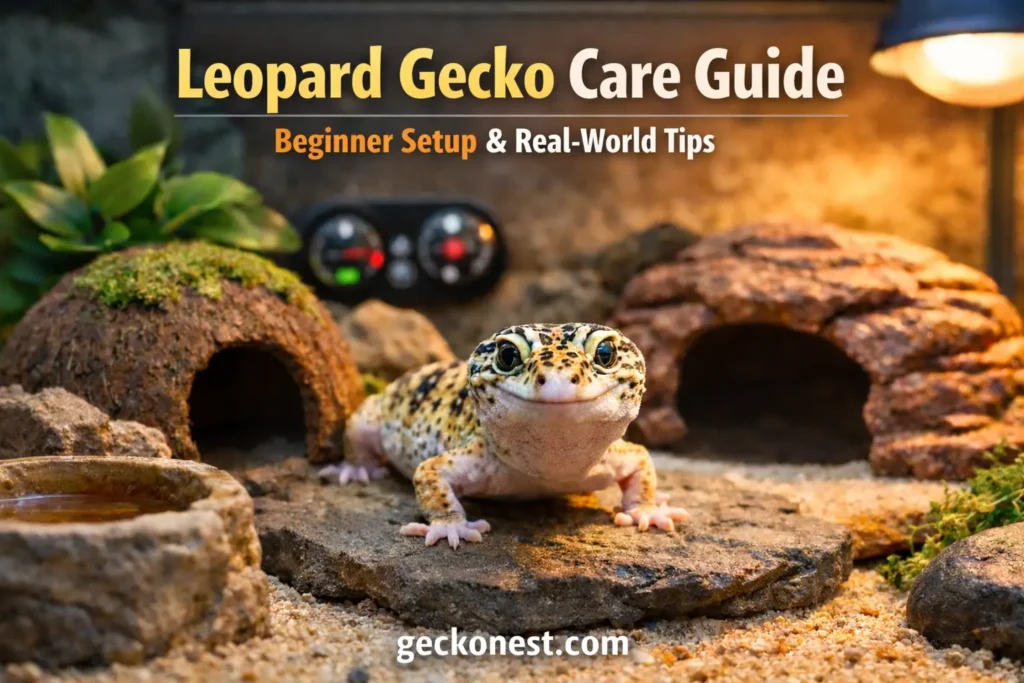
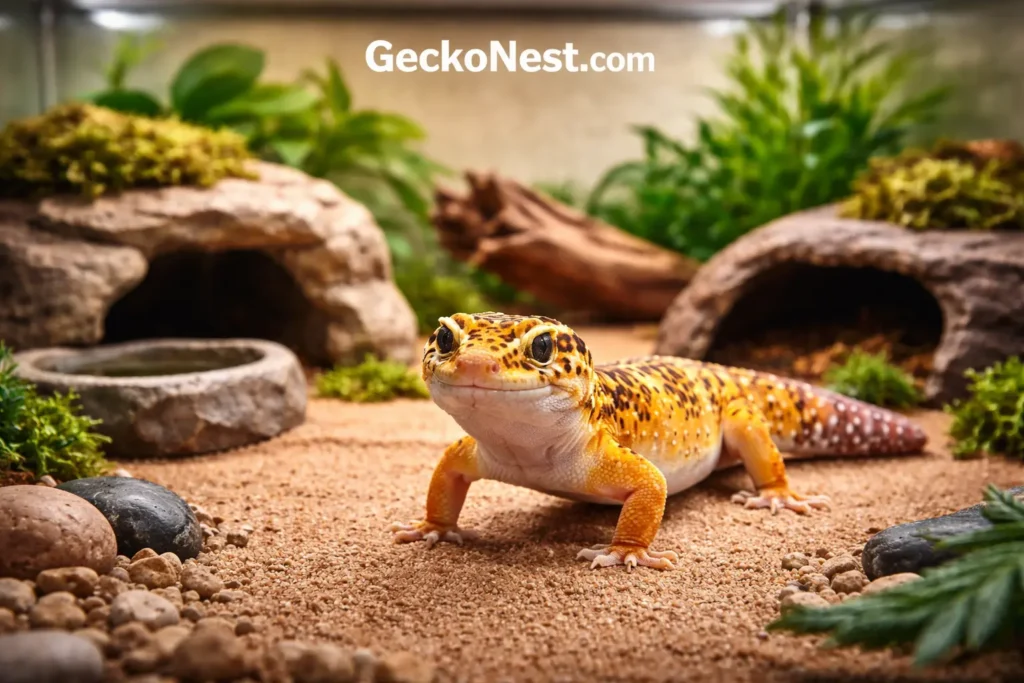
Leopard geckos are desert reptiles that live on the ground, not climbers swinging from bars like tiny reptile gymnasts.
A proper leopard gecko enclosure should allow:
- Stable heat retention
- A warm side and cool side
- Safe hiding spots
- Controlled humidity
- Stress-free movement
In short, your gecko wants a small desert apartment, not a metal hamster cage from 1997.
Do Leopard Geckos Live in Cages?
Technically… yes.
Practically… please don’t do that.
A wire cage is one of the worst leopard gecko enclosure choices for several reasons.
Problems With Cage Enclosures
Wire cages:
- Lose heat very quickly
- Make temperature control difficult
- Dry out too fast
- Offer little security
- Stress reptiles
Leopard geckos rely heavily on stable temperatures to digest food and stay healthy.
Without stable warmth, problems begin:
- Poor digestion
- Low appetite
- Weak immune system
A cage might work for a hamster.
But for a leopard gecko enclosure, it’s basically the equivalent of living in a wind tunnel with bad heating.
Why a Terrarium Is the Best Habitat for Leopard Geckos
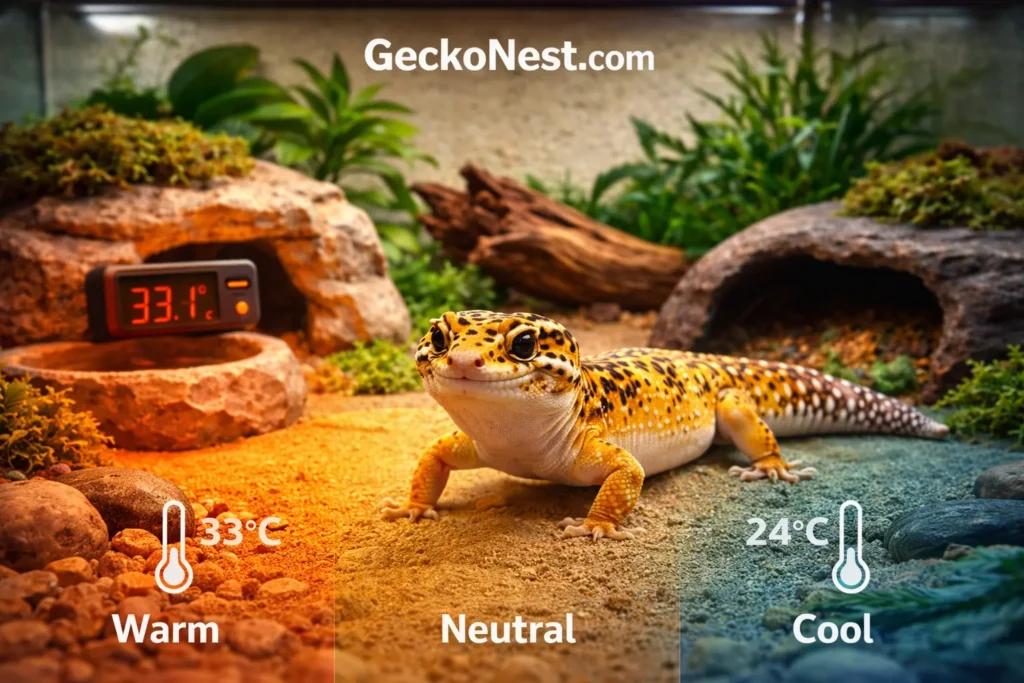
A glass terrarium is the gold standard leopard gecko enclosure.
Why?
Because it allows proper temperature control.
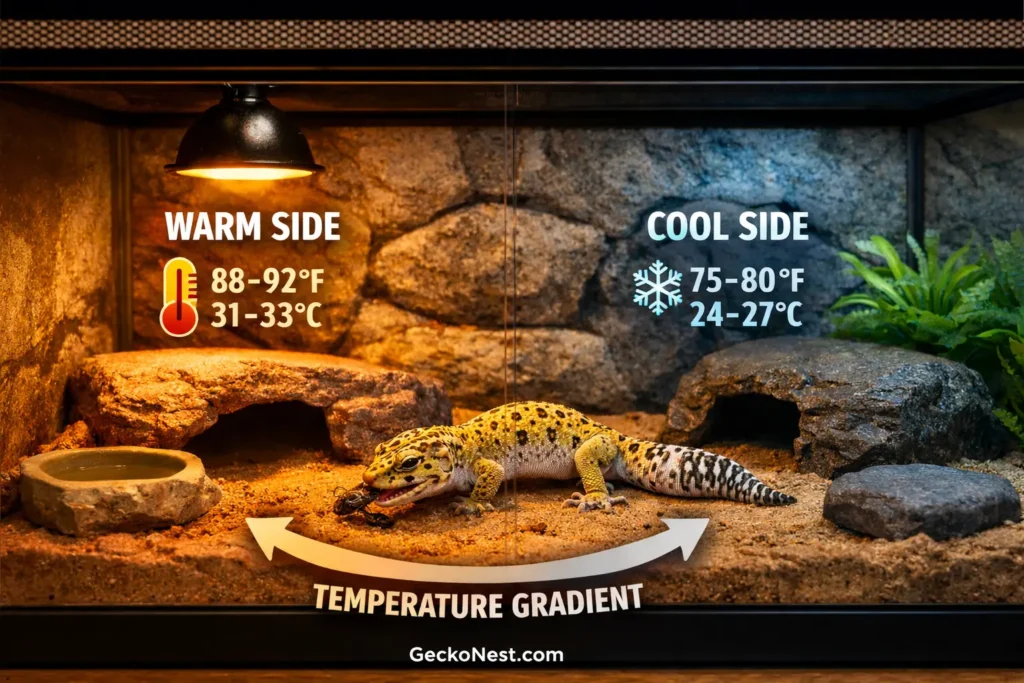
Leopard geckos require a temperature gradient inside their enclosure.
Typical setup:
| Area | Surface Temperature |
|---|---|
| Warm side | 88–92°F (31–33°C) |
| Cool side | 75–80°F (24–27°C) |
This gradient allows the gecko to thermoregulate naturally.
In a wire cage, heat escapes faster than your motivation to exercise on Monday morning.
A glass leopard gecko enclosure keeps heat stable, which directly improves digestion, appetite, and long-term health.
Leopard Gecko Tank Size Guide
The recommended minimum leopard gecko enclosure size for one adult gecko is:
20-gallon long tank
Larger is always welcome.
Think of it this way:
Even if your gecko isn’t running a marathon, it still needs room to:
- Explore
- Thermoregulate
- Hide
- Feel safe
A cramped leopard gecko enclosure causes stress and poor temperature gradients.
And reptiles hate stress almost as much as humans hate Monday meetings.
What Every Leopard Gecko Terrarium Must Include
A complete leopard gecko enclosure setup includes several essential components.
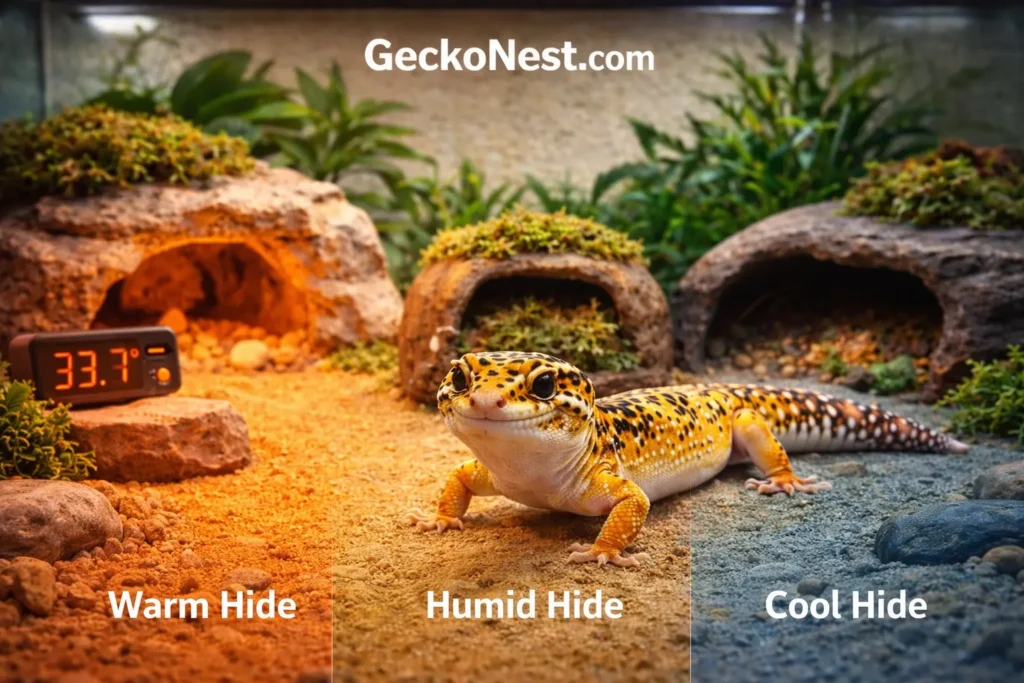
The 3-Hide Rule
Every leopard gecko enclosure needs:
- Warm hide
- Cool hide
- Humid hide
These help with:
- Shedding
- Stress reduction
- Temperature regulation
Heating
Use:
- Under-tank heat mat
- Thermostat (mandatory)
Skipping a thermostat is like driving a car without brakes and hoping for the best.
Basic Supplies
Your leopard gecko enclosure should also include:
- Digital thermometers
- Water dish
- Calcium dish
- Safe substrate
- Simple enrichment items
Temperature control matters far more than fancy decorations.
Your gecko doesn’t care if the rock looks like it came from a luxury spa.
Common Leopard Gecko Terrarium Mistakes
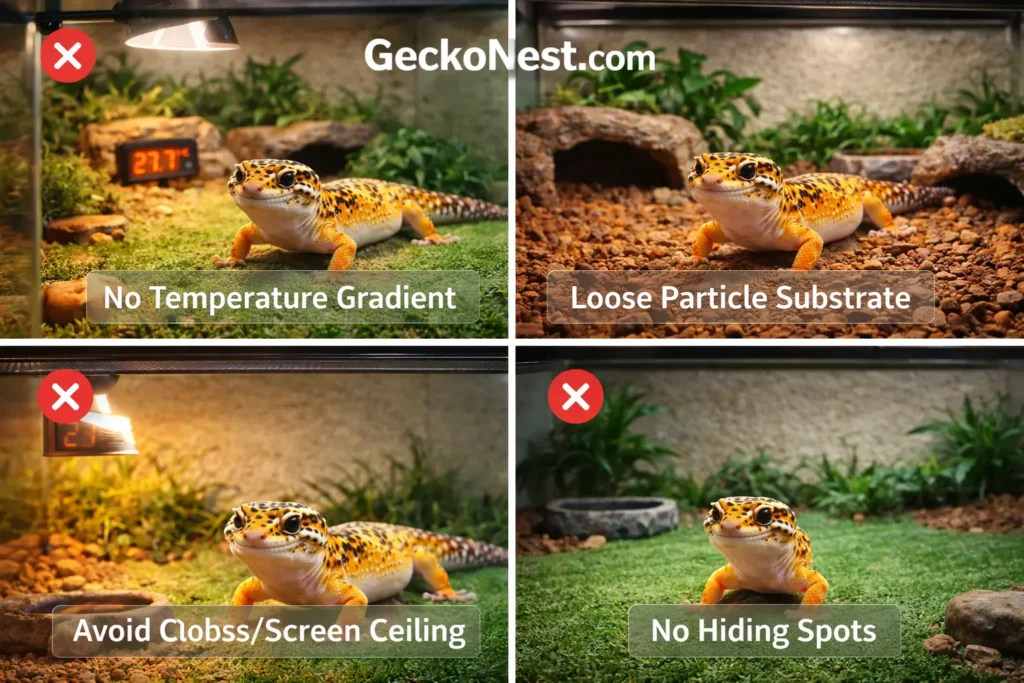
Many new keepers accidentally sabotage their leopard gecko enclosure setup.
Here are the classic mistakes.
1. Using Loose Sand
Loose sand may look natural but often causes impaction problems.
Better options include:
- Paper towel
- Tile
- Reptile carpet
2. No Thermostat
A heat mat without a thermostat can overheat the enclosure quickly.
3. Only Overhead Heat
Surface heat is essential for digestion.
Overhead bulbs alone often fail to provide this.
4. Enclosure Too Small
Small tanks cause unstable temperatures and stress.
5. No Humid Hide
Without one, shedding problems become common.
If your gecko suddenly stops eating, the issue is often the leopard gecko enclosure setup, not the gecko itself.
Read the full leopard gecko care guide at ReptiFilesAquarium vs Reptile Terrarium
Both options can work for a leopard gecko enclosure.
Standard Glass Aquarium
Pros:
- Affordable
- Easy to find
- Good heat retention
Cons:
- Top-opening only
Front-Opening Terrarium
Pros:
- Easier handling
- Less stress for the gecko
- Better access for cleaning
Cons:
- Slightly more expensive
Handling a gecko from above can feel like a hawk attack simulation.
Front-opening tanks feel safer to them.
Can Leopard Geckos Live in Plastic Tubs?
Short answer:
Yes.
Long answer:
Only experienced keepers should do it.
Breeders sometimes use rack systems with plastic tubs because they maintain stable heating across many animals.
But beginners often struggle with:
- Ventilation balance
- Temperature monitoring
- Humidity control
For most owners, a glass terrarium leopard gecko enclosure is the safest and easiest choice.
Quick Leopard Gecko Enclosure Comparison
| Enclosure Type | Good or Bad? | Notes |
|---|---|---|
| Wire Cage | ❌ Poor | Cannot maintain heat |
| Glass Tank | ✅ Good | Ideal beginner setup |
| Front-Opening Terrarium | ⭐ Best | Easy handling |
| Plastic Tub | ⚠️ Advanced | Requires experience |
If you’re choosing between cage or terrarium for a leopard gecko enclosure, the answer is simple:
Terrarium. Every time.
Final Thoughts
Choosing the correct leopard gecko enclosure isn’t about aesthetics.
It’s about temperature stability, health, and preventing avoidable problems.
A proper terrarium setup may cost slightly more at the beginning.
But it prevents:
- health issues
- vet bills
- unnecessary stress
And honestly?
Your gecko will live longer, healthier, and happier.
Which is definitely worth more than saving $40 on the wrong enclosure.
Plus… if your gecko could review your setup on Google, you’d probably want five stars.
Leopard Gecko Enclosure FAQ
Everything owners should know before choosing the right leopard gecko enclosure.
What is the best leopard gecko enclosure?
The best leopard gecko enclosure is a glass terrarium or a 20-gallon long tank that can maintain a proper temperature gradient. It should provide stable heating, three hides, and enough space for the gecko to feel secure.
Can a leopard gecko live in a wire cage?
A leopard gecko can technically survive in a wire cage, but it is not recommended. Wire cages lose heat too quickly and make temperature control difficult, which can lead to stress and health problems.
Is a terrarium better than a cage for a leopard gecko?
Yes, a terrarium is much better than a cage for a leopard gecko. A terrarium holds heat more effectively, supports humidity control, and creates a more secure environment.
What size leopard gecko enclosure do I need?
For one adult leopard gecko, the minimum recommended enclosure size is a 20-gallon long tank. Larger enclosures are even better because they allow a more stable setup and more room to explore.
What should be inside a leopard gecko enclosure?
A proper leopard gecko enclosure should include a warm hide, cool hide, humid hide, under-tank heating with a thermostat, digital thermometers, a water dish, a calcium dish, and safe substrate.
Can leopard geckos live in plastic tubs?
Yes, leopard geckos can live in plastic tubs if heating, ventilation, and humidity are managed properly. However, glass terrariums are usually safer and easier for beginners.
Why is my leopard gecko not eating in its enclosure?
A leopard gecko may stop eating if the enclosure setup is incorrect. Common causes include poor heating, lack of a humid hide, incorrect substrate, or stress from an enclosure that feels too exposed.
Do leopard geckos need a humid hide in their enclosure?
Yes, a humid hide is essential in a leopard gecko enclosure. It helps with shedding and gives the gecko a safe place to regulate moisture when needed.







Helpful Leopard Gecko Tools
Quick calculators and practical tools for feeding, humidity, health, and enclosure setup.
Feeding Calculator
Estimate the right feeding amount for your leopard gecko.
Open ToolCalcium & D3 Calculator
Plan calcium and vitamin D3 more easily and accurately.
Open ToolHumidity Checker
Check if your terrarium humidity is in a safe range.
Open ToolHealth Symptom Checker
Review possible health issues based on symptoms.
Open ToolSetup Builder
Build and review the ideal leopard gecko enclosure setup.
Open ToolGecko Age Calculator
Estimate your gecko’s age and life stage.
Open ToolElectricity Cost Calculator
Estimate terrarium electricity costs by day, month, and year.
Open ToolBreeding Compatibility
Check if two leopard geckos are compatible for breeding.
Open ToolPet Name Calculator
Find a fun and fitting name for your leopard gecko.
Open ToolWeekly Care Planner
Create a simple weekly care routine for your gecko.
Open Tool