

Introduction
If you’re trying to figure out how to feed your leopard gecko properly, you’re not alone. Almost every new owner asks the same questions: What do leopard geckos eat? How much should they eat? And why does mine stare at me like I forgot dinner even though it just ate ten minutes ago?
Welcome to the world of leopard gecko ownership.
The good news is that feeding them is actually very simple once you understand the basics. The bad news? The internet tends to make it sound like you need a spreadsheet, a calculator, and possibly a reptile nutrition degree.
Relax. You don’t.
Leopard geckos are strict insectivores. That means their entire diet revolves around insects. No fruit. No vegetables. No “maybe just a tiny blueberry to see what happens.” Trust me, your gecko will look at that blueberry like you just handed it a rock.
Once you understand three core things — what they eat, how much they eat, and how their feeding schedule changes with age — feeding becomes one of the easiest parts of keeping a leopard gecko.
And honestly, watching a leopard gecko slowly stalk a cricket like a miniature Jurassic Park scene never really gets old.
In this leopard gecko feeding guide, we’ll cover:
- What leopard geckos eat in the wild
- The best feeder insects
- How much to feed based on age
- A simple leopard gecko feeding schedule
- Supplements and gut loading
- Common feeding mistakes beginners make
By the end, you’ll know exactly how to feed your gecko without second-guessing every meal.
If you’re completely new to leopard geckos, you may want to start with our complete leopard gecko care guide where we cover enclosure setup, heating, feeding, and beginner mistakes.
Leopard Gecko Feeding Guide: How Often Should You Feed a Leopard Gecko
The correct leopard gecko feeding schedule depends mostly on one thing: age.
Here’s the quick answer most people are looking for:
| Age | Feeding Frequency |
|---|---|
| 0–6 months | Feed daily |
| 6–12 months | Feed every other day |
| 12+ months | Feed 2–3 times per week |
That’s the basic leopard gecko feeding guide rule used by most experienced keepers.
But beginners often fall into two traps:
- Feeding adults every day forever
- Panicking the first time their gecko skips a meal
Leopard geckos are not tiny dogs waiting at the bowl every evening. If anything, they sometimes act like they forgot feeding even exists… until a cricket walks by.
Then suddenly it’s National Geographic.
Leopard Gecko Feeding Schedule (Simple Weekly Plan)
If you prefer something more visual, here’s a simple weekly leopard gecko feeding schedule:
Baby (0–6 months)
- Feed every day
Juvenile (6–12 months)
- Monday, Wednesday, Friday, Sunday
Adult (12+ months)
- Monday and Thursday (or 3 days if needed)
No complicated tracking.
No feeding apps required.
Just consistency.
Leopard geckos don’t need perfection — they need routine.
Baby Leopard Gecko Feeding Guide
Baby leopard geckos grow quickly. Bones develop, tails get thicker, and their metabolism runs much faster than adults.
Because of that, baby leopard geckos should be fed every day.
Typical baby feeding session:
- 5–10 small insects
- 10–15 minutes feeding time
Baby geckos are dramatic hunters. They will act like they haven’t eaten since the Jurassic period.
This does not mean you should run an all-you-can-eat insect buffet.
Let them hunt for about 10–15 minutes, then end the feeding session.
Adult Leopard Gecko Feeding Schedule
Adult leopard geckos eat much less frequently.
A healthy adult leopard gecko feeding schedule usually looks like this:
2–3 feedings per week
That’s it.
You could feed Monday and Thursday. Or Tuesday, Friday and Sunday. Leopard geckos don’t check calendars.
Healthy adults can easily go 3–4 days without food. Their thick tail stores fat for exactly that reason.
Think of the tail like a tiny reptile savings account.
Withdrawals happen when needed.
Best Time of Day to Feed a Leopard Gecko
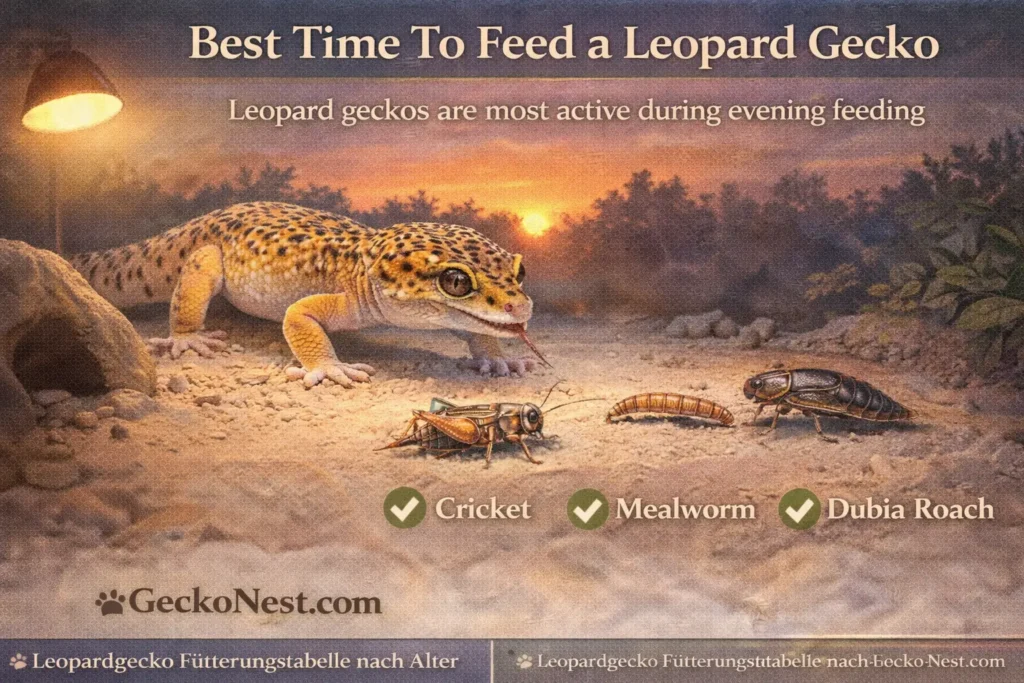
Leopard geckos are crepuscular, which means they are most active during the evening.
The best time to feed them is:
After the enclosure warms up and lights begin to dim.
Feed too early and you might get the classic gecko look:
Slow blink.
Zero movement.
The reptile equivalent of “maybe later.”
Feed in the evening and suddenly the prehistoric hunter activates.
What Do Leopard Geckos Eat
A leopard gecko diet is simple.
They eat insects.
That’s the whole menu.
If you ever wondered “what else can leopard geckos eat?”, the honest answer is: nothing else.
No fruit.
No vegetables.
No salad bowls.
If your gecko could roll its eyes at a strawberry, it absolutely would.
What Should You Feed a Leopard Gecko Daily?
If you’re wondering what should you feed a leopard gecko on a daily basis, the answer depends on age — but the structure stays the same.
A proper feeding plan always includes:
- Live insects (main protein source)
- Variety (not just one insect type)
- Proper supplementation
A simple daily feeding rotation could look like:
Day 1 → Crickets
Day 2 → Dubia roaches
Day 3 → Mealworms
Then repeat.
This keeps nutrition balanced and prevents picky eating habits.
Because yes… leopard geckos can become picky.
And once that happens, good luck convincing them that crickets are still food.
Best Feeder Insects for Leopard Geckos
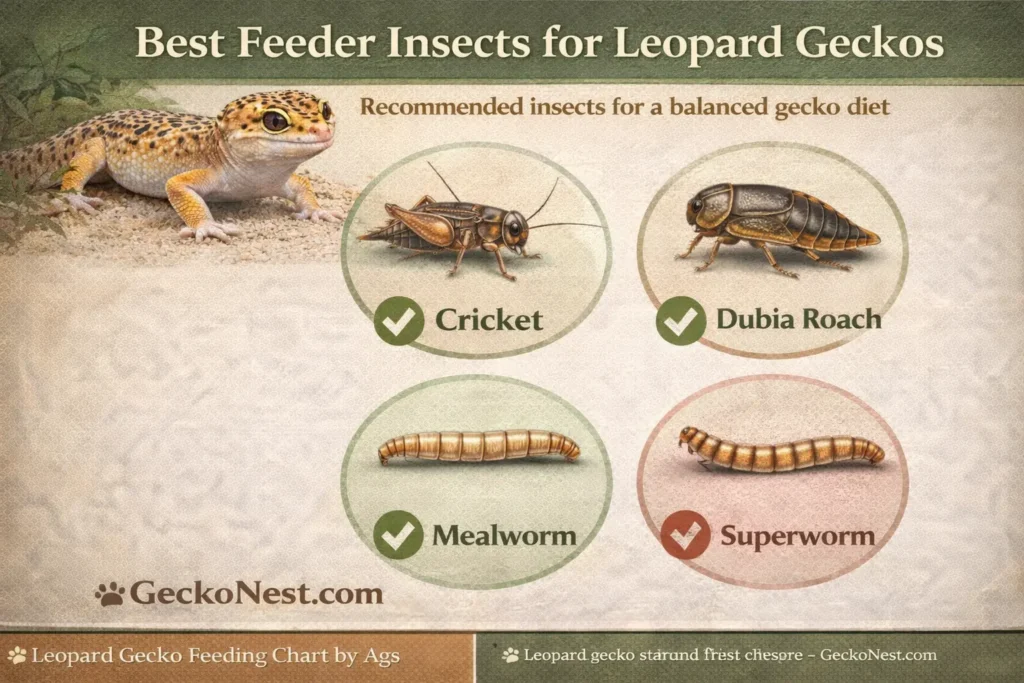
A healthy leopard gecko diet should include a rotation of feeder insects:
- Crickets
- Dubia roaches
- Mealworms
- Superworms (occasionally)
Variety is important. Feeding only mealworms forever is like eating fast food every day.
Convenient? Yes.
Ideal long-term nutrition? Not really.
Rotating feeder insects provides better nutrients and keeps feeding interesting for your gecko.
And honestly, watching a gecko chase a cricket is way more entertaining than watching it stare at a slow mealworm like it personally offended them.
Can Leopard Geckos Eat Fruit?
Short answer:
No.
Long answer:
Still no.
Leopard geckos lack the digestive enzymes needed to process fruit sugars. Offering fruit can cause digestive problems and provides no useful nutrition.
They don’t want blueberries.
They want bugs.
What Vegetables Can Leopard Geckos Eat?
None.
Their digestive system is built for protein-based prey, not plant matter.
Your leopard gecko is not waiting for a kale smoothie.
How Much Food Should You Feed a Leopard Gecko
This part is where many new owners overthink things.
A good rule in any leopard gecko feeding guide is:
Feed as many insects as your gecko eats within 10–15 minutes.
That’s it.
No calorie counting. No complicated math. No reptile spreadsheets.
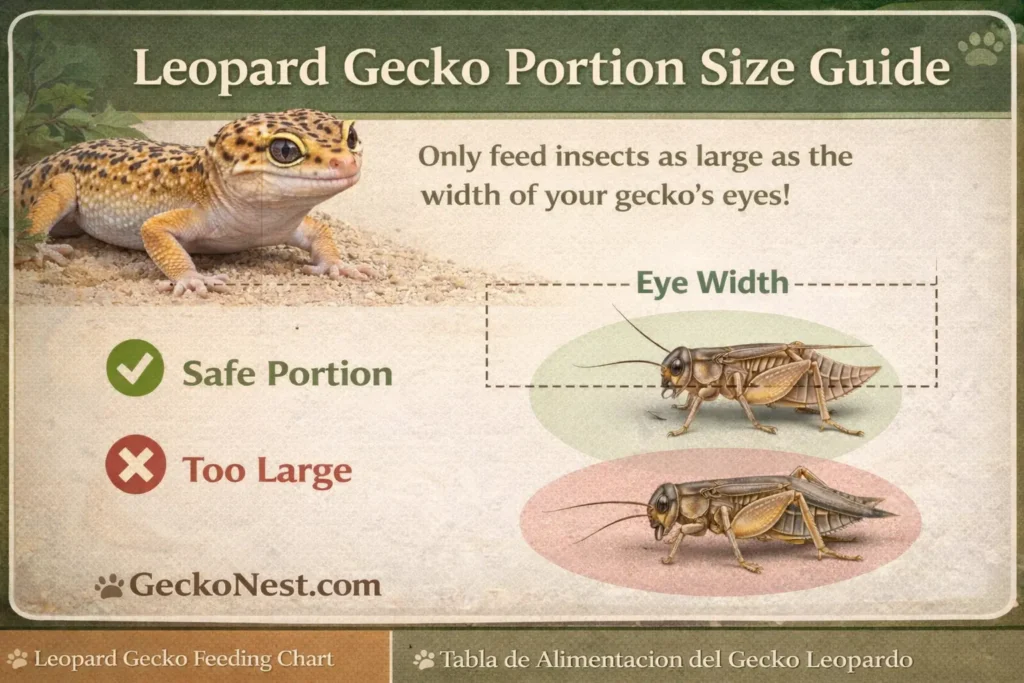
The Eye-Width Rule
A simple rule reptile keepers follow:
The insect should never be wider than the space between the gecko’s eyes.
It sounds strange.
But it works extremely well.
Reptile logic.
Portion Size Guide
Typical feeding amounts:
Baby leopard gecko
• 5–10 small insects daily
Juvenile leopard gecko
• 5–8 insects every other day
Adult leopard gecko
• 5–8 insects 2–3 times weekly
If the tail stays thick and the body looks balanced, you’re doing it right.
How Many Mealworms Should You Feed a Leopard Gecko?
Let’s talk about mealworms — the fast food of the gecko world.
Convenient? Yes.
Healthy as a full-time diet? Not really.
So how many mealworms should you feed a leopard gecko?
Here’s a simple rule:
- Baby geckos → 5–8 small mealworms
- Juveniles → 4–6 medium mealworms
- Adults → 3–5 larger mealworms
But here’s the catch…
Mealworms should NOT be the only food source.
Feeding only mealworms is like eating burgers every day. You’ll survive… but you won’t thrive.
Mealworms are best used as part of a varied diet that includes crickets and roaches.
Also, because mealworms have a harder outer shell, feeding too many can cause digestion issues.
So yes, your gecko loves them.
But your gecko also thinks staring at a wall is a good idea sometimes.
Don’t trust it blindly.
Leopard Gecko Feeding Schedule by Age
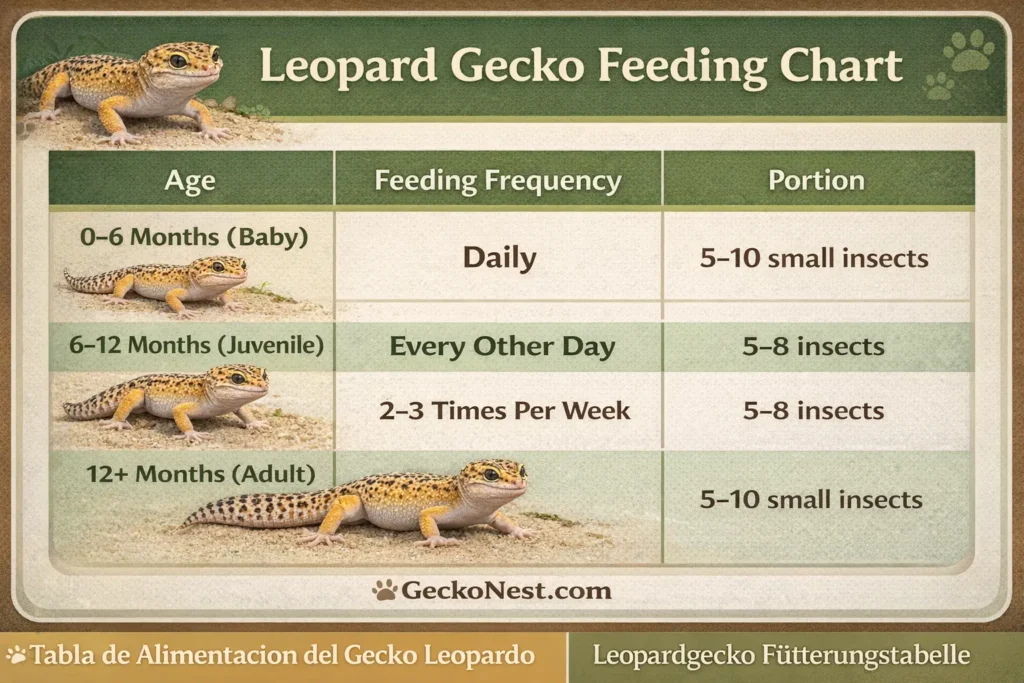
Here’s the full leopard gecko feeding schedule chart.
| Age | Feeding Frequency | Portion |
|---|---|---|
| Baby (0–6 months) | Daily | 5–10 small insects |
| Juvenile (6–12 months) | Every other day | 5–8 insects |
| Adult (12+ months) | 2–3 times weekly | 5–8 insects |
Save it.
Screenshot it.
Future you will thank you.
Do Leopard Geckos Need Calcium and Vitamins
Yes.
Absolutely.
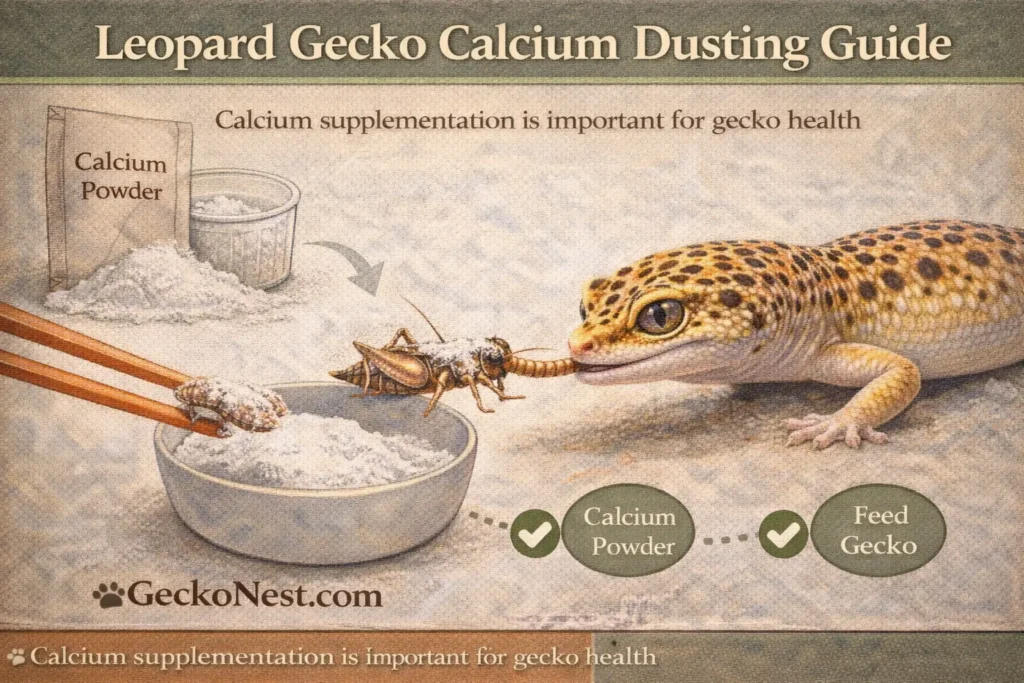
Without proper supplementation, reptiles can develop Metabolic Bone Disease (MBD) over time.
Supplements are not optional.
They are basic reptile care.
According to the Association of Reptile and Amphibian Veterinarians, proper calcium supplementation is essential for reptile bone health.
Simple Supplement Schedule
Most keepers follow this routine:
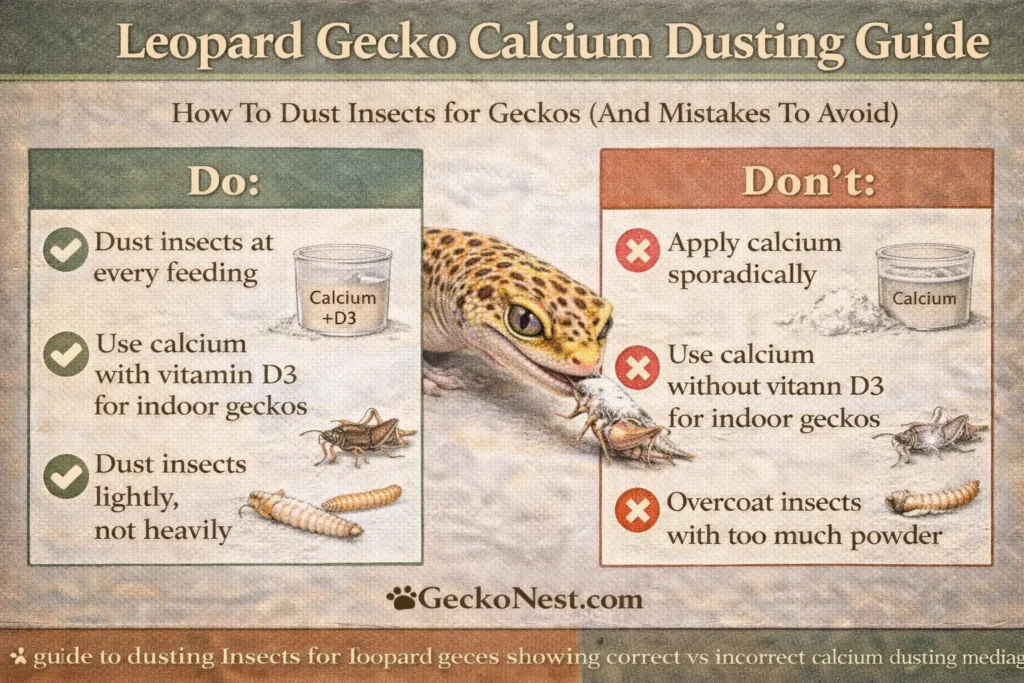
Plain calcium → most feedings
Calcium with D3 → 1–2 times weekly
Multivitamin → once weekly
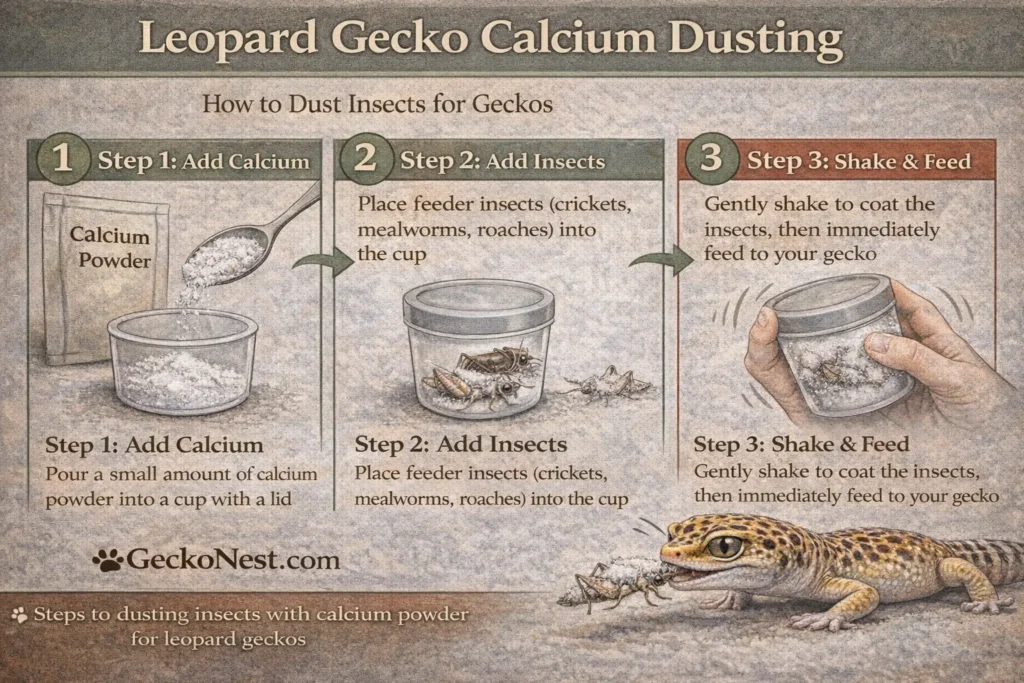
Light dusting is enough.
If your insects look like powdered donuts, you probably used too much.
What Is Gut Loading
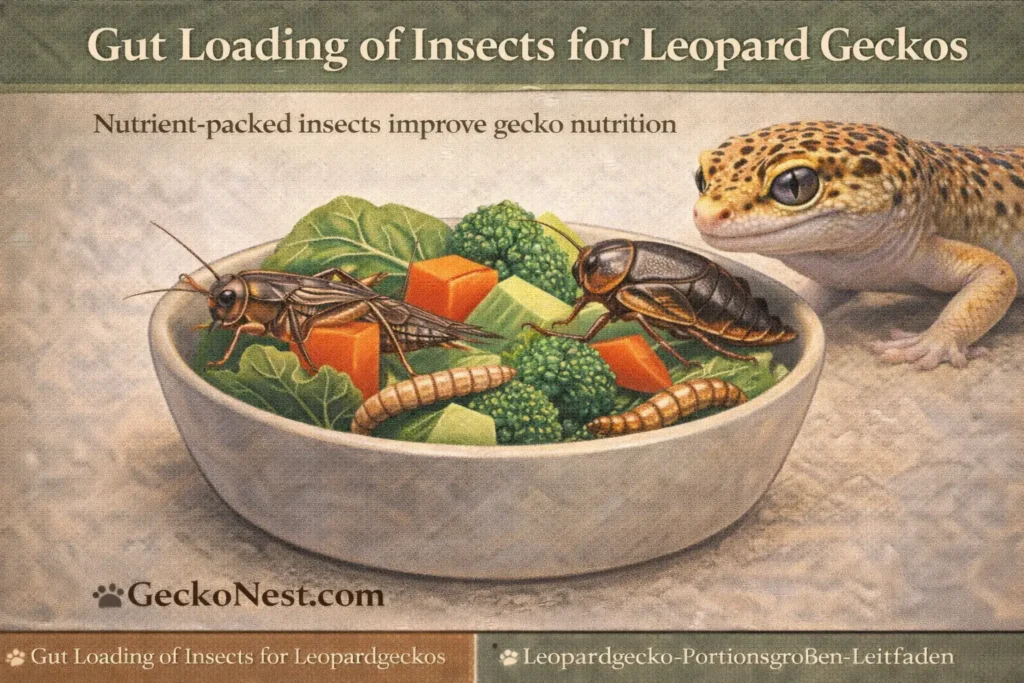
Gut loading means feeding nutritious food to your feeder insects 24 hours before feeding them to your gecko.
Because whatever the insect eats…
Your gecko eats too.
Good gut loading foods include:
- leafy greens
- carrots
- commercial insect diets
Bad gut loading food includes:
- leftover pizza crusts
- random junk food
Yes. People have tried that.
Common Leopard Gecko Feeding Mistakes
Almost every new keeper makes at least one of these.
Overfeeding
Leopard geckos are incredible actors.
They can look starving even when they just ate.
Do not fall for the performance.
Feeding Only One Insect
Mealworms are convenient.
Too convenient.
Rotation improves nutrition.
Wrong Portion Size
Oversized insects can cause digestion issues.
Remember the eye-width rule.
Wrong Feeding Schedule
Feeding adults every day is one of the most common beginner mistakes.
Quick Leopard Gecko Feeding Summary
If you want the simple leopard gecko feeding guide version, here it is:
• Babies eat daily
• Juveniles eat every other day
• Adults eat 2–3 times weekly
• Feed for 10–15 minutes
• Insects should be smaller than eye width
• Rotate feeder insects
• Use calcium regularly
If the tail looks healthy and your gecko is active, you’re probably doing just fine.
What Can You Feed a Leopard Gecko (Complete Food List)
Here’s a complete list of what you can feed a leopard gecko:
Safe feeder insects:
- Crickets
- Dubia roaches
- Mealworms
- Superworms (occasionally)
Occasional treats:
- Waxworms (very rarely — high fat)
Avoid completely:
- Fruits
- Vegetables
- Wild insects
If it doesn’t move… your gecko probably doesn’t care.
Leopard geckos are hunters, not salad lovers.
Can a leopard gecko go 4 days without food?
Yes. Healthy adults can go several days without food thanks to fat stored in their tail.
Can leopard geckos eat fruit or vegetables?
No. Leopard geckos are strict insectivores.
Why is my leopard gecko not eating?
Check these first:
• enclosure temperature
• shedding cycle
• stress
• enclosure changes
Nine times out of ten, temperature is the issue.
Final Thoughts
Leopard gecko feeding looks complicated when you first research it.
Charts. Opinions. Conflicting advice everywhere.
But in practice?
It’s simple.
Feed insects.
Follow the age schedule.
Use calcium.
Watch the tail.
That’s the formula.
And honestly, watching a leopard gecko hunt a cricket will never stop being fun.
Tiny dinosaur energy.
Every time.







Helpful Leopard Gecko Tools
Quick calculators and practical tools for feeding, humidity, health, and enclosure setup.
Feeding Calculator
Estimate the right feeding amount for your leopard gecko.
Open ToolCalcium & D3 Calculator
Plan calcium and vitamin D3 more easily and accurately.
Open ToolHumidity Checker
Check if your terrarium humidity is in a safe range.
Open ToolHealth Symptom Checker
Review possible health issues based on symptoms.
Open ToolSetup Builder
Build and review the ideal leopard gecko enclosure setup.
Open ToolGecko Age Calculator
Estimate your gecko’s age and life stage.
Open ToolElectricity Cost Calculator
Estimate terrarium electricity costs by day, month, and year.
Open ToolBreeding Compatibility
Check if two leopard geckos are compatible for breeding.
Open ToolPet Name Calculator
Find a fun and fitting name for your leopard gecko.
Open ToolWeekly Care Planner
Create a simple weekly care routine for your gecko.
Open Tool